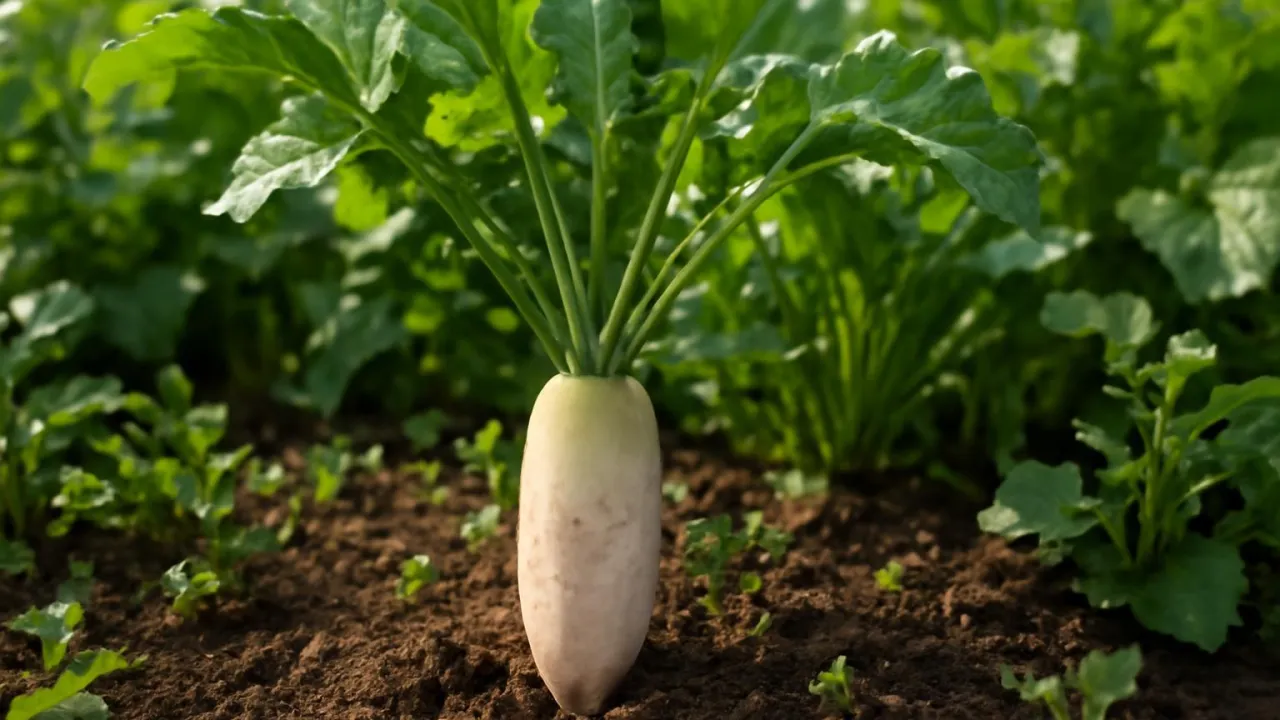
Daikon radishes can grow up to 20 inches long underground!
✨ Word Sparks (Grade 2 Glossary)
Tap 🔊 to hear
moist
A little wet, not dry
sprout
When a seed starts to grow
pickled
Food soaked in salty water to last longer
🪝
Have you ever seen a radish as big and white as a carrot?
1
Where Daikons Grow
Daikon radishes grow best in gardens with full sun and soil. They come from East Asia and are popular in many countries. Farmers plant them in spring or fall when the weather is cool.
2
How Daikons Grow
Daikons start as small seeds that into green leaves above ground. The big white root grows underground and stores food for the plant. It can grow very long, sometimes up to twenty inches.
3
A Spicy Crunchy Root
The daikon root is crunchy and tastes a little spicy or peppery. People eat it raw, cooked, or in many dishes. The white color helps it stay fresh longer than red radishes.
Daikon radishes can grow roots over 20 inches long, storing energy underground!
✨ Word Sparks (Grade 3 Glossary)
Tap 🔊 to hear
nutrients
Food plants need to grow strong
adaptation
A change that helps plants survive
predator
An animal that eats other animals or plants
🪝
Did you know the daikon radish uses its long root to store food underground?
1
Daikon’s Growing Place
Daikon radishes grow best in temperate gardens where the soil is moist and loose. They need full sun and cooler weather to thrive. These conditions help the root grow long and thick underground.
2
How Daikon Grows Underground
The daikon’s root grows deep into the soil to find water and . This root stores energy for the plant and helps it survive cold weather. Its white color and smooth skin protect it from pests.
3
A Crunchy, Peppery Root
Daikon radishes have a crunchy texture and a mild peppery taste that can vary in spiciness. This flavor helps protect the plant from some . People use daikon in salads, soups, and pickles worldwide.
4
Why Daikon is Special
Daikon radishes have adapted to grow large roots that store effectively. This helps the plant survive in different climates and soil types. Farmers value daikon for its fast growth and versatility.
1. Why does the daikon’s root grow deep underground?
2. What helps protect daikon from some predators?
🤯 Mind-Blowing Fact • Grade 4
Daikon radishes improve soil health by breaking up compacted earth in crop rotations!
✨ Word Sparks (Grade 4 Glossary)
Tap 🔊 to hear
ecosystem
All living things in one place
symbiotic
Living together and helping each other
pesticides
Chemicals that kill pests
🪝
How does the daikon radish’s large root help it survive in different environments?
1
Growing Conditions and Distribution
Daikon radishes thrive in temperate regions with loose, moist soil and plenty of sunlight, mainly found across East Asia and parts of North America. These conditions cause the root to grow long and store energy efficiently, which helps the plant survive colder seasons. Farmers often rotate daikon crops to improve soil health by breaking up compacted earth.
2
Root Structure and Survival
The daikon’s large white root grows deeply into the soil, allowing it to absorb water and essential nutrients even during dry spells. This root structure also helps the plant resist drought and cold temperatures by storing food underground. Its smooth skin reduces damage from pests and diseases, making it a resilient vegetable.
3
Role in Ecosystems and Human Use
Daikon radishes play an important role in food webs as a source of nutrition for humans and some animals. They are used in crop rotation to enrich soil and prevent erosion, showing a relationship with the environment. People consume daikon fresh, cooked, or pickled, making it a versatile ingredient in many cuisines.
4
Impact of Agriculture and Conservation
Modern farming practices have increased daikon production worldwide, but overuse of can harm beneficial insects and soil health. Sustainable farming methods encourage organic growing to protect . Conserving heirloom daikon varieties helps maintain genetic diversity important for future crops.
1. How does the daikon’s root help it survive dry spells?
2. Why do farmers use daikon in crop rotation?
🤯 Mind-Blowing Fact • Grade 5
Daikon radishes can grow roots weighing up to 2 kilograms and 50 centimeters long!
✨ Word Sparks (Grade 5 Glossary)
Tap 🔊 to hear
biennial
A plant that lives for two years
taproot
Main root that grows deep underground
aeration
Letting air into soil for healthy roots
🪝
What makes the daikon radish’s long root a remarkable adaptation in plant physiology and agriculture?
1
Scientific Classification and Origins
The daikon radish, scientifically named Raphanus sativus var. longipinnatus, belongs to the Brassicaceae family, native to East Asia. It is a plant cultivated primarily as an annual for its edible root. Its taxonomic classification highlights its relation to other radishes and mustard plants, known for pungent flavors and nutritional value.
2
Physiological Mechanics of Growth
Daikon radishes develop a large, fleshy that can grow up to 50 centimeters long, designed to store carbohydrates and water efficiently. This root penetrates deep into loose, well-drained soils, allowing access to moisture and minerals unavailable to shallow-rooted plants. The plant’s leaves conduct photosynthesis to produce sugars transported to the root for storage.
3
Agricultural Importance and Conservation
Daikon radishes play a vital role in sustainable agriculture through crop rotation, improving soil and reducing pests naturally. Conservation of heirloom varieties preserves genetic diversity, which is crucial for breeding disease-resistant and climate-adapted cultivars. Organic farming practices minimize pesticide use, protecting soil microbiomes and beneficial insects.
4
Quantitative Comparisons and Environmental Adaptations
Daikon roots can weigh up to 2 kilograms and grow in soil temperatures ranging from 50 to 75 degrees Fahrenheit, optimizing growth in temperate climates. Compared to smaller red radishes, daikons have a milder flavor and longer shelf life due to lower water content. Their deep roots also help reduce soil erosion by stabilizing the ground.
5
Culinary and Cultural Significance
Daikon radishes are integral to East Asian cuisine, used fresh, cooked, or pickled in dishes like kimchi and oden. Their mild peppery flavor and crunchy texture make them versatile in salads and soups worldwide. Historical records show daikon cultivation dating back over a thousand years, reflecting its importance in food culture and agriculture.