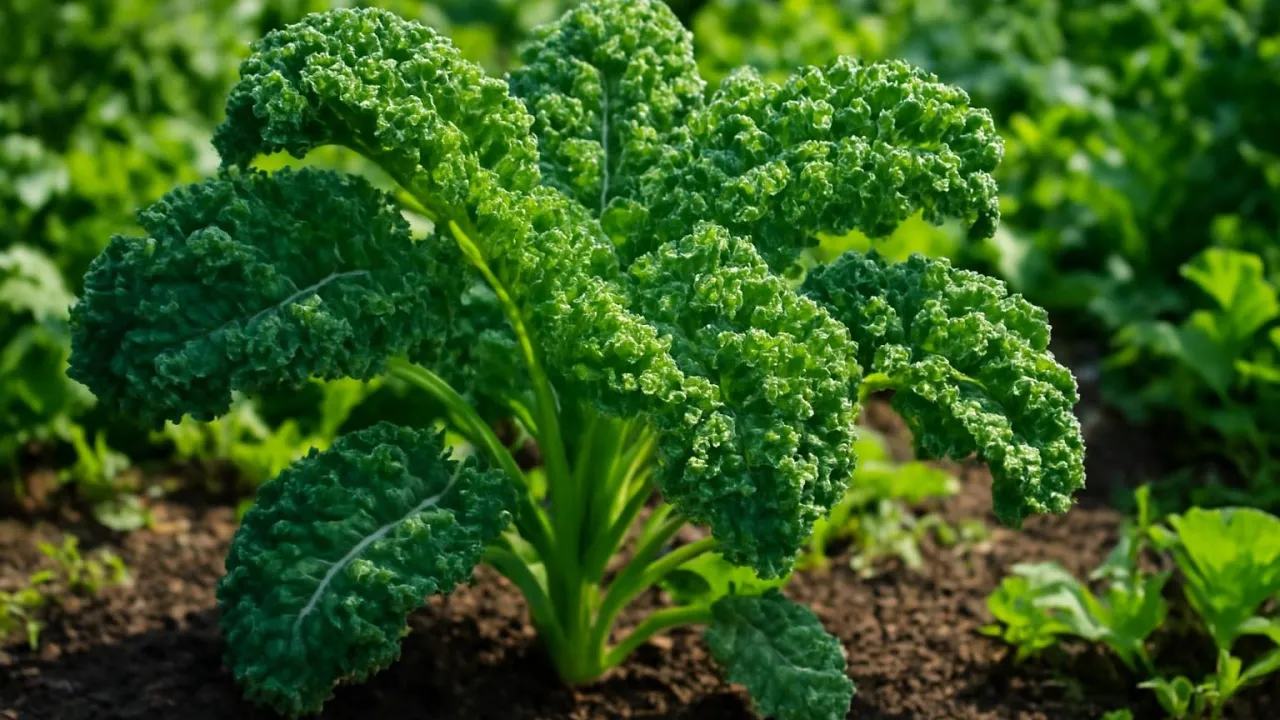
Curly kale leaves have more vitamin C than many other green vegetables!
✨ Word Sparks (Grade 2 Glossary)
Tap 🔊 to hear
vitamin
A tiny helper in food that keeps you healthy.
harvest
When people pick plants to eat or sell.
curl
To bend or twist into a round shape.
🪝
Have you ever seen a vegetable with curly, green leaves like a crown?
1
Curly Leaves and Color
Curly kale has bright green leaves that up at the edges. The leaves look bumpy and feel rough to touch. They grow in bunches on tall stems. This makes curly kale easy to spot in gardens.
2
Where It Grows and Grows
Curly kale grows best in cool weather and needs plenty of sun and water. Farmers plant it in fields or gardens where the soil is rich. The plant grows about one to three feet tall before . People pick the leaves when they are big and healthy.
3
Why It’s So Special
Curly kale is full of like A and C that help keep people healthy. Its curly leaves catch the sunlight well for making food. Many people add it to salads, soups, or smoothies. Bugs and birds may eat the leaves too.
Curly kale’s crinkly leaves help it absorb more sunlight for energy than flat leaves!
✨ Word Sparks (Grade 3 Glossary)
Tap 🔊 to hear
photosynthesis
How plants use sunlight to make their food.
ecosystem
A community of living things and their environment.
nutrients
Food parts that help plants and animals grow strong.
🪝
Did you know curly kale’s crinkly leaves help it catch sunlight better than flat leaves?
1
Curly Kale’s Unique Leaves
Curly kale has thick, bumpy leaves that curl tightly at the edges. These crinkly leaves increase surface area for better . The rough texture helps protect the plant from some insects. This adaptation helps curly kale survive in many gardens.
2
Where Curly Kale Thrives
Curly kale grows best in temperate climates with cool temperatures. It prefers rich, moist soil and needs plenty of sunlight each day. The plant can grow up to three feet tall with many leaves. Farmers harvest the leaves before cold weather arrives.
3
Role in the Ecosystem
Curly kale provides food for many garden animals like insects and birds. It is part of a food web where predators eat the insects living on the plant. The leaves also help the soil by adding when they decompose. This makes curly kale important for healthy gardens.
4
Why People Love Curly Kale
People eat curly kale because it is rich in vitamins A, C, and K. These support strong bones, healthy skin, and good eyesight. Its curly shape makes it fun to use in salads and smoothies. Curly kale’s tough leaves also store antioxidants that protect cells.
Curly kale’s leaf curls help it save water and fight bugs, making it a strong garden survivor!
✨ Word Sparks (Grade 4 Glossary)
Tap 🔊 to hear
photosynthesis
Plants use sunlight to make food and energy.
ecosystem
All living things and their homes working together.
agriculture
Growing plants and raising animals for food.
🪝
How does curly kale’s curly leaf shape help it live and grow in gardens worldwide?
1
Leaf Shape and Survival
Curly kale’s distinctive curled leaves increase the surface area exposed to sunlight, which enhances and energy production. This shape also helps reduce water loss by trapping moisture near the leaf surface, aiding survival in drier conditions. The thick, crinkly texture deters many insect predators, reducing damage to the plant. These adaptations allow curly kale to thrive in various climates around the world.
2
Ecosystem Role and Food Webs
Curly kale plays an important role in garden by providing food and habitat for insects, birds, and small mammals. The plant supports pollinators and herbivores, which in turn feed predators, creating a balanced food web. When leaves fall and decompose, they enrich the soil with nutrients, promoting healthy plant growth. Humans also cultivate curly kale for its nutritional benefits, linking to natural ecosystems.
3
Geographic Distribution and Growth
Originally native to Europe, curly kale has spread worldwide and grows best in temperate regions with cool summers. It is cultivated extensively in North America, Europe, and parts of Asia. The plant grows between one and three feet tall and requires fertile, well-drained soil with full sun exposure. Regular watering is essential to maintain leaf quality and prevent wilting during dry spells.
4
Human Impact and Agriculture
Curly kale’s popularity has increased due to its health benefits and versatility in cooking. Sustainable farming practices help reduce pesticide use and protect beneficial insects living on kale plants. Crop rotation and organic fertilizers improve soil health, supporting long-term productivity. As a nutrient-rich vegetable, curly kale contributes to food security and healthy diets worldwide.
1. How do curly kale’s leaves help it survive dry weather?
2. Why is curly kale important in garden food webs?
🤯 Mind-Blowing Fact • Grade 5
Curly kale’s leaf curls create tiny humid zones that conserve water and boost photosynthesis efficiency!
✨ Word Sparks (Grade 5 Glossary)
Tap 🔊 to hear
transpiration
How plants lose water through tiny leaf openings.
antioxidants
Natural helpers that protect cells from damage.
genetic diversity
Different kinds of genes in plants that help survival.
🪝
What makes curly kale’s unique leaf structure a marvel of plant adaptation and nutrition?
1
Scientific Classification and Origins
Curly kale, scientifically known as Brassica oleracea var. sabellica, belongs to the Brassicaceae family, which includes cabbage and broccoli. It originated in the Mediterranean and Europe, where it was cultivated for centuries before spreading worldwide. This vegetable thrives in temperate climates and has been selectively bred for its distinctive curly leaves and robust nutritional profile. Understanding its taxonomy helps scientists study its genetics and improve crop varieties.
2
Physiological Adaptations and Mechanics
The curly leaves of kale increase surface area, enhancing photosynthetic efficiency by capturing more sunlight. Their thick, waxy cuticle reduces water loss through , enabling survival in variable moisture conditions. The leaf’s curled edges create microclimates that conserve humidity and deter herbivorous insects. These physiological features work together to optimize growth and resilience in diverse environments.
3
Nutritional and Botanical Significance
Curly kale is exceptionally rich in vitamins A, C, and K, as well as minerals like calcium and iron, making it a superfood in human diets. Botanically, kale is a leafy green vegetable, but its leaves are also considered a botanical fruit in some classifications due to their seed-producing capability in flowering plants. Its help reduce inflammation and support cellular health, contributing to disease prevention.
4
Conservation and Agricultural History
Historically, kale was a staple crop during harsh winters in Europe due to its cold tolerance and nutritional value. Today, sustainable farming practices focus on reducing pesticide use and improving soil health to maintain kale production. Crop rotation and organic amendments help conserve biodiversity and prevent soil degradation. Conservation efforts also include preserving heirloom kale varieties to maintain .
5
Quantitative Comparisons and Growth Details
Curly kale plants typically grow between 1 and 3 feet tall, producing leaves that can weigh up to 0.5 pounds each. They require temperatures between 60 and 75 degrees Fahrenheit for optimal growth and can withstand light frosts. Compared to other leafy greens, kale contains up to four times more vitamin K and twice the vitamin C content. These metrics highlight kale’s exceptional nutritional density and adaptability.