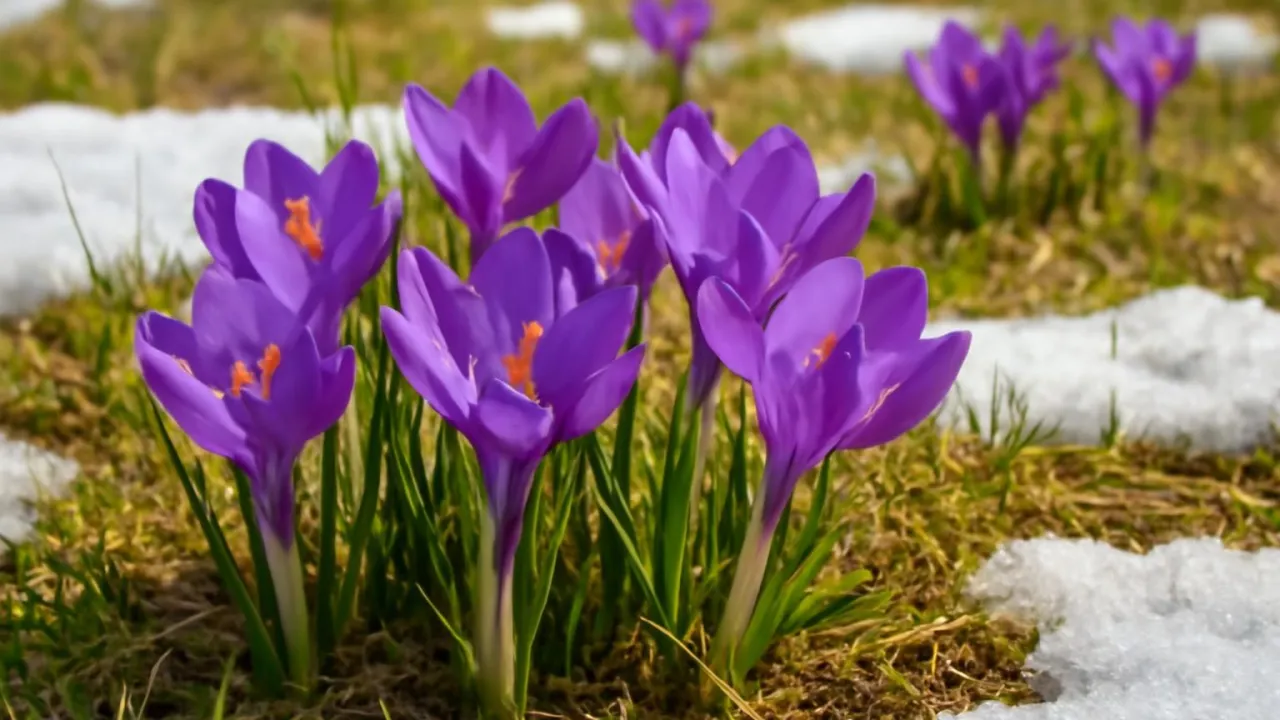
Crocus flowers can push through snow to bloom early and brighten the cold landscape.
✨ Word Sparks (Grade 2 Glossary)
Tap 🔊 to hear
pollination
When bees help flowers make seeds
petals
Colorful parts of a flower
nectar
Sweet liquid inside flowers for bees
🪝
Have you seen flowers bloom while snow still covers the ground?
1
Colorful Early Bloomers
Crocus flowers bloom very early in spring, even when snow is melting. They have bright that can be purple, yellow, or white. These flowers grow close to the ground in small clusters.
2
Where Crocus Grows
Crocus plants grow in sunny places like gardens, meadows, and forests. They need well-drained soil that does not stay too wet. These flowers come from Europe, North Africa, and parts of Asia.
3
Special Flower Features
Crocus has cup-shaped flowers that protect its pollen and inside. Bees visit crocus to collect nectar and help with . The flowers close at night to keep warm and safe.
Crocus corms store nutrients underground, allowing flowers to bloom early despite cold weather.
✨ Word Sparks (Grade 3 Glossary)
Tap 🔊 to hear
adaptation
A change that helps survival
pollination
Transfer of pollen to make seeds
corm
A bulb-like stem that stores food
🪝
How do crocus flowers survive and bloom when snow still covers the ground?
1
Early Blooming Adaptation
Crocus flowers have adapted to bloom very early in spring, often pushing through melting snow. This early bloom helps them avoid competition for pollinators. Their bright petals attract bees and other insects for .
2
Flower Structure and Survival
The cup-shaped petals of crocus help protect pollen and nectar from cold winds. At night, the flowers close tightly to conserve heat and protect delicate parts. This helps crocus survive harsh early spring weather.
3
Habitat and Growth Cycle
Crocus grows in temperate regions across Europe, North Africa, and Asia. It thrives in well-drained soil and sunny spots. The plant grows from , which store nutrients underground during winter.
4
Role in Ecosystems
Crocus provides one of the first food sources for early pollinators like bees. This helps pollinators survive and supports the food web. Crocus also helps spread its seeds through and seed dispersal.
1. What helps crocus flowers protect pollen from cold winds?
2. Why are crocus flowers important for early pollinators?
🤯 Mind-Blowing Fact • Grade 4
Crocus flowers’ early bloom supports pollinators and helps maintain healthy ecosystems each spring.
✨ Word Sparks (Grade 4 Glossary)
Tap 🔊 to hear
symbiotic
A helpful relationship between living things
pollination
Process where pollen helps make seeds
conservation
Protecting plants and animals’ homes
🪝
Why does the crocus flower bloom so early, even when snow still covers the ground?
1
Early Blooming and Adaptations
Crocus flowers bloom early in spring to take advantage of scarce pollinators before other plants flower. Their cup-shaped petals close at night, conserving heat and protecting pollen from frost damage. This adaptation allows crocus to survive in cold climates where other flowers cannot. The early bloom also helps crocus avoid competition for sunlight and nutrients.
2
Ecological Role and Pollination
By blooming early, crocus provides vital nectar for bees and other pollinators emerging from winter dormancy. This relationship supports the local food web, as pollinators help crocus reproduce through . Crocus seeds then spread to new areas, sustaining plant populations and promoting biodiversity.
3
Geographic Distribution and Habitat
Crocus species are native to temperate regions of Europe, North Africa, and Asia, thriving in well-drained soils and sunny habitats such as meadows and open woodlands. Human cultivation has spread crocus worldwide as a popular ornamental flower in gardens and parks. These flowers often mark the start of spring in many cultures.
4
Human Impact and Conservation
While many crocus species are common, some wild varieties face habitat loss due to urban development and agriculture. efforts focus on protecting natural habitats and promoting sustainable gardening practices. Crocus also holds cultural importance in festivals and traditional medicine, encouraging preservation.
1. How does crocus help pollinators in early spring?
2. What threatens some wild crocus species?
🤯 Mind-Blowing Fact • Grade 5
It takes about 150,000 crocus flowers to produce just one pound of saffron spice, one of the world’s most expensive spices.
✨ Word Sparks (Grade 5 Glossary)
Tap 🔊 to hear
corm
A bulb-like stem storing food underground
perennial
A plant that lives for many years
stigma
Part of a flower that collects pollen
🪝
What makes crocus flowers one of the earliest bloomers in temperate ecosystems worldwide?
1
Taxonomy and Botanical Classification
Crocus belongs to the Iridaceae family and includes about 90 species across Europe, North Africa, and Asia. These plants grow from , which are specialized underground stems storing nutrients for early growth. Their scientific genus name, Crocus, reflects their distinctive flower shape and early bloom timing. Understanding their classification helps scientists study their evolution and relationships.
2
Physiological Adaptations for Early Bloom
Crocus store carbohydrates that fuel rapid shoot and flower growth before leaves fully develop. Their cup-shaped petals close tightly at night, reducing heat loss and protecting reproductive organs from frost. These physiological traits enable crocus to bloom through snow and cold temperatures as low as 20°F (-6°C). This remarkable cold tolerance is key to their survival.
3
Ecological and Conservation Importance
By blooming early, crocus provides essential nectar for emerging pollinators, supporting ecosystem food webs. Some wild crocus species face threats from habitat destruction and overharvesting for ornamental trade. Conservation programs aim to preserve genetic diversity and protect natural habitats to ensure sustainable populations. Protecting crocus also helps maintain biodiversity and ecosystem health.
4
Cultural and Historical Significance
Crocus has been cultivated since ancient times for ornamental and medicinal uses. The saffron crocus (Crocus sativus) produces valuable saffron spice, harvested from . This economic and cultural importance has influenced agriculture and trade across Mediterranean regions for thousands of years. Saffron remains one of the most expensive spices worldwide.
5
Quantitative Comparisons and Growth Metrics
Crocus flowers typically reach heights between 2 and 6 inches (5 to 15 centimeters). Their blooming period lasts about two to three weeks in early spring. Saffron crocus are hand-harvested, requiring around 150,000 flowers to produce one pound (0.45 kg) of saffron spice, highlighting the labor-intensive nature of cultivation. This makes saffron a precious and rare product.