Healthy kids normally cough up to ten times a day just to keep their airways tidy and clear!
✨ Word Sparks (Grade 2 Glossary)
Tap 🔊 to hear
epiglottis
Little throat flap covering windpipe during swallowing
vocal cords
Two throat bands that open, close, and vibrate
mucus
Slippery fluid that traps dust and germs
🪝
How is a cough different from a sneeze inside your breathing tubes?
1
Two Tubes in Your Neck
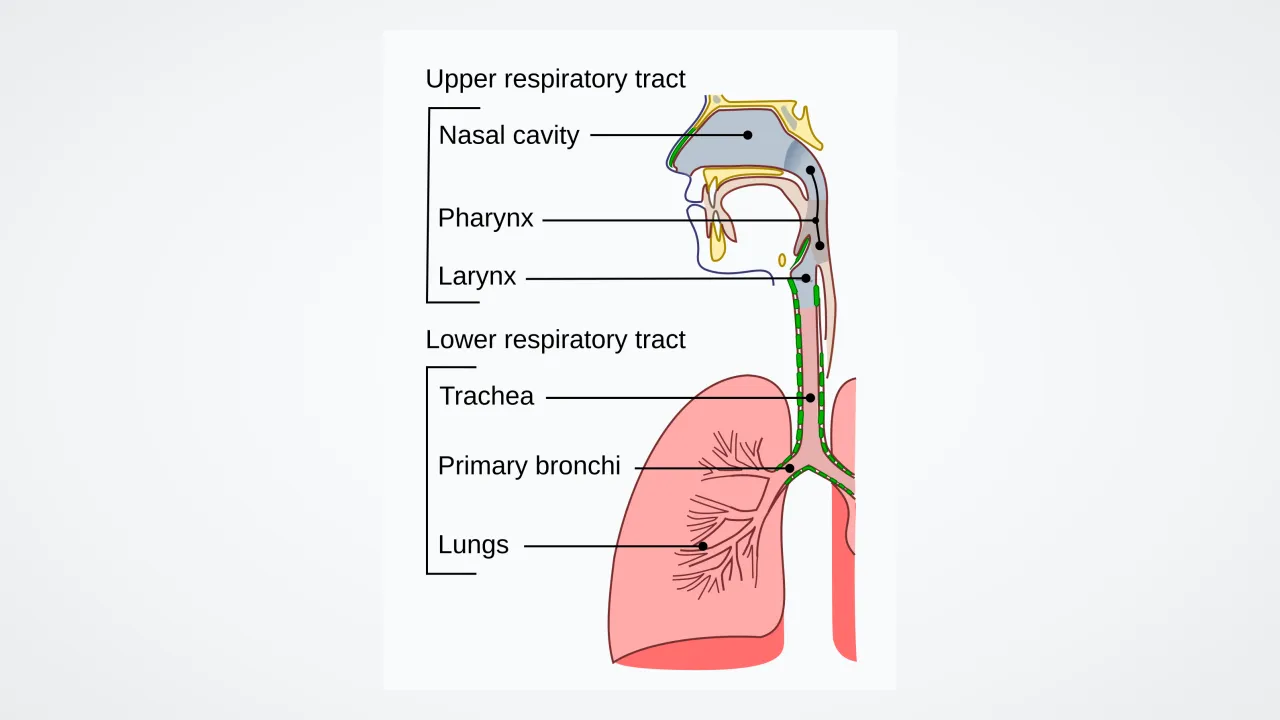
Imagine laughing while eating a cracker—suddenly, cough, cough! Inside your neck sit two important tubes. One tube carries food to your stomach, and your windpipe carries air to your lungs. A tiny flap called the guards the windpipe.
2
Sounding the Throat Alarm
While a sneeze clears your nose, a cough protects your lower throat and lungs. If smoke, dust, extra , or a stray crumb slips past the flap, sensitive nerves in your windpipe alert your brain right away.
3
A Fast Gust Upward
Your lungs pull in air, your shut tight for a moment, and your belly muscles squeeze! When the cords snap open, air blasts upward at 50 miles per hour to sweep your windpipe clean.
1. What job does the epiglottis perform when you swallow food?
2. Which area does a cough clean out compared to a sneeze?
🤯 Mind-Blowing Fact • Grade 3
Unlike sneezing, coughing can be both an automatic brainstem reflex and a voluntary action directed by the thinking part of your brain!
✨ Word Sparks (Grade 3 Glossary)
Tap 🔊 to hear
trachea
Ringed windpipe carrying air toward your lungs
bronchi
Main breathing tubes branching into each lung
vagus nerve
Long nerve linking lungs and organs to brain
🪝
How does your windpipe squeeze narrower during a cough to make air move even faster?
1
Sensors Along the Bronchial Tree
Picture blowing through a wide paper tube versus a narrow straw—air shoots out of the narrow straw much faster! Deep inside your chest, your branches into smaller tubes called . Special touch and chemical sensors line these passages like watchful security guards.
2
Riding the Vagus Nerve
When cold air, campfire smoke, thick phlegm, or a crumb touches those airway sensors, an electrical alert races up the to your brainstem's cough center. Unlike sneezing, you can also cough on purpose whenever you choose to clear your throat!
3
Three Steps of a Cough
Doctors call coughing tussis, and it unfolds in three quick steps. First, you inhale deeply to fill your lungs. Second, your epiglottis and vocal cords slam shut while chest and belly muscles compress the trapped air.
4
The Garden-Hose Nozzle Trick
Third, your vocal cords burst open while the back wall of your squeezes inward. Just like putting your thumb partly over a garden hose, narrowing the windpipe speeds up the rushing air to scrub away sticky mucus!
1. Why does the back wall of your trachea squeeze narrower during a cough?
2. Which major nerve carries cough alerts from your airways to your brainstem?
🤯 Mind-Blowing Fact • Grade 4
During the brief compressive split-second before a strong cough bursts out, air pressure inside your chest can jump higher than the air pressure inside a car tire's gauge range—up to 300 mmHg!
✨ Word Sparks (Grade 4 Glossary)
Tap 🔊 to hear
mechanoreceptor
Nerve sensor that detects physical touch or movement
productive cough
Cough that clears mucus out of airways
medulla oblongata
Lower brainstem region controlling vital breathing reflexes
🪝
Why do doctors sometimes encourage a cough instead of stopping it right away?
1
Backup for the Mucociliary Escalator
Listen to the sharp bark of a cough on a chilly winter morning—what sounds annoying is actually a life-protecting engineering feat. Normally, microscopic cilia lining your trachea and bronchi sweep mucus upward toward the throat like a silent conveyor belt called the mucociliary escalator. When a respiratory infection floods airways with thick phlegm or a foreign particle threatens to block airflow, the cough reflex steps in as heavy-duty backup.
2
Mechanoreceptors and Chemoreceptors
Two specialized sensor teams patrol your larynx, trachea, and bronchial forks. Rapidly adapting detect physical touch, dust, or fluid drops, while chemoreceptors respond to irritating fumes, acid, or inflammatory chemicals. Both send impulses along sensory fibers of the vagus nerve to the nucleus tractus solitarius in the .
3
Inspiratory, Compressive, and Expulsive Phases
During the inspiratory phase, you inhale up to several liters of air. Next comes a 0.2-second compressive phase: the glottis seals while expiratory muscles squeeze the rib cage, driving chest pressure up to 300 millimeters of mercury! Finally, the glottis snaps open for the expulsive phase, collapsing the flexible rear tracheal membrane so air shears mucus off bronchial walls.
4
Dry Coughs Versus Productive Coughs
Clinicians distinguish between dry coughs caused by viral irritation and that clear germ-laden phlegm. Because productive coughs keep delicate lung alveoli open for oxygen exchange, doctors often soothe throat irritation with honey and warm fluids rather than silencing helpful airway clearance.
1. Why is a 'productive cough' often helpful during a chest cold?
2. How long does the high-pressure compressive phase of a cough typically last?
🤯 Mind-Blowing Fact • Grade 5
Dynamic compression during a forceful cough temporarily narrows your windpipe's open area by up to 80 percent, multiplying air velocity fivefold to peel thick mucus off bronchial walls!
✨ Word Sparks (Grade 5 Glossary)
Tap 🔊 to hear
carina
Sensitive ridge where trachea splits into bronchi
aspiration
Accidental entry of food or liquid into airways
dynamic compression
Temporary airway narrowing that boosts cough airspeed
🪝
How can touching a tiny spot inside your outer ear canal mysteriously trigger a full-blown cough in your chest?
1
Guardian of Gas-Exchange Architecture
At the bottom of your respiratory tract lie roughly 300 to 480 million paper-thin air sacs called alveoli, whose combined surface area rivals a tennis court. Keeping particles, aspirated liquids, and excess secretions away from those fragile membranes is a matter of survival. Whenever everyday mucociliary transport becomes overwhelmed, the mammalian body deploys tussis—a precisely timed neuromuscular reflex capable of generating hurricane-force shear stress inside the central airways.
2
Vagal Afferents and Arnold's Ear-Cough Quirk
The cough arc begins at cough receptors concentrated in the larynx, vocal folds, tracheal , and large bronchial bifurcations. Myelinated A-delta fibers react instantaneously to mechanical touch or liquid , whereas unmyelinated C-fibers carrying TRPV1 and TRPA1 ion channels detect chemical irritants and inflammatory mediators. Both converge via the vagus nerve (cranial nerve X) onto the brainstem's nucleus tractus solitarius. Remarkably, in about 2 to 4 percent of people, stimulating the external ear canal activates Arnold's nerve—an auricular branch of the vagus nerve—fooling the medulla into launching an immediate reflex cough!
3
Dynamic Compression and Shear Physics
Coordinated motor signals descend through the phrenic, intercostal, and recurrent laryngeal nerves. After deep inhalation expands lung volume, the glottis adducts tightly for approximately 200 milliseconds as abdominal and internal intercostal muscles drive intrathoracic pressures up to 300 mmHg. Upon sudden glottic opening, collapses the non-cartilaginous trachealis muscle inward, shrinking cross-sectional area by up to 80 percent and accelerating linear air velocity enough to strip viscoelastic mucus from airway walls.
4
Dual Cortical and Brainstem Control
Functional brain imaging reveals why tussis bridges involuntary and conscious realms: while medullary circuits execute emergency defense even under light sleep, cerebral cortex pathways allow humans to initiate or temporarily suppress a cough in a quiet concert hall.
5
Acoustic Diagnostics in Modern Medicine
Physicians since ancient Greece have listened closely to cough acoustics—distinguishing the seal-like bark of croup in a swollen larynx from the wheezing cough of narrowed bronchioles—and modern bioengineers now train smartphone sound analyzers to screen respiratory conditions noninvasively.