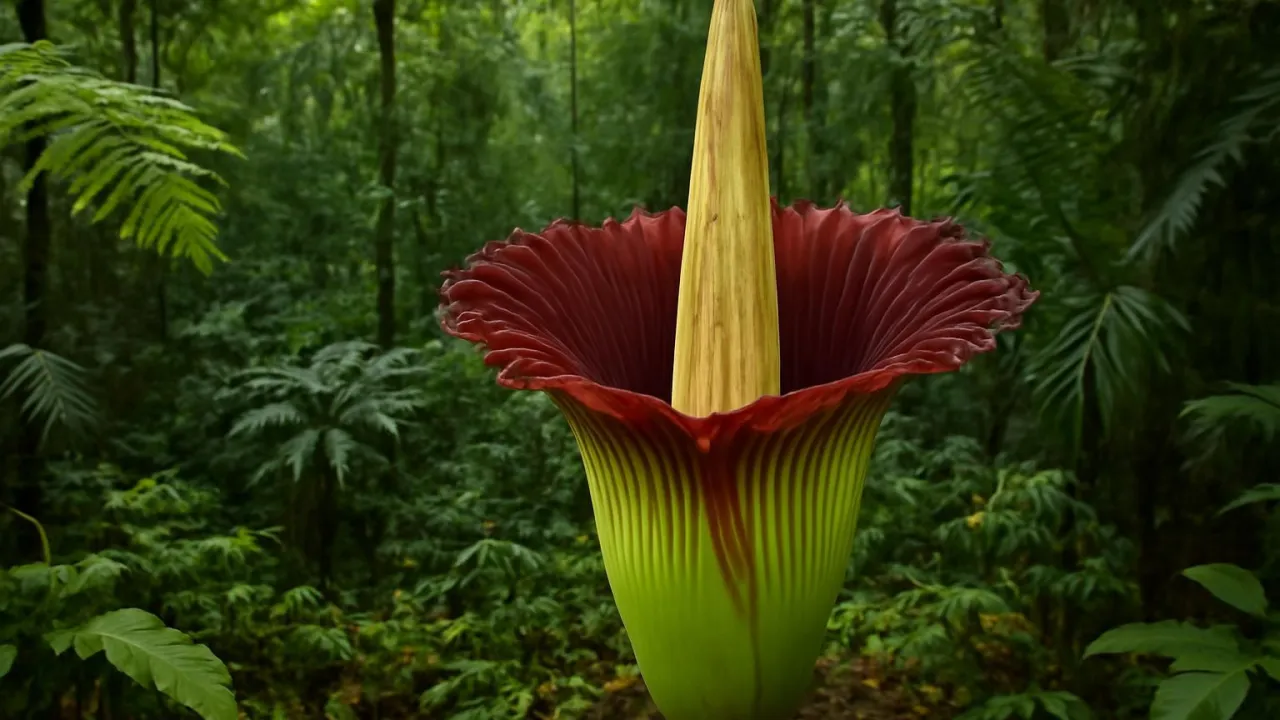
The corpse flower’s bloom can last only 24 to 48 hours before it closes again.
✨ Word Sparks (Grade 2 Glossary)
Tap 🔊 to hear
bloom
When a flower opens to show its petals.
nutrients
Food that plants get from soil to grow.
insects
Small animals like bugs that help flowers.
🪝
Have you ever smelled a flower that smells like rotten meat?
1
A Giant Flower with a Stinky Smell
The corpse flower grows very tall and smells like rotten meat to attract bugs. It only once every few years and stays open for a short time. This strong smell helps find the flower to help it make seeds.
2
Where It Lives and Grows
This flower lives in the tropical rainforests of Sumatra, Indonesia, where it is warm and wet. It grows in shady places under big trees and needs rich soil to get . The flower likes moisture and shade to grow healthy and strong.
3
What It Looks Like
The corpse flower has big red and green petals that open wide to show its inside. It can grow as tall as a small tree, sometimes reaching ten feet high. When it , it looks very strange and different from other flowers.
The corpse flower’s spadix can heat up to 98°F (37°C) to spread its smell farther.
✨ Word Sparks (Grade 3 Glossary)
Tap 🔊 to hear
pollination
When pollen moves to make new seeds.
adaptation
A change that helps plants survive better.
tuber
A thick root that stores food for plants.
🪝
Did you know the corpse flower uses a stinky smell to trick insects?
1
The Smelly Bloom
The corpse flower produces a strong odor like rotting flesh to attract pollinators. This smell tricks insects such as carrion beetles and flies to visit the flower. These insects help with by moving pollen from one flower to another. The flower blooms rarely and only for a short time to maximize this effect.
2
Where It Lives and Grows
Native to the tropical rainforests of Sumatra, Indonesia, the corpse flower grows in shaded, humid environments. It depends on rich soil full of nutrients to support its large size. The plant’s large underground stores energy for its rare blooming cycle. This helps it survive long periods without blooming.
3
Physical Features and Adaptations
The corpse flower can reach heights of up to ten feet, making it one of the largest flowers in the world. Its tall spadix heats up to release the strong odor more effectively. The large red and green spathe petals open wide to expose the spadix and attract insects visually. This combination of heat and smell is a unique for survival.
4
Life Cycle and Survival
The corpse flower’s life cycle includes long periods of growth underground before blooming. It stores nutrients in its to fuel the bloom, which lasts only 24 to 48 hours. After blooming, the flower produces fruit that contains seeds for new plants. This cycle ensures the species continues despite its rare flowering.
2. Why does the corpse flower store nutrients in a tuber?
🤯 Mind-Blowing Fact • Grade 4
The corpse flower’s bloom can weigh up to 24 pounds (11 kilograms), making it one of the heaviest flowers on Earth.
✨ Word Sparks (Grade 4 Glossary)
Tap 🔊 to hear
symbiotic
When two living things help each other.
pollinator
An animal that helps flowers make seeds.
conservation
Protecting plants and animals from harm.
🪝
How does a flower that smells like death help its rainforest home?
1
The Corpse Flower’s Unique Smell and Bloom
The corpse flower emits a strong odor resembling rotting flesh to attract such as carrion beetles and flies. This smell, combined with the flower’s heat, increases the chance of pollination by mimicking dead animals. The flower blooms very rarely, sometimes taking years to produce a single bloom, which lasts only one or two days. This rare blooming event draws many visitors to observe its unusual appearance.
2
Role in the Rainforest Ecosystem
By attracting specific insects, the corpse flower plays a vital role in its ecosystem’s food web and pollination network. These insects rely on the flower’s scent to find places to lay eggs or feed, while the flower depends on them to transfer pollen. This relationship helps maintain biodiversity in the tropical rainforest and supports many other species. The flower’s presence benefits the entire ecosystem.
3
Geographic Distribution and Conservation
Native only to Sumatra’s tropical rainforests, the corpse flower faces threats from habitat loss due to logging and agriculture. efforts focus on protecting its natural habitat and educating the public about its ecological importance. Botanical gardens worldwide also grow corpse flowers to help preserve the species and raise awareness. These efforts are crucial to prevent extinction.
4
Physical Adaptations for Survival
The corpse flower’s large spadix heats up to nearly human body temperature, which helps spread its smell farther in the humid rainforest air. Its enormous size and striking red and green colors visually attract from a distance. These adaptations increase the flower’s chances of successful reproduction in a competitive environment where many plants vie for pollinators. Its unique features make it a remarkable example of evolution.
2. What is one reason the corpse flower needs conservation?
🤯 Mind-Blowing Fact • Grade 5
The corpse flower’s bloom can heat up to nearly 98°F, matching human body temperature to spread its smell.
✨ Word Sparks (Grade 5 Glossary)
Tap 🔊 to hear
thermogenesis
When a plant makes heat to spread its smell.
putrescine
A chemical that smells like rotten flesh.
inflorescence
A group of flowers that bloom together.
🪝
What makes the corpse flower one of the most fascinating and rare plants on Earth?
1
Scientific Classification and Discovery
The corpse flower, scientifically named Amorphophallus titanum, belongs to the Araceae family, known for unique flowering structures. Discovered in the early 1870s in Sumatra, this species has fascinated botanists due to its enormous size and unusual odor. Its genus name means 'shapeless phallus,' reflecting the flower’s distinctive shape. The plant’s reproductive strategy is highly specialized among flowering plants.
2
Physiological Mechanics of Blooming and Smell
The corpse flower’s bloom involves , where the spadix heats up to nearly 37 degrees Celsius to volatilize odor compounds. This heating intensifies the scent of and cadaverine, chemicals that mimic decaying flesh to attract carrion insects. The flower’s large spathe acts as a visual and olfactory beacon, while the heat helps disperse the scent through the dense rainforest. This mechanism ensures effective pollinator attraction during its brief bloom.
3
Ecological Role and Conservation Challenges
Ecologically, the corpse flower supports rainforest biodiversity by providing a rare food source for specific carrion insects, contributing to pollination networks. However, habitat destruction from deforestation and agricultural expansion threatens its survival in the wild. Conservation efforts include habitat protection, seed banking, and cultivation in botanical gardens worldwide to preserve genetic diversity. Public education about its ecological importance also aids conservation.
4
Botanical History and Cultivation
Since its discovery, the corpse flower has been cultivated in botanical gardens, where it attracts large public interest due to its rare and dramatic bloom. Cultivation requires mimicking its natural tropical environment, including humidity, shade, and nutrient-rich soil. The plant’s long life cycle and infrequent blooming make successful cultivation challenging but rewarding for researchers and enthusiasts. Its blooming events are often celebrated worldwide.
5
Quantitative Comparisons and Unique Traits
The corpse flower can reach heights up to 10 feet and weigh as much as 24 pounds during bloom, making it one of the largest flowers globally. Its spadix temperature can rise to nearly human body temperature, around 98 degrees Fahrenheit, to disperse its odor effectively. Bloom duration is brief, lasting only 24 to 48 hours, which contrasts with many flowers that bloom for weeks. These unique traits highlight its specialized evolutionary adaptations.