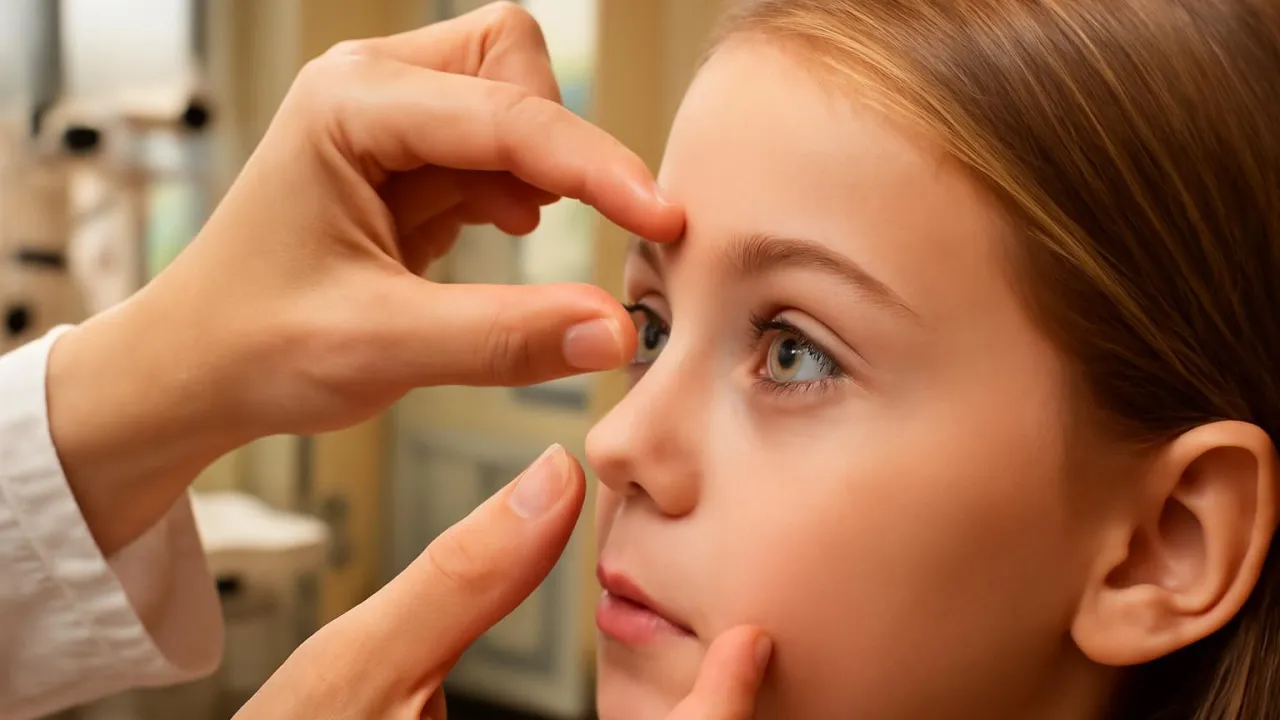
The first contact lenses covered the whole front of the eye!
✨ Word Sparks (Grade 2 Glossary)
Tap 🔊 to hear
focus
To make something clear to see
plastic
A bendy material used in many things
inventor
A person who creates something new
🪝
Have you ever wondered how people see without glasses?
1
Invisible Glasses
Contact lenses are tiny, clear disks that sit right on your eyes. They help people see clearly, just like glasses do. Many people like contact lenses because you cannot see them. Some even come in fun colors!
2
How Do They Work?
Contact lenses bend light so it on the right spot in your eye. They are made from soft or special hard materials. People take them out at night and clean them carefully. Some people wear them all day long.
3
Who Invented Them?
Long ago, in Europe dreamed up the first contact lenses. The first real ones were made of glass in the 1880s. Today, most are soft and safe for kids and adults. They help millions see the world every day.
Some modern contact lenses can even help treat eye diseases and deliver medicine!
✨ Word Sparks (Grade 3 Glossary)
Tap 🔊 to hear
cornea
The clear front part of your eye
refraction
Bending light to help you see
astigmatism
A vision problem caused by an uneven eye shape
🪝
Imagine placing a clear, soft circle on your eye—how could that help you see?
1
A New Way to See
Contact lenses are thin, curved lenses that rest directly on the of your eye. They are almost invisible and can be soft or hard. Many people choose contact lenses because they correct vision without changing how your face looks. Some even use colored lenses to change their eye color for fun.
2
How Do Contact Lenses Work?
Contact lenses work by bending light so it focuses properly on the retina. This process is called , and it helps people see clearly if their eyes cannot do it alone. The lens must match the shape of your eye to fit comfortably and work well. Some lenses are designed for special vision problems like .
3
From Glass to Soft Plastic
The first contact lenses were invented in the 1880s and made from blown glass. Early lenses were large and covered the whole front of the eye, which could be uncomfortable. In the 20th century, inventors created smaller, lighter lenses from plastic. Today, most contact lenses are soft, flexible, and easy to wear for many hours.
4
Millions See the World
Contact lenses are used by people all over the world. They are especially helpful for athletes and performers who do not want glasses. Eye doctors carefully measure your eyes and teach you how to use and clean your lenses. With the right care, contact lenses can make blurry vision sharp and clear every day.
1. What part of the eye do contact lenses rest on?
2. Why do some people prefer contacts over glasses?
🤯 Mind-Blowing Fact • Grade 4
Some contact lenses now contain tiny electronics to monitor eye health or blood sugar levels!
✨ Word Sparks (Grade 4 Glossary)
Tap 🔊 to hear
optical
Related to light and seeing
retina
The part of your eye that senses light
hygiene
Keeping things clean and healthy
🪝
What if you could sharpen your vision using a nearly invisible, flexible disk on your eye?
1
A Revolution in Vision Correction
Contact lenses are thin, curved devices that rest directly on the cornea, correcting vision by altering the path of light entering the eye. They offer a nearly invisible alternative to traditional eyeglasses, allowing people to see clearly without changing their appearance. Some contact lenses are even designed to change the color of your eyes or filter out harmful sunlight. Millions of people around the world rely on contact lenses every day for work, sports, and daily life.
2
The Science Behind the Lens
Contact lenses correct vision by using refraction, which is the bending of light as it passes through different materials. The curved surface of the lens is carefully shaped to focus light precisely onto the , creating a sharp image. Lenses must match the unique shape and size of each person's cornea to ensure comfort and clear vision. There are special lenses for conditions like astigmatism, which occurs when the cornea is not perfectly round.
3
Inventors and Evolution
The idea for contact lenses was first imagined by Leonardo da Vinci in the 1500s, but the first practical glass lenses were made in the 1880s by F. E. Muller and Adolf Fick. Early lenses were large, covered the entire eye, and could only be worn for a short time. In the 20th century, inventors developed smaller, lighter plastic lenses that were much more comfortable. Today, most lenses are soft and flexible, made from advanced materials that allow oxygen to reach the eye.
4
Changing Lives Across the Globe
Contact lenses have transformed vision care for people of all ages and backgrounds. They are especially popular with athletes, performers, and anyone who wants to avoid the look or feel of glasses. Eye doctors use precise measurements and advanced tools to fit contact lenses safely. With proper care and , contact lenses can provide clear, comfortable vision and even help treat certain eye diseases.
The thinnest soft contact lenses are less than 0.1 millimeters thick—thinner than a human hair!
✨ Word Sparks (Grade 5 Glossary)
Tap 🔊 to hear
hydrophilic
Attracts and holds water easily
corneal topography
A map of the eye’s curved surface
presbyopia
Trouble seeing things up close as you age
🪝
Can a transparent disk smaller than a dime truly transform blurry vision into crisp clarity?
1
The Optical Engineering of Contact Lenses
Contact lenses are meticulously engineered optical devices designed to rest on the tear film covering the cornea, offering precise vision correction by altering the trajectory of incoming light. Each lens is crafted with a specific curvature and thickness, calculated to refract light so it focuses sharply on the retina. This process counters common vision problems such as myopia (nearsightedness), hyperopia (farsightedness), and astigmatism, all of which result from irregularities in the eye’s shape. Modern lenses are manufactured using advanced polymers that allow oxygen to permeate, keeping eyes healthy during extended wear. The science behind their function involves both geometric optics and material chemistry.
2
From Da Vinci’s Sketches to High-Tech Lenses
The concept of contact lenses dates back to Leonardo da Vinci’s 1508 sketches, which imagined altering vision by placing water-filled glass bowls over the eyes. The first wearable glass contact lens was produced in 1887 by German glassblower F. E. Muller, and soon after, ophthalmologist Adolf Fick developed the first prototype for medical use. Early glass lenses were large, covering the entire visible eye and restricting oxygen flow, so they could only be worn briefly. The invention of lightweight plastic lenses in the 1940s by Kevin Tuohy marked a turning point, leading to the development of comfortable, cornea-sized lenses. Today, computer-aided design and precision lathes create lenses tailored to each individual’s unique eye shape.
3
How Contact Lenses Work: Light, Shape, and Fit
Contact lenses correct vision by refraction, bending light rays to compensate for the eye’s focusing errors. The lens’s front and back surfaces are mathematically calculated to match the wearer’s prescription, ensuring the image lands exactly on the retina. Rigid gas-permeable (RGP) lenses maintain their shape and provide excellent vision for people with astigmatism or irregular corneas. Soft lenses, made from hydrogel or silicone hydrogel, conform to the eye’s surface and are generally easier to adapt to. Proper fit is crucial; even tiny mismatches can cause discomfort or blurry vision.
4
Global Impact and Specialized Innovations
Contact lenses have revolutionized vision care for over 150 million people worldwide, offering freedom from glasses and enabling participation in sports, performing arts, and many professions. Advanced lenses now include multifocal designs for , UV protection, and even therapeutic uses for corneal diseases. Some experimental lenses incorporate microelectronics to monitor eye pressure or glucose levels, opening new possibilities for medical care. The global contact lens market continues to grow, driven by ongoing innovations in materials, design, and eye health monitoring.
5
Care, Safety, and the Future
Safe contact lens use requires meticulous hygiene, including daily cleaning, correct handling, and regular replacement to prevent infections. Eye care professionals use and digital imaging to ensure optimal fit and vision correction. Research continues into smart lenses capable of drug delivery or real-time health tracking, pointing toward a future where contact lenses do far more than correct vision. As technology advances, these tiny optical marvels will remain at the forefront of both science and daily life, helping people see the world in new ways.