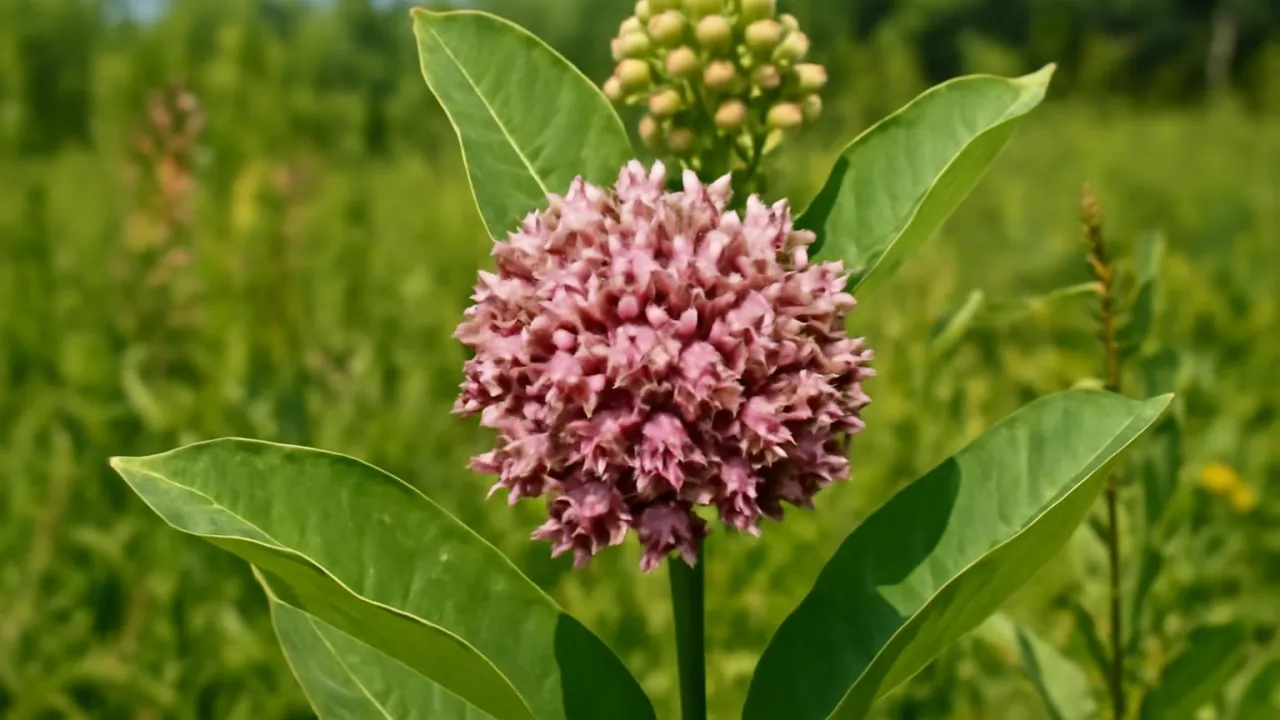
Milkweed is the only plant monarch caterpillars eat to grow strong.
✨ Word Sparks (Grade 2 Glossary)
Tap 🔊 to hear
cluster
A group of things close together
caterpillar
A baby butterfly that eats leaves
nutrients
Food parts that help plants or animals grow
🪝
Have you seen flowers that help butterflies grow strong?
1
Pink Flowers and Sweet Smell
Common milkweed has of pink flowers that smell very sweet. These flowers bloom in summer and attract many insects. The scent helps butterflies find the plant easily.
2
Tall Plant with Big Leaves
This plant grows tall, often reaching five feet high. Its large green leaves grow on thick stems. The leaves provide food for butterfly to eat.
3
Butterflies Use Milkweed
Monarch butterflies lay their eggs on milkweed leaves. When the eggs hatch, eat the leaves to get . Without milkweed, monarchs cannot grow well.
Milkweed’s toxins protect monarch caterpillars from being eaten by birds.
✨ Word Sparks (Grade 3 Glossary)
Tap 🔊 to hear
pollination
When insects help flowers make seeds
adaptation
A change that helps plants or animals survive
ecosystem
A community of living things and their home
🪝
Did you know milkweed plants help monarch butterflies survive?
1
Milkweed’s Pink Flowers Attract Pollinators
Common milkweed produces clusters of pink flowers that attract many pollinators. These flowers use bright colors and sweet scents to lure insects. helps the plant make seeds for new plants to grow.
2
Large Leaves Provide Food and Shelter
The plant’s large green leaves serve as food for monarch caterpillars. These leaves contain toxins that protect the caterpillars from predators. This helps caterpillars survive until they become butterflies.
3
Milkweed’s Role in the Ecosystem
Milkweed supports many insects, including bees and butterflies, in its habitat. It plays an important role in the food web by providing nectar and leaves. Without milkweed, monarch butterfly populations would decline.
4
How Milkweed Grows and Spreads
Milkweed grows best in sunny fields and roadsides with well-drained soil. It spreads by releasing seeds attached to silky hairs that float in the wind. This method helps milkweed colonize new areas effectively.
1. Why do monarch caterpillars eat milkweed leaves?
2. How does milkweed spread its seeds?
🤯 Mind-Blowing Fact • Grade 4
Milkweed toxins protect monarch caterpillars, helping butterflies survive and thrive.
✨ Word Sparks (Grade 4 Glossary)
Tap 🔊 to hear
pollinator
An insect that helps flowers make seeds
toxin
A poison that helps protect plants or animals
food web
How plants and animals eat and live together
🪝
How does common milkweed help butterflies and nature work together?
1
Milkweed’s Flowers and Pollination Process
Common milkweed produces sweet-smelling pink flowers that attract many like bees and butterflies. These insects transfer pollen from flower to flower, causing pollination, which helps the plant reproduce. Without pollinators, milkweed could not produce seeds to grow new plants. This relationship shows how plants and insects depend on each other to survive.
2
Milkweed’s Leaves Protect Monarch Caterpillars
The large green leaves of milkweed contain that monarch caterpillars can eat safely. These toxins make the caterpillars taste bad to predators, which helps protect them from birds and other animals. This cause-and-effect relationship supports monarch butterfly survival and helps keep their populations stable.
3
Role in the Food Web and Ecosystem
Milkweed is an important part of many ecosystems across North America. It provides nectar for and food for caterpillars, supporting a complex . Humans also benefit from milkweed fibers, which have been used to make textiles and insulation. The plant’s presence helps maintain biodiversity and healthy habitats.
4
Where Milkweed Grows and Spreads
Milkweed grows mostly in sunny fields, roadsides, and open areas with well-drained soil. Its seeds have silky hairs that allow them to travel long distances by wind, helping the plant colonize new habitats. This wide distribution helps maintain healthy ecosystems and supports many species of insects and animals.
1. What happens when pollinators visit milkweed flowers?
2. How do milkweed toxins help monarch caterpillars?
🤯 Mind-Blowing Fact • Grade 5
Monarch caterpillars store milkweed toxins, making themselves poisonous to predators.
✨ Word Sparks (Grade 5 Glossary)
Tap 🔊 to hear
cardiac glycosides
Plant toxins that protect from animals eating them
mutualistic
A helpful relationship between two living things
coma
Silky hairs on seeds that help them float in wind
🪝
What makes common milkweed vital for monarch butterflies and ecosystems?
1
Scientific Classification and Botanical Features
Common milkweed, scientifically named Asclepias syriaca, belongs to the Apocynaceae family. It is a perennial herbaceous plant native to North America. The plant typically grows between three and five feet tall and produces clusters of fragrant pink to purplish flowers. These flowers have a complex structure adapted for specialized pollination by insects.
2
Physiological Adaptations and Defense Mechanisms
Milkweed produces a milky latex sap containing , which are toxic compounds that deter most herbivores. Monarch butterfly caterpillars have evolved to tolerate these toxins and sequester them, making themselves poisonous to predators. This physiological adaptation creates a relationship between milkweed and monarchs.
3
Ecological Role and Conservation Importance
Milkweed plays a crucial role in supporting monarch butterfly populations by serving as their exclusive larval host plant. It also provides nectar for various pollinators, contributing to biodiversity. Due to habitat loss and pesticide use, milkweed populations have declined, prompting conservation efforts to restore native milkweed habitats.
4
Seed Dispersal and Geographic Distribution
The plant produces seeds attached to silky, floss-like hairs called , which allow wind dispersal over long distances. Common milkweed is widely distributed across much of the eastern and central United States and parts of Canada. Its ability to colonize disturbed soils helps maintain its presence in diverse ecosystems.
5
Quantitative Comparisons and Botanical History
Common milkweed stems can grow up to five feet tall, with individual flower clusters containing dozens of flowers. The plant blooms from June to August, thriving in temperatures between 60 and 85 degrees Fahrenheit. Historically, indigenous peoples used milkweed fibers for textiles, and modern research explores its potential for sustainable materials.