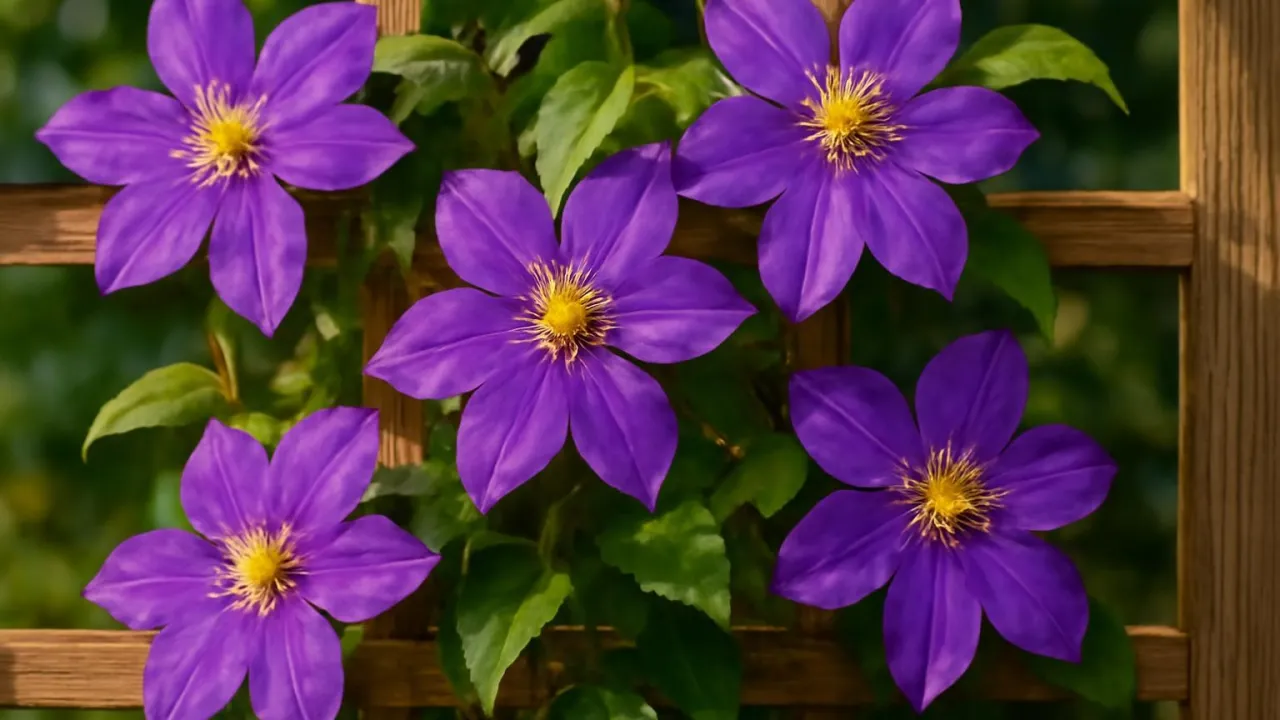
Clematis climbs by twining its leaf stems tightly around supports to reach sunlight.
✨ Word Sparks (Grade 2 Glossary)
Tap 🔊 to hear
pollinate
Help flowers make seeds by moving pollen
stem
The part that holds up leaves and flowers
temperate
A place with mild weather, not too hot or cold
🪝
Have you ever seen a flower climb up a fence or wall?
1
Bright and Colorful Flowers
Clematis flowers bloom in many bright colors like purple and pink. They attract bees and butterflies to help them. These flowers can grow large and star-shaped in gardens.
2
How Clematis Climbs
This plant climbs by wrapping its leaf around fences or other plants. It can grow very tall, reaching up to 20 feet in height. Clematis uses this climbing to get more sunlight for better growth.
3
Where Clematis Grows
Clematis grows best in places with full sun and good water. It is found in regions around the world. Gardeners often plant it in spring for colorful summer blooms.
Clematis leaf stems twist tightly around supports, acting like natural climbing ropes.
✨ Word Sparks (Grade 3 Glossary)
Tap 🔊 to hear
pollination
When pollen moves to help flowers make seeds
adaptation
A change that helps a plant survive better
predator
An animal that hunts other animals for food
🪝
Did you know clematis uses its leaf stems to climb like tiny ropes?
1
Bright Flowers and Pollination
Clematis produces large, colorful flowers that attract pollinators like bees and butterflies. helps the plant make seeds for new growth. The star-shaped flowers come in purple, pink, white, and blue hues.
2
Climbing Adaptations
Clematis climbs by twining its leaf stems around supports, which helps it reach sunlight. This climbing protects it from on the ground. The plant’s flexible stems allow it to grip fences and trees tightly.
3
Growth and Habitat
Clematis grows in temperate regions where it receives full sun and moderate water. It thrives in well-drained soil and blooms mostly in spring and summer. Its climbing habit allows it to compete for light in crowded habitats.
4
Survival and Ecosystem Role
By climbing high, clematis avoids shade and gains better access to pollinators. It also provides shelter for insects and birds. This plant plays a role in garden food webs by supporting pollinators and small animals.
Clematis’s climbing ability lets it compete for sunlight and supports many pollinators in ecosystems.
✨ Word Sparks (Grade 4 Glossary)
Tap 🔊 to hear
symbiosis
A close relationship where two living things help each other
biodiversity
Many different kinds of plants and animals living together
invasive
A plant that spreads and harms other plants
🪝
How does clematis’s climbing ability affect its role in gardens and nature?
1
Climbing Mechanism and Growth
Clematis climbs by twining its leaf stems around fences or branches, which allows it to grow vertically and reach more sunlight. This climbing habit helps the plant avoid ground-level shade and competition from other plants. The flexible stems can twist tightly, providing a strong grip on supports.
2
Ecosystem Roles and Food Webs
By growing high, clematis flowers attract many pollinators such as bees and butterflies, which are essential for pollination and seed production. The plant also provides shelter and food for small insects and birds, making it an important part of local food webs. Its presence supports in garden and wild habitats.
3
Geographic Distribution and Habitat
Clematis species are found mainly in temperate regions across North America, Europe, and Asia. They prefer well-drained soils with moderate moisture and full sun exposure. Gardeners cultivate clematis widely because of its attractive flowers and climbing ability, which enhances vertical garden spaces.
4
Human Impact and Cultivation
Humans have cultivated clematis for centuries, selecting varieties with larger and more colorful flowers. While generally beneficial, some species can become outside their native range, affecting local ecosystems. Proper garden management ensures clematis supports rather than harms native plants and wildlife.
1. Why is clematis’s climbing ability important in nature?
2. What can happen if clematis grows outside its native area?
🤯 Mind-Blowing Fact • Grade 5
Clematis climbs by coiling its leaf stems tightly, acting like natural grappling hooks to ascend tall supports.
✨ Word Sparks (Grade 5 Glossary)
Tap 🔊 to hear
petiole
The leaf stem that helps the plant climb
horticulture
The science of growing plants and gardens
mechanical stability
How a plant stays strong and steady climbing
🪝
What scientific features make clematis a fascinating climbing flowering plant worldwide?
1
Taxonomy and Scientific Classification
Clematis belongs to the Ranunculaceae family, encompassing over 300 species worldwide. The genus name Clematis comes from the Greek word for 'climbing plant.' These species vary widely in flower color, size, and climbing strategies adapted to different habitats.
2
Physiological Mechanics of Climbing
Clematis climbs by twining its , or leaf stems, around supports, which functions as a natural grappling hook. This physiological adaptation allows the plant to ascend vertical structures without producing tendrils or adhesive pads. The flexible stems can coil tightly, providing and efficient resource allocation.
3
Conservation and Botanical History
Historically, clematis has been cultivated since ancient times for ornamental use in gardens across Europe and Asia. Some species face threats from habitat loss and invasive species competition. Conservation efforts focus on preserving native clematis populations and promoting sustainable practices.
4
Quantitative Comparisons and Growth Rates
Clematis vines can grow up to 20 feet (6 meters) in a single growing season under optimal conditions. Flower sizes range from 1 to 6 inches (2.5 to 15 centimeters) across, depending on species. The plant thrives in temperatures between 50 and 75 degrees Fahrenheit (10 to 24 degrees Celsius), typical of temperate climates. Clematis requires moderate watering and well-drained soil to maintain healthy growth.
5
Ecological and Human Impact
Clematis plays a crucial role in temperate ecosystems by supporting pollinators and providing habitat for insects and birds. Its climbing habit enhances vertical plant diversity in gardens and natural areas. However, some non-native species can become invasive, requiring careful management to balance ecological benefits and risks. Gardeners must monitor growth to prevent unwanted spread.