Clara Barton
Founder of the American Red Cross
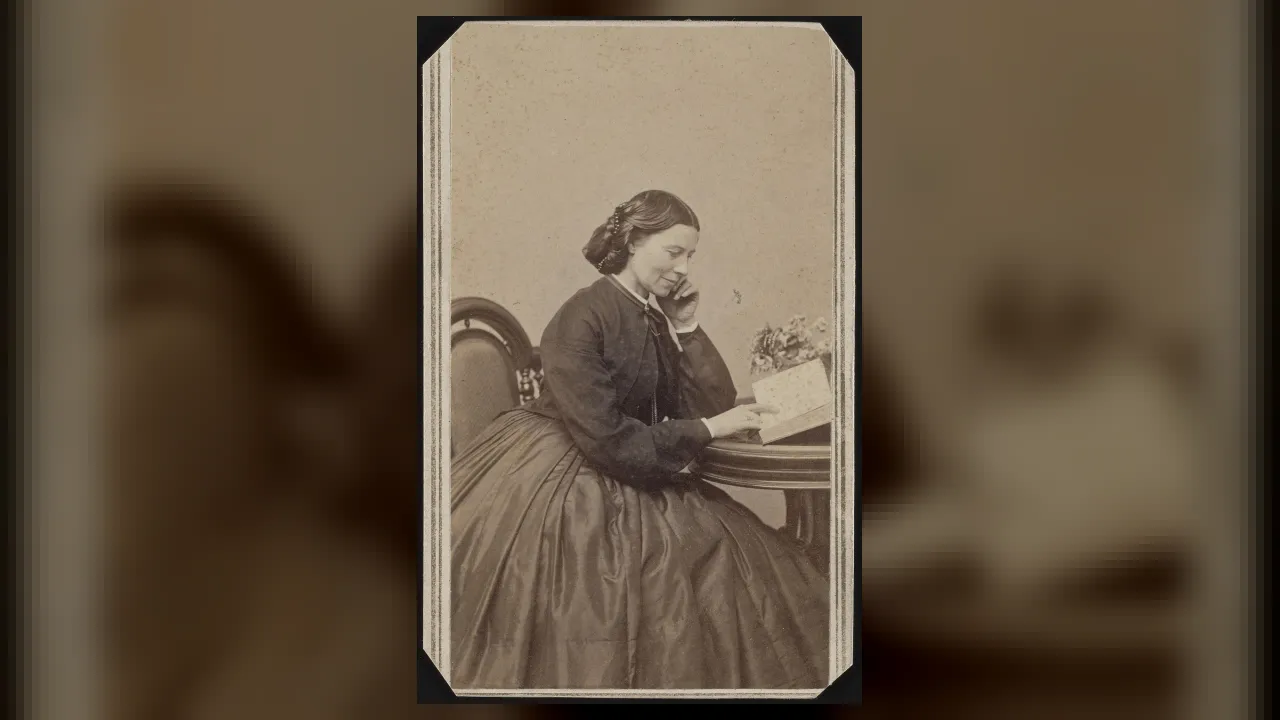
Before becoming a famous nurse, Clara Barton opened one of the very first free public schools in New Jersey!
Who rides a wagon through the dark night to bring warm soup and clean bandages?
1 A Shy Girl Helps Out
Young Clara was very shy at home. Yet when her brother got hurt, she cared for him day and night. Helping others made Clara feel brave.
2 The Angel Helper
During a big war, hurt soldiers needed care. Clara brought wagons of , , and warm food. Soldiers called her the Angel of the Battlefield.
3 The Red Cross
Later, Clara started the American Red Cross. Her team helped families after floods and storms. People still wear the Red Cross badge to help today!
1. What caring nickname did soldiers give Clara Barton?
2. Which helpful group did Clara Barton start in America?
Clara Barton's free public school in Bordentown, New Jersey, started with just six students on the first day and grew to six hundred within a year!
How did a quiet girl from Massachusetts grow up to lead rescue teams across the whole country?
1 Teacher and Clerk
Picture a crowded little schoolhouse in Bordentown, New Jersey, in 1852. Clara Barton saw many children wandering the streets because school cost money, so she offered to teach for free if the town provided a building! Soon six hundred students filled her classrooms, and later she worked at the Patent Office in Washington, D.C.
2 Wagons of Hope
When the Civil War began in 1861, hospitals ran short of blankets, bandages, and lanterns. Clara collected from citizens and drove mule wagons directly to field hospitals, earning the name 'Angel of the Battlefield.'
3 Starting the American Red Cross
While visiting Europe, Clara learned about the International Red Cross. In 1881, she founded the American Red Cross so could bring medicine, blankets, and clean water after floods, fires, and hurricanes.
1. What happened after Clara Barton opened a free public school in Bordentown, New Jersey?
2. Besides wartime care, what new mission did Clara Barton give the American Red Cross?
In 1996, repair workers inspecting an attic in Washington, D.C., discovered Clara Barton's long-lost 'Missing Soldiers Office' sign untouched behind wallpaper after more than a century!
What happens when field doctors run out of candles at midnight and a rumbling mule wagon suddenly arrives?
1 Finding Courage Through Service
Imagine the rumble of wooden wagon wheels rolling up to a dark Maryland farmhouse in September 1862. Inside, an exhausted doctor had only one tiny stub of candle left to treat wounded Civil War soldiers. Out stepped Clara Barton with crates of bright lanterns, clean linen bandages, and kettles of warm cornmeal gruel. Though painfully shy as a child in Massachusetts, Clara discovered fearless strength whenever someone needed care.
2 Finding Missing Soldiers
When the Civil War ended in 1865, thousands of families still did not know what had happened to their loved ones. With approval from President Abraham Lincoln, Clara opened the Office of Missing Soldiers in Washington, D.C. Her small team answered more than sixty thousand letters and helped identify over twenty-two thousand missing men.
3 Launching the American Red Cross
During a trip to Switzerland in 1869, Clara saw how the International Red Cross aided wounded people neutrally under a protective . Returning home, she campaigned for years until founding the American Red Cross on May 21, 1881.
4 The 'American Amendment' for Disasters
Clara convinced world leaders that the Red Cross should also respond to peacetime emergencies like forest fires, floods, and hurricanes. She led relief efforts herself well into her seventies, leaving a model of service that endures today.
1. Which president approved Clara Barton's plan to search for missing Civil War soldiers?
2. Where did Clara Barton first learn about the International Red Cross movement?
Clara Barton's Glen Echo, Maryland, home was built partly from lumber salvaged from Red Cross emergency shelters used after the 1889 Johnstown Flood and is now a National Historic Site!
How did one woman convince the United States to sign an international humanitarian treaty and reinvent disaster relief?
1 Breaking Barriers Before the War
Picture stacks of handwritten supply ledgers piled from floor to ceiling inside a third-floor Washington, D.C., boardinghouse in 1861. Long before the Civil War, Clarissa Harlowe Barton had already shown remarkable initiative—teaching in Massachusetts at age seventeen, founding a thriving free public school in Bordentown, New Jersey, and becoming one of the first women appointed as a full-salaried recording clerk in the U.S. Patent Office.
2 Frontline Logistics at Antietam and Virginia
Recognizing that military supply trains often lagged miles behind fast-moving armies, Barton organized independent citizen donations and secured army passes to reach front-line dressing stations across Maryland and Virginia, including Cedar Mountain, Second Manassas, Antietam, and Fredericksburg. Surgeon James Dunn praised her arrival at Antietam, writing that in his estimation General McClellan with all his laurels faded beside this true heroine of the age, the 'Angel of the Battlefield.'
3 The Geneva Treaty and Peacetime Relief
After directing the Office of Missing Soldiers from 1865 to 1868, Barton traveled to Europe for rest and witnessed the International Red Cross operating under the 1864 Geneva Convention. Back in America, U.S. officials worried foreign treaties might entangle the nation abroad. Barton skillfully reframed the argument: an American Red Cross would provide swift disaster aid during domestic floods, wildfires, and . Founded in May 1881, her organization responded within months to devastating Michigan forest fires, and the U.S. Senate ratified the Geneva Convention in March 1882.
4 From Johnstown to Galveston
Leading the American Red Cross for twenty-three years from her headquarters—later relocated to Glen Echo, Maryland, along the Potomac River—Barton directed major operations at the 1889 Johnstown Flood and, at age seventy-eight, the 1900 Galveston Hurricane.
1. How did Clara Barton persuade hesitant U.S. leaders to support the Red Cross and ratify the Geneva Convention?
2. At age seventy-eight, which major disaster relief effort did Clara Barton personally travel to lead in 1900?
Clara Barton's Glen Echo home in Maryland became the very first National Historic Site in the National Park System dedicated solely to honoring a woman's achievements!
How did an untrained volunteer revolutionize battlefield supply chains, missing-persons forensics, and international disaster relief?
1 Early Career in Public Education and Federal Service
Step inside Room 9 on the third floor of 437 Seventh Street NW in Washington, D.C., where wooden pigeonholes overflow with sixty-three thousand anxious letters from families across a reunited nation. Born on Christmas Day 1821 in North Oxford, Massachusetts, Clarissa Harlowe Barton blended organizational precision with deep empathy. In 1852, she persuaded civic leaders in Bordentown, New Jersey, to fund free public schooling, expanding enrollment from six pupils to six hundred in twelve months. Moving to Washington in 1854, she became one of the earliest female clerks in the U.S. Patent Office to earn a salary equal to her male peers.
2 Transforming Civil War Medical Logistics
Following the April 1861 Baltimore riot, when wounded Sixth Massachusetts Infantry soldiers arrived at the unfinished U.S. Capitol without basic provisions, Barton recognized a critical bottleneck: military medical departments lacked agile forward-supply networks. Soliciting bandages, surgical dressings, lanterns, and preserved foods through newspaper appeals, she secured rare passes in mid-1862. At Cedar Mountain, Chantilly, Antietam, Fredericksburg, and the Wilderness, she delivered wagonloads directly under artillery range, sterilizing instruments and lighting operating tents through the night.
3 The Missing Soldiers Office and Andersonville
In March 1865, carrying official endorsement from President Abraham Lincoln, Barton established the Office of Correspondence with the Friends of the Missing Men of the United States Army. Investing $15,000 of her own savings before Congress reimbursed expenses, she collaborated with former prisoner Dorence Atwater to travel to Andersonville, Georgia, where they identified and marked nearly 13,000 Union graves and published rolls resolving the fate of more than 22,000 soldiers.
4 Founding the American Red Cross and the 'American Amendment'
Introduced to the International Committee of the Red Cross in Geneva in 1869, Barton spent four years lobbying Presidents Rutherford B. Hayes, James A. Garfield, and Chester A. Arthur to abandon diplomatic isolation regarding the 1864 Geneva Convention. Founding the American Association of the Red Cross on May 21, 1881, she pioneered the 'American Amendment'—formally adopted internationally in 1884—which expanded Red Cross beyond armed conflict to include natural disasters, famines, and pestilence.
5 Enduring Institutional Legacy
For twenty-three years until 1904, Barton directed field operations from the Ohio and Mississippi River floods (1884) and the Johnstown Flood (1889)—where Red Cross crews housed 25,000 residents—to the Sea Islands Hurricane (1893) and Galveston Hurricane (1900). Her Glen Echo, Maryland, warehouse-home stands today as the first National Historic Site dedicated to the achievements of a woman.
1. With whom did Clara Barton travel to Andersonville, Georgia, in 1865 to identify and mark nearly 13,000 Union graves?
2. What did the 'American Amendment,' adopted internationally in 1884, add to the global Red Cross mission?