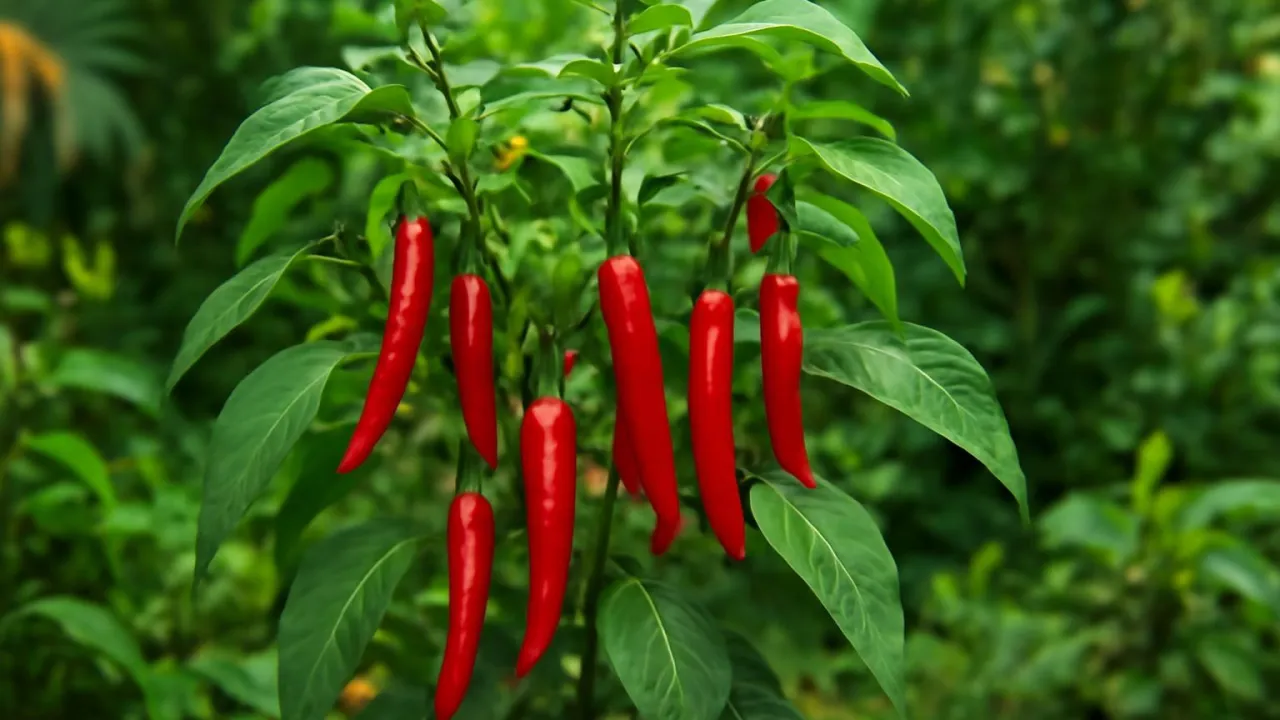
Cayenne peppers get their spicy heat from a special chemical called capsaicin!
✨ Word Sparks (Grade 2 Glossary)
Tap 🔊 to hear
capsaicin
A chemical that makes peppers spicy hot
ripe
When fruit is ready to eat or pick
tropical
Warm places near the Earth’s equator
🪝
Have you ever wondered why some peppers taste very spicy and hot?
1
Where They Grow
Cayenne peppers grow best in warm, sunny places with plenty of water. They come from Americas and like soil that drains well. Farmers plant them outside in gardens or fields during warm months.
2
How They Grow
These peppers start as small green fruits and turn bright red when . The plants grow about two to five feet tall and have green leaves that catch sunlight. The peppers hang down and look like tiny red fingers on the plant.
3
Spicy Feature
Cayenne peppers are very spicy because they have a chemical called . This makes your mouth feel hot and tingly when you eat them. People use cayenne to add heat to many dishes and sauces.
Birds can eat cayenne peppers without feeling the spicy heat from capsaicin!
✨ Word Sparks (Grade 3 Glossary)
Tap 🔊 to hear
capsaicin
A chemical that makes peppers feel hot
adaptation
A change that helps plants or animals survive
ripen
When fruit becomes ready to eat or pick
🪝
Did you know cayenne peppers use a chemical defense to protect themselves from animals?
1
Growing in Warm Places
Cayenne peppers grow well in tropical and subtropical climates where sunlight is strong. They need rich, well-drained soil to absorb nutrients and water easily. The plants can reach heights of about two to five feet tall, with many green leaves.
2
Ripening and Appearance
The peppers start green and slowly turn bright red as they , signaling they are ready to be picked. Their long, thin shape helps them hang from the plant without breaking. This shape also helps them dry quickly when harvested.
3
Capsaicin and Defense
Cayenne peppers produce , a chemical that causes a burning sensation to mammals but not birds. This helps protect the seeds by discouraging some animals from eating the fruit. Birds help spread the seeds by eating the peppers without feeling the heat.
4
Using Cayenne Peppers
People use cayenne peppers in cooking to add heat and flavor to dishes like soups, sauces, and stews. is also used in medicine for pain relief creams because it can reduce pain signals in nerves. Cayenne peppers play an important role in both food and health.
2. Which animals can eat cayenne peppers without feeling heat?
🤯 Mind-Blowing Fact • Grade 4
Cayenne peppers have a symbiotic relationship with birds that helps spread their seeds far and wide!
✨ Word Sparks (Grade 4 Glossary)
Tap 🔊 to hear
symbiotic
A helpful relationship between two living things
deterrent
Something that stops animals from doing things
cultivate
To grow plants for food or use
🪝
How does the cayenne pepper’s spicy chemical help it survive in nature’s food web?
1
Climate and Growth Needs
Cayenne peppers thrive in warm tropical and subtropical climates where sunlight is intense and soil drains well. These conditions allow the plants to grow healthy leaves and produce spicy fruits that mature from green to bright red. Without enough sun or water, the plants cannot develop their full heat or flavor.
2
Capsaicin’s Role in Defense
The chemical capsaicin in cayenne peppers serves as a defense mechanism by deterring mammals from eating the fruit, which protects the seeds inside. However, birds do not feel the heat and help spread the seeds by eating the peppers and flying to new locations. This relationship benefits both the plant and the birds.
3
Ecosystem Impact and Uses
Cayenne peppers contribute to food webs by providing spicy fruit that influences animal feeding behavior. Humans cayenne peppers widely for culinary uses, adding heat and flavor to many dishes worldwide. Additionally, capsaicin extracted from peppers is used in medicine and pest , showing how humans benefit from this plant’s unique traits.
4
Geographic Distribution
Originally native to tropical regions of the Americas, cayenne peppers are now grown globally in warm climates. They are commonly cultivated in Asia, Africa, and parts of the United States, especially in southern states. Their ability to adapt to various warm environments has made them a popular agricultural crop.
2. Why does capsaicin stop some animals from eating cayenne peppers?
🤯 Mind-Blowing Fact • Grade 5
Cayenne peppers can reach up to 50,000 Scoville Heat Units, much hotter than many common peppers!
✨ Word Sparks (Grade 5 Glossary)
Tap 🔊 to hear
Scoville Heat Units
A scale that measures pepper spiciness
placental tissue
Part inside pepper where seeds and heat form
dispersal
The spreading of seeds to new places
🪝
What scientific secrets make cayenne peppers one of the hottest and most useful plants in the world?
1
Taxonomy and Botanical Identity
Cayenne pepper belongs to the species Capsicum annuum, a member of the Solanaceae family, which includes tomatoes and potatoes. Botanically, cayenne peppers are fruits because they develop from the flower’s ovary and contain seeds. Despite being called a vegetable in cooking, their botanical classification is fruit. This distinction helps us understand plant biology better.
2
Physiological Mechanics of Heat
The spicy heat of cayenne peppers comes from capsaicin, a compound produced in the pepper’s surrounding the seeds. Capsaicin binds to pain receptors in mammals, causing a burning sensation, but birds lack these receptors, allowing them to eat the peppers without discomfort. This selective mechanism aids seed by birds and protects the plant.
3
Conservation and Agricultural History
Cayenne peppers were first cultivated by indigenous peoples in Central and South America thousands of years ago. Today, they are grown worldwide in warm climates, with major production in India, China, and Mexico. Agricultural practices focus on maximizing yield and capsaicin content to meet culinary and medicinal demands while supporting sustainable farming.
4
Quantitative Comparisons and Uses
Cayenne peppers typically measure two to five inches long and contain capsaicin levels reaching 30,000 to 50,000 , making them moderately hot. In comparison, jalapeños measure 2,500 to 8,000 SHU. Capsaicin is also used in topical creams to relieve nerve pain and in pepper sprays for defense, showing its wide range of applications.
5
Ecological Role and Human Impact
In natural ecosystems, cayenne peppers influence food webs by deterring mammalian predators with capsaicin while encouraging seed by birds. Humans have cultivated and spread cayenne peppers globally, impacting agriculture, cuisine, and medicine. Sustainable farming practices aim to balance production with environmental health to protect ecosystems.