Canada geese fly thousands of miles in a V formation to save energy during migration.
✨ Word Sparks (Grade 2 Glossary)
Tap 🔊 to hear
migration
When animals move to warmer places for winter
webbed
Feet with skin between toes for swimming
nest
A home birds build to lay eggs
🪝
Have you ever seen a big bird flying in a V shape?
1
How They Look
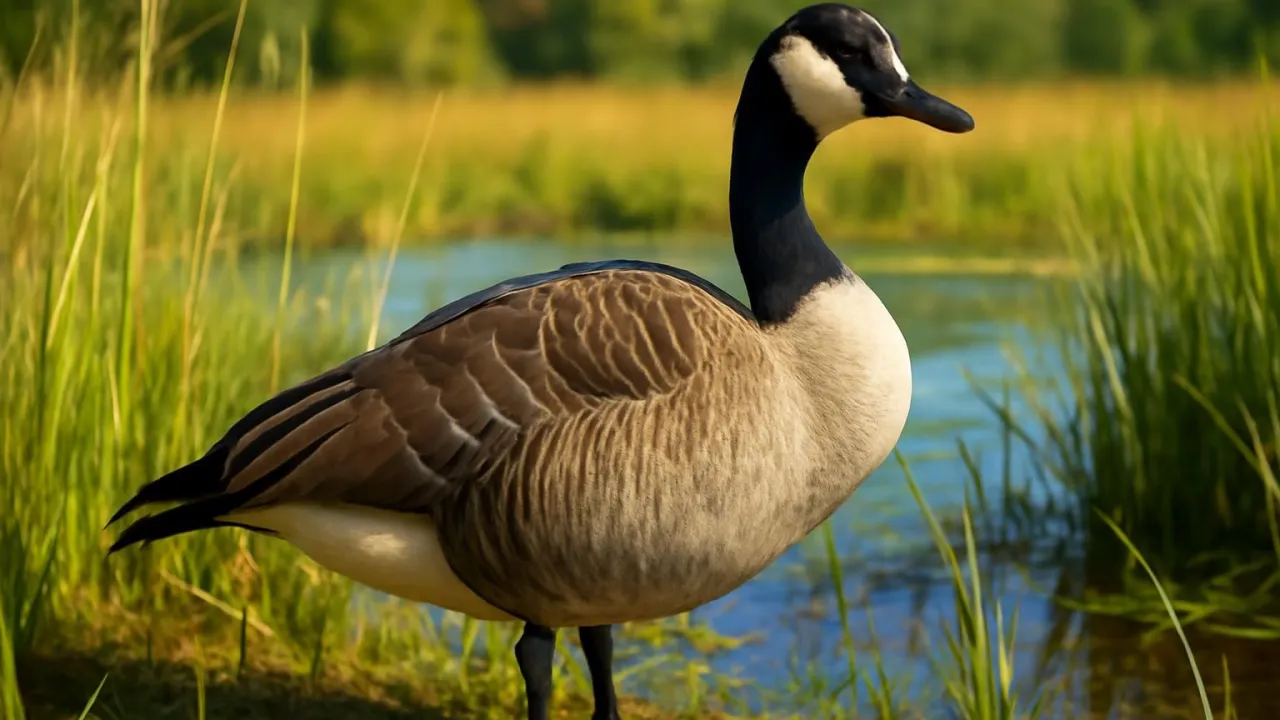
Canada geese have long black necks and white cheeks on their heads. Their bodies are brown and gray with large wings. They have feet that help them swim well.
2
Where They Live
These birds live near lakes, ponds, and rivers where water is easy to find. They build on the ground close to water and grass. In winter, they fly south to find warmer places.
3
What They Eat and Do
Canada geese eat grass, grains, and water plants that grow near lakes. They use their beaks to nibble on these plants and swim in the water. They also make loud honking sounds to talk to each other.
Flying in a V formation helps Canada geese reduce wind resistance by up to 70 percent.
✨ Word Sparks (Grade 3 Glossary)
Tap 🔊 to hear
adaptation
A body change that helps survival
predator
An animal that hunts others
flock
A group of birds flying together
🪝
Did you know Canada geese use teamwork to fly far and stay safe?
1
Physical Features and Adaptations
Canada geese have long black necks and white cheek patches that help identify them. Their webbed feet allow them to swim efficiently in water. Their strong wings enable long flights during migration seasons. These features help them survive in both water and air environments.
2
Habitat and Migration
These birds live mostly near freshwater lakes, ponds, and rivers across North America. In colder months, they migrate south to warmer areas to find food and avoid freezing temperatures. Migration is a survival that helps them access better resources seasonally.
3
Diet and Feeding
Canada geese primarily eat grasses, grains, and aquatic plants found near water bodies. Their beaks are adapted to graze and pull plants from the ground or water. Eating plants provides the nutrients they need for energy during long flights.
4
Social Behavior and Communication
Canada geese are social birds that often travel in for protection against . They communicate loudly with honks to keep the group coordinated during flight. Flying in a V formation reduces wind resistance and conserves energy for the whole flock.
Canada geese can fly up to 40 miles per hour during migration, covering great distances efficiently.
✨ Word Sparks (Grade 4 Glossary)
Tap 🔊 to hear
ecosystem
A community of plants and animals living together
conservation
Protecting animals and plants in nature
territorial
Protecting their home from others
🪝
How do Canada geese’s flying skills affect their survival and ecosystems?
1
Physical Traits and Survival
Canada geese have distinctive black necks with white chinstraps that help other geese recognize them during flight. Their webbed feet allow them to swim effectively, while their strong wings support long-distance migration flights. These physical traits enable them to thrive in both aquatic and terrestrial environments.
2
Migration and Ecosystem Impact
Each year, Canada geese migrate thousands of miles from northern breeding grounds to southern wintering sites. This migration helps maintain balance by spreading seeds and nutrients across regions. Their grazing on grasses can influence plant growth, affecting other animals in the food web.
3
Social Behavior and Communication
Canada geese travel in flocks, using loud honking calls to communicate and coordinate movements. Flying in a V formation reduces air resistance, allowing the flock to conserve energy during long flights. This teamwork increases their chances of survival against predators and harsh weather.
4
Human Interactions and Conservation
Canada geese often live near human habitats like parks and golf courses, sometimes causing conflicts due to droppings and aggressive behavior. However, they are protected by wildlife laws that help maintain their populations. efforts focus on balancing their presence with human activities.
Canada geese reduce air resistance by 70% flying in a V, enabling energy-efficient migration over thousands of miles.
✨ Word Sparks (Grade 5 Glossary)
Tap 🔊 to hear
Anatidae
The bird family with ducks and swans
aerodynamic
Shaped to move easily through air
nutrient cycling
Moving nutrients through nature’s systems
🪝
What makes the Canada goose a remarkable migratory bird with ecological importance?
1
Taxonomy and Scientific Classification
The Canada goose, scientifically named Branta canadensis, belongs to the family, which includes ducks, swans, and other geese. It is native to North America and is known for its distinctive black head and neck with a white cheek patch. This species has several subspecies adapted to different habitats across the continent.
2
Physiological Adaptations for Flight
Canada geese possess powerful flight muscles and body shapes that enable sustained long-distance migration. Their V-shaped flight formation reduces air resistance by approximately seventy percent, conserving energy for the entire flock. Additionally, their webbed feet aid in swimming and walking on soft ground near water bodies.
3
Ecological Role and Conservation Status
As herbivores, Canada geese play a vital role in their ecosystems by grazing on grasses and aquatic plants, which helps control vegetation growth. Their migratory patterns contribute to seed dispersal and across vast geographic areas. Although populations are stable, some local groups face habitat loss and human-wildlife conflicts, prompting conservation efforts.
4
Human Interactions and Management
Canada geese frequently inhabit urban parks, golf courses, and agricultural fields, where their droppings can cause sanitation issues. Wildlife managers use non-lethal methods such as habitat modification and hazing to reduce conflicts while protecting the species under migratory bird laws. Public education promotes coexistence between humans and geese.
5
Quantitative Comparisons and Migration Details
Canada geese can fly at speeds up to forty miles per hour and migrate thousands of miles between breeding and wintering grounds. Adult birds typically weigh between six and fourteen pounds and measure up to four feet in length. Their ability to withstand cold temperatures during northern breeding seasons demonstrates remarkable physiological resilience.