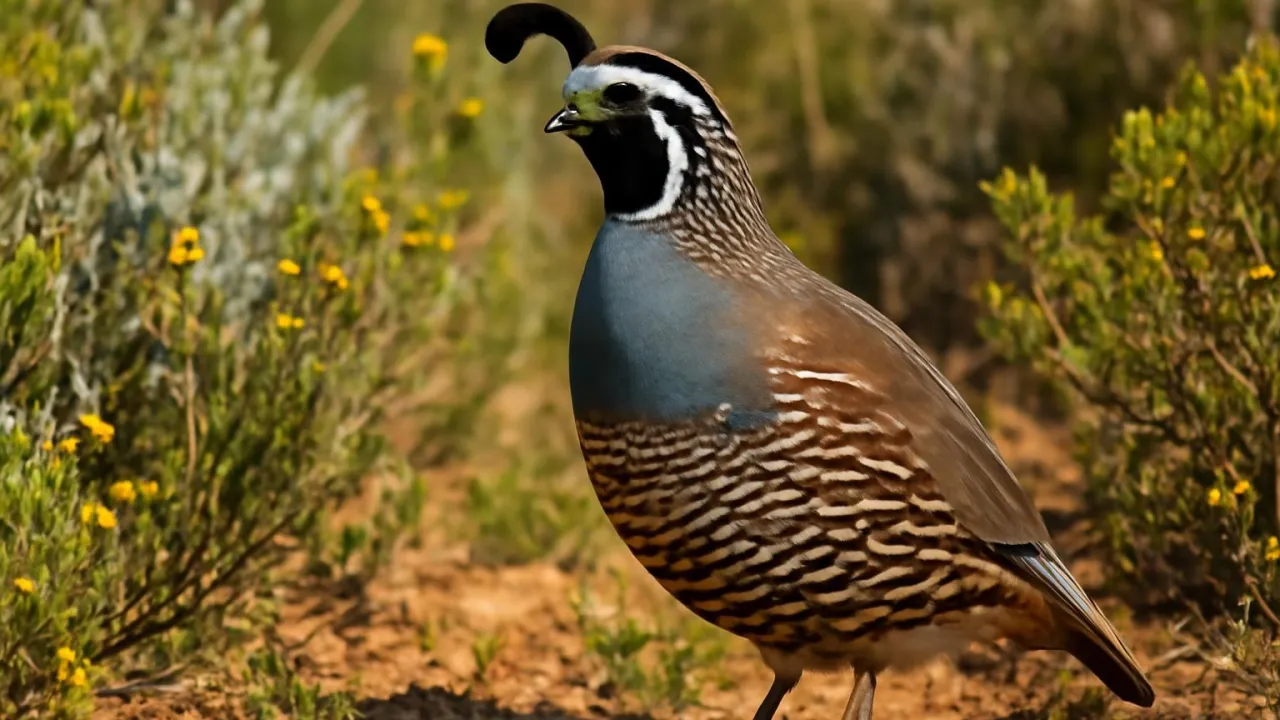
1. What does the California Quail have on its head?
2. What does the quail like to eat?
🤯 Mind-Blowing Fact • Grade 2
California Quail chicks can run and follow their parents just minutes after hatching!
✨ Word Sparks (Grade 2 Glossary)
Tap 🔊 to hear
plume
A fancy feather on a bird's head
chaparral
A dry area with bushes and small trees
predator
An animal that hunts other animals
🪝
Have you ever seen a bird with a feather shaped like a comma on its head?
1
A Feather That Stands Out
California Quail have a unique that looks like a comma on their head. This feather moves as they walk and helps them stand out. It is one of their coolest features and helps friends find each other.
2
Where They Call Home
These birds live mostly in warm places like and woodlands in western North America. They like to hide in bushes and under trees to stay safe from .
3
What They Like to Eat
California Quail eat seeds, leaves, and insects that they find on the ground. They scratch the dirt with their feet to find food. Drinking water is also important to keep them healthy.
1. What does the plume on a California Quail look like?
2. Where do California Quail like to live?
🤯 Mind-Blowing Fact • Grade 3
California Quail chicks can run within minutes after hatching to escape predators quickly!
✨ Word Sparks (Grade 3 Glossary)
Tap 🔊 to hear
camouflage
Colors that help animals hide from others
foraging
Looking for food in the ground or plants
covey
A group of quail living and moving together
🪝
Did you know the California Quail uses its plume to communicate with friends?
1
The Comma-Shaped Plume
The California Quail has a unique plume shaped like a comma on its head that moves as it walks. This plume helps the bird communicate with others in its group. It is also used to show dominance among males. The plume is made of soft feathers that stand upright.
2
Habitat and Camouflage
These birds live in chaparral and woodland areas where bushes provide cover from predators. Their brown and gray feathers help with by blending into dry leaves and dirt. This adaptation helps them avoid being seen by animals that want to eat them.
3
Diet and Foraging
California Quail eat seeds, leaves, and insects found on the ground. They scratch the soil with their feet to uncover food hidden under leaves. This behavior helps them get the nutrients they need to survive. Insects provide important protein for growing chicks.
4
Life Cycle and Family Groups
Quail live in groups called that help protect them from predators. After hatching, chicks can run and follow their parents almost immediately. This quick movement helps chicks escape danger. The family stays together through the winter for safety and warmth.
1. Why do California Quail have brown and gray feathers?
2. What does a covey mean for quail?
🤯 Mind-Blowing Fact • Grade 4
California Quail use their plume to send signals that help keep their group safe from predators.
✨ Word Sparks (Grade 4 Glossary)
Tap 🔊 to hear
dominance
Showing who is the leader or strongest
aerate
To mix air into soil to help plants grow
habitat
The natural home where animals live
🪝
How does the California Quail’s plume help it survive in its environment?
1
Plume Signals and Social Life
The California Quail’s comma-shaped plume acts as a social signal to other birds in its covey, helping to show and attract mates. This feather also helps quail recognize each other in dense brush where visibility is low. The plume’s movement can communicate different moods or warnings to nearby birds.
2
Adaptations for Survival
Their brown and gray feathers provide excellent camouflage in the chaparral and woodland where they live. This camouflage helps protect quail from predators like hawks and foxes. Additionally, their strong legs allow quick running and scratching for food, which is important for escaping danger and finding nutrients.
3
Role in the Ecosystem
California Quail play an important role in their ecosystem by eating seeds and insects, which helps control insect populations and spread plant seeds. They serve as prey for many predators, linking food webs together. Their foraging also helps soil, benefiting plant growth.
4
Geographic Range and Human Impact
Native to western North America, California Quail are found from California to parts of Mexico and the Pacific Northwest. Human development has reduced some of their natural , but they adapt well to suburban areas with bushes and gardens. Conservation efforts focus on protecting these habitats to keep quail populations stable.
1. Why do California Quail have camouflage feathers?
2. How do California Quail help plants grow?
🤯 Mind-Blowing Fact • Grade 5
The California Quail’s plume feathers are controlled by special muscles that help it send social signals.
✨ Word Sparks (Grade 5 Glossary)
Tap 🔊 to hear
taxonomy
How scientists classify living things
physiology
How a body part works and moves
urbanization
Building cities where nature once was
🪝
What makes the California Quail’s unique plume a key part of its taxonomy and survival?
1
Taxonomy and Scientific Classification
The California Quail, scientifically named Callipepla californica, belongs to the family Odontophoridae, known as New World quails. Its genus Callipepla includes species characterized by distinctive head plumes. This bird’s unique comma-shaped plume is an important taxonomic trait used to identify it among other quail species.
2
Physiological Mechanics of the Plume
The plume consists of six forward-curving feathers that are flexible and move with the bird’s head motions. Muscles at the base of the plume control its position, allowing the bird to signal social status or alertness. This physiological adaptation enhances communication within coveys, especially in dense vegetation.
3
Conservation and Historical Context
Historically, California Quail populations were abundant across western North America, but habitat loss from and agriculture has reduced their numbers. Conservation efforts include habitat restoration and public education to maintain stable populations. The species is currently listed as Least Concern but benefits from ongoing monitoring.
4
Ecological Role and Quantitative Comparisons
California Quail consume a diet mainly of seeds and insects, foraging by scratching soil at speeds up to 5 miles per hour. Adults weigh about 5 to 6 ounces (140 to 170 grams) and measure roughly 10 inches (25 centimeters) in length. Their role as prey supports numerous predators, linking them tightly to the food web.
5
Behavioral Adaptations and Group Dynamics
Quail form coveys of 10 to 20 birds that communicate through calls and plume displays to maintain group cohesion. Chicks can run within minutes after hatching, reaching speeds that help them evade predators quickly. These behavioral adaptations increase survival rates and contribute to the species’ ecological success.