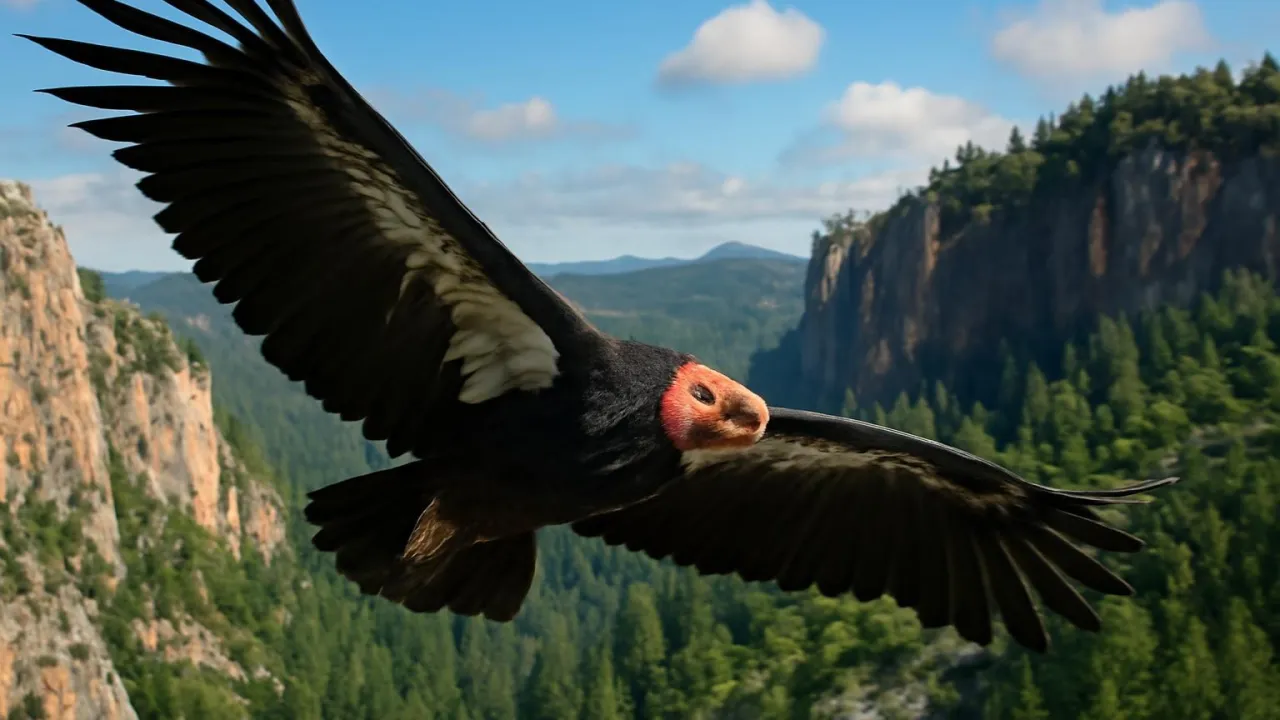
California Condors have the largest wingspan of any North American bird, reaching up to 10 feet!
✨ Word Sparks (Grade 2 Glossary)
Tap 🔊 to hear
carrion
Dead animals that some birds eat
soar
To fly high and smoothly in the air
cliff
A steep, high rock face
🪝
Have you ever seen a bird with wings as wide as a small car?
1
Huge Wings for Flying
The California Condor has huge wings that can stretch up to ten feet wide. It uses these wings to very high in the sky. The wings are mostly black with white patches underneath. This helps it glide smoothly on air currents.
2
Home in Rocky Places
This bird lives in rocky and forests in western North America. It prefers warm, open areas where it can find food easily. The condor nests on cliffs where it stays safe from predators. It can see very far while flying high above.
3
Eating Dead Animals
Unlike many birds, the condor eats only dead animals called . It has a strong, sharp beak to tear meat from bones. This helps keep the environment clean by removing dead animals. The condor can smell carrion from far away while flying.
California Condors can soar at altitudes over 15,000 feet, higher than many other birds!
✨ Word Sparks (Grade 3 Glossary)
Tap 🔊 to hear
scavenger
An animal that eats dead plants or animals
camouflage
Colors or shapes that help hide an animal
carrion
Dead animals that some animals eat
🪝
Did you know the California Condor can soar higher than almost any other bird?
1
Massive Wings for Soaring
The California Condor has a wingspan that can reach up to ten feet, making it the largest in North America. Its broad wings allow it to glide effortlessly on thermal air currents. This adaptation helps the condor conserve energy while searching for food. The white patches under its wings also help with against the bright sky.
2
Habitat and Nesting
This bird lives mainly in rocky cliffs and mountainous forests of western North America. It builds nests on cliff ledges to stay safe from predators. The condor’s keen eyesight helps it spot from miles away. Its habitat provides the open space needed for its large wings to fly freely.
3
Diet and Role in Nature
The condor is a that feeds on , or dead animals, playing an important role in the ecosystem. Its strong, hooked beak tears through tough skin and bones to access nutrients. By eating dead animals, the condor helps prevent the spread of disease. This cleaning role is vital for maintaining healthy environments.
4
Survival Adaptations
The condor’s bald head is an adaptation that keeps it clean while feeding inside carcasses. Its large lungs and heart support long flights at high altitudes. The bird’s slow reproduction rate makes its population vulnerable to threats. Conservation efforts focus on protecting habitat and breeding programs to help survival.
2. What important role does the condor play in nature?
🤯 Mind-Blowing Fact • Grade 4
California Condors can glide over 150 miles in a single day while searching for food!
✨ Word Sparks (Grade 4 Glossary)
Tap 🔊 to hear
thermal updraft
Warm air that helps birds rise high
scavenger
An animal that eats dead plants or animals
ecosystem
A community of living things and their home
🪝
How does the California Condor’s huge wingspan help it survive in the wild?
1
Flight and Energy Conservation
The California Condor’s massive wingspan of nearly ten feet allows it to soar for hours without flapping. By riding , it conserves energy while searching vast areas for food. This efficient flight is essential because carrion can be scarce and spread out. Its ability to glide long distances helps it cover more ground in its search.
2
Ecosystem Role and Food Webs
As a , the condor plays a crucial role in its by consuming dead animals that could spread disease. This cleaning service supports other wildlife and helps maintain healthy habitats. The condor’s presence affects food webs by recycling nutrients back into the environment. Its decline could disrupt these natural cycles significantly.
3
Habitat and Geographic Range
California Condors primarily inhabit rocky cliffs and open forests in western North America, including California and Arizona. These regions provide safe nesting sites and open skies for soaring. Human activities have reduced their range, but conservation efforts focus on protecting these habitats. The condor’s survival depends on preserving large, undisturbed areas.
4
Conservation and Human Impact
Once nearly extinct, the California Condor has been saved by captive breeding and habitat protection programs. Lead poisoning from hunting ammunition remains a serious threat to wild populations. Educating people and banning harmful substances are key to the condor’s recovery. Continued human care and monitoring are vital to ensure this giant bird’s future.
1. Why do condors use thermal updrafts when flying?
2. What human threat still harms wild California Condors?
🤯 Mind-Blowing Fact • Grade 5
California Condors can soar higher than Mount Everest’s peak, reaching altitudes above 15,000 feet!
✨ Word Sparks (Grade 5 Glossary)
Tap 🔊 to hear
taxonomy
The science of naming and grouping living things
respiratory system
Body parts that help animals breathe air
trophic level
A step in a food chain or web
🪝
What makes the California Condor a remarkable survivor among North America’s largest birds?
1
Taxonomy and Scientific Classification
The California Condor, Gymnogyps californianus, belongs to the family Cathartidae, which includes New World vultures. It is the largest land bird in North America, with a wingspan reaching up to ten feet. This species evolved specialized features for scavenging, such as a powerful beak and keen eyesight. Its highlights its unique evolutionary path among raptors.
2
Physiological Adaptations for Flight
This bird’s massive wings and lightweight bones enable it to soar at altitudes exceeding 15,000 feet. Its efficiently extracts oxygen even at high altitudes, supporting long flights. The condor’s bald head reduces bacterial growth while feeding on carrion, an important adaptation for hygiene. Its cardiovascular system supports sustained soaring over vast territories.
3
Conservation History and Challenges
By the 1980s, California Condors were nearly extinct, with only 27 individuals remaining. Conservationists implemented captive breeding and reintroduction programs to restore populations. Lead poisoning from ingesting bullet fragments remains a critical threat, necessitating ongoing regulation and public education. Habitat loss and human disturbance also challenge recovery efforts.
4
Ecological Role and Food Web Impact
As a scavenger, the condor recycles nutrients by consuming carrion, preventing disease spread in ecosystems. Its role influences multiple and supports biodiversity in its habitat. The condor’s ability to travel over 150 miles daily allows it to connect distant food webs. Its decline could cause imbalances, showing the importance of apex scavengers in ecosystems.
5
Quantitative Comparisons and Records
California Condors have wingspans up to 10 feet, nearly three times longer than a bald eagle’s. They can glide at speeds of 55 miles per hour and reach altitudes over 15,000 feet. Adults weigh between 20 to 26 pounds, which is heavy for soaring birds. These impressive physical records highlight the condor’s adaptation to its ecological niche.