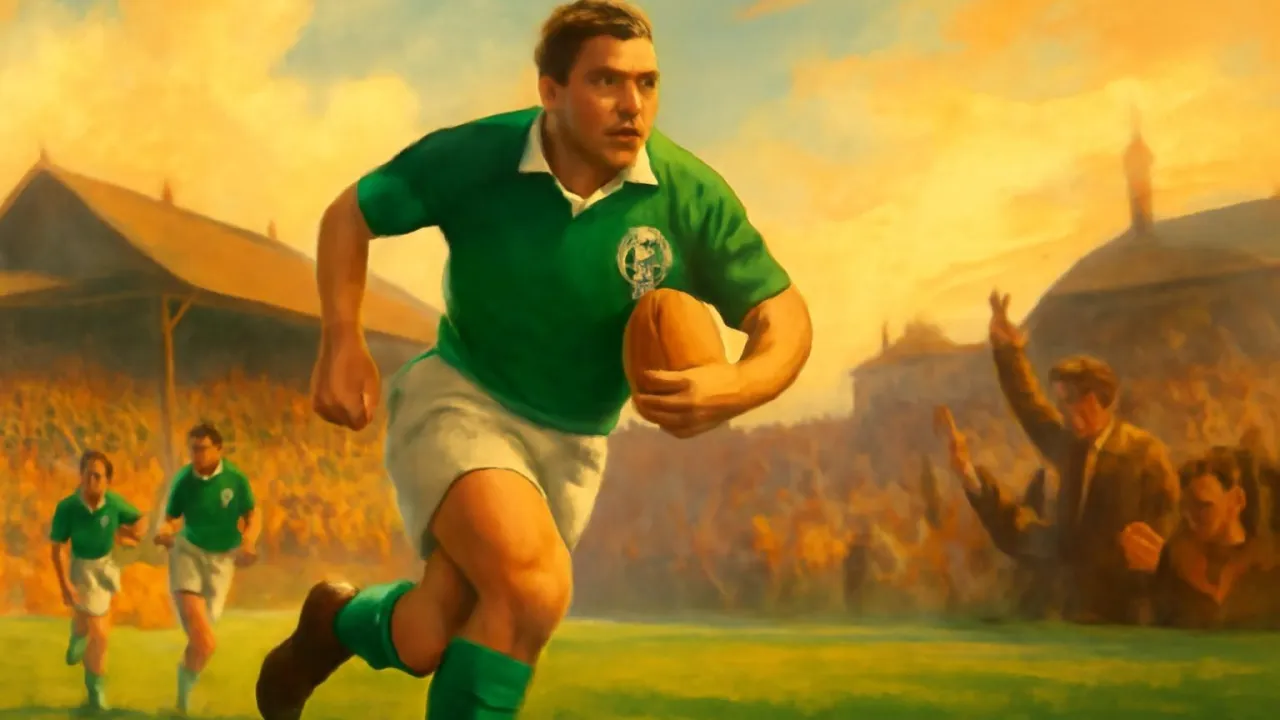
Brian played 133 games for Ireland—more than anyone else!
✨ Word Sparks (Grade 2 Glossary)
Tap 🔊 to hear
captain
The leader of a team.
Grand Slam
Winning every big match.
rugby
A sport with running and tackling.
🪝
Have you ever dreamed of scoring the winning try for your country?
1
A Curious Kid
Brian always wondered how fast he could run. He loved chasing balls with his friends. He watched older players and wanted to be just like them. He dreamed of wearing Ireland’s green jersey.
2
Hard Practice
Brian practiced passing, running, and tackling every day after school. He listened to his coaches and worked hard to get better. He learned to play as a team and help others. He never gave up, even when it was tough.
3
A Big Win
Brian became of Ireland’s team. He led his team to a famous win. He scored more tries than any Irish player before him. The whole country celebrated his amazing achievements.
Brian O’Driscoll was named World Rugby Player of the Year three times!
✨ Word Sparks (Grade 3 Glossary)
Tap 🔊 to hear
perseverance
Never giving up, even when it’s hard.
defense
Stopping the other team from scoring.
legend
A person who is very famous for something special.
🪝
Imagine running so swiftly that defenders can’t catch you—how would you feel?
1
A Young Dreamer
Brian O’Driscoll grew up in Dublin, where rugby was a favorite sport. He watched matches on TV and cheered for Ireland with his family. As a child, he practiced quick footwork and clever passes in his backyard. His dream was to play for Ireland’s national team one day.
2
Training and Teamwork
Brian worked hard at every rugby skill, from tackling to scoring a try. He learned that teamwork and were just as important as speed. Coaches taught him how to read the game and lead his teammates. His dedication helped him become a star player at school.
3
Becoming a Rugby Legend
Brian’s dazzling moves and strong made him famous across Ireland. He became captain and inspired his team to win the Six Nations Grand Slam in 2009. He scored more tries than any other Irish player in history. Fans everywhere admired his sportsmanship and courage.
4
Changing the Game
Brian’s leadership changed how people saw Irish rugby. He showed that respect and hard work could lead to great victories. His creative playing style influenced young athletes across the world. Today, he is remembered as one of rugby’s greatest .
Brian O’Driscoll captained the British & Irish Lions on their 2005 tour to New Zealand.
✨ Word Sparks (Grade 4 Glossary)
Tap 🔊 to hear
agility
Moving quickly and easily in sports.
resilience
Bouncing back after tough times.
ambassador
Someone who represents and helps others.
🪝
What does it take to become a national hero in a sport loved by millions?
1
Dublin Beginnings
In the lively city of Dublin, Brian O’Driscoll’s childhood was filled with rugby dreams and backyard games. He watched legendary Irish players on television and imagined himself wearing the famous green jersey. Encouraged by his family, Brian joined a local rugby club, where his natural and determination quickly set him apart from his peers. These early experiences laid the foundation for his future as a rugby icon.
2
Mastering the Game
Brian devoted countless hours to mastering every aspect of rugby, from perfecting his sidestep to strengthening his defense. He learned that true success required both individual skill and the ability to work seamlessly within a team. Coaches recognized his leadership potential and helped him develop strategic thinking on the field. Through perseverance and , Brian rose through the ranks, eventually representing his school, his club, and finally his country.
3
A Captain’s Triumph
As captain of Ireland’s national rugby team, Brian O’Driscoll led his teammates to one of their greatest achievements—the 2009 Six Nations Grand Slam. His fearless play, creative passing, and ability to inspire others made him a respected leader. Brian’s record-breaking 46 international tries and 133 caps set new standards for Irish rugby excellence. His sportsmanship and humility earned him admiration from fans and opponents alike.
4
Legacy Beyond the Pitch
Brian’s impact reached far beyond the rugby field, as he became a role model for young athletes worldwide. He promoted respect, teamwork, and community involvement, showing that leadership extends off the pitch as well. After retiring, Brian continued to support rugby through coaching and charity work, helping the next generation of players. His legacy as a trailblazer and for Irish rugby endures to this day.
2. How did Brian continue to help rugby after retiring?
🤯 Mind-Blowing Fact • Grade 5
Brian O’Driscoll is Ireland’s all-time leading try scorer and one of world rugby’s most-capped players.
✨ Word Sparks (Grade 5 Glossary)
Tap 🔊 to hear
cap
An appearance in an international game.
integrity
Doing the right thing, even when it’s hard.
accolade
A special award or honor for achievement.
🪝
How does a single athlete’s vision and leadership help transform a nation’s sporting identity?
1
Early Passion and Family Roots
Long before stadium crowds chanted his name, Brian O’Driscoll’s rugby journey began on the bustling streets of Dublin. Inspired by his father, who also played rugby, Brian spent countless afternoons practicing passes and sidesteps with neighborhood friends. His early exposure to the sport ignited a passion that would shape his entire life, and his supportive family encouraged him to join the local club, Blackrock College RFC. Even as a teenager, Brian demonstrated a fierce competitive spirit and an eagerness to learn from every match, win or lose.
2
Developing Skill and Leadership
Brian’s ascent through school and club rugby was marked by relentless training and a deep commitment to teamwork. He became known for his exceptional footwork, lightning-fast acceleration, and the ability to read the game several moves ahead. Coaches and teammates admired his willingness to lead both by example and through encouragement, fostering unity on and off the field. By age 20, Brian had earned his first for Ireland, quickly establishing himself as a vital centre and a future leader. His dedication to continuous improvement set a standard for aspiring players nationwide.
3
Record-Breaking Achievements
O’Driscoll’s career with the Irish national team spanned fifteen years, during which he amassed 133 international and scored 46 tries—both records for Ireland at the time. As captain, he led Ireland to their first Six Nations Grand Slam in 61 years in 2009, a triumph celebrated across the nation. His creative attacking play, precise tackling, and strategic vision earned him numerous , including three nominations for World Rugby Player of the Year. Brian also captained the British & Irish Lions on their 2005 tour, further cementing his legacy as a global rugby icon.
4
Legacy and Influence Beyond Rugby
Brian O’Driscoll’s influence extended far beyond his on-field accomplishments, as he became a symbol of sportsmanship, humility, and resilience for young athletes everywhere. He was deeply involved in charitable initiatives, supporting youth sports programs and promoting inclusion within the rugby community. After retiring in 2014, Brian transitioned to broadcasting and coaching, sharing his knowledge and passion with future generations. His leadership and advocacy helped elevate Irish rugby’s reputation on the world stage, inspiring countless children to pursue their own sporting dreams.
5
Inspiring the Next Generation
Brian’s journey from a curious Dublin schoolboy to an international rugby legend demonstrates the power of perseverance, teamwork, and vision. His story teaches us that true greatness is built not only on talent, but also on character and a desire to uplift others. Today, Brian O’Driscoll’s legacy endures in every young player who dreams of wearing the green jersey and making their mark on the world. He remains a role model for leadership, , and the unbreakable spirit of Irish rugby.