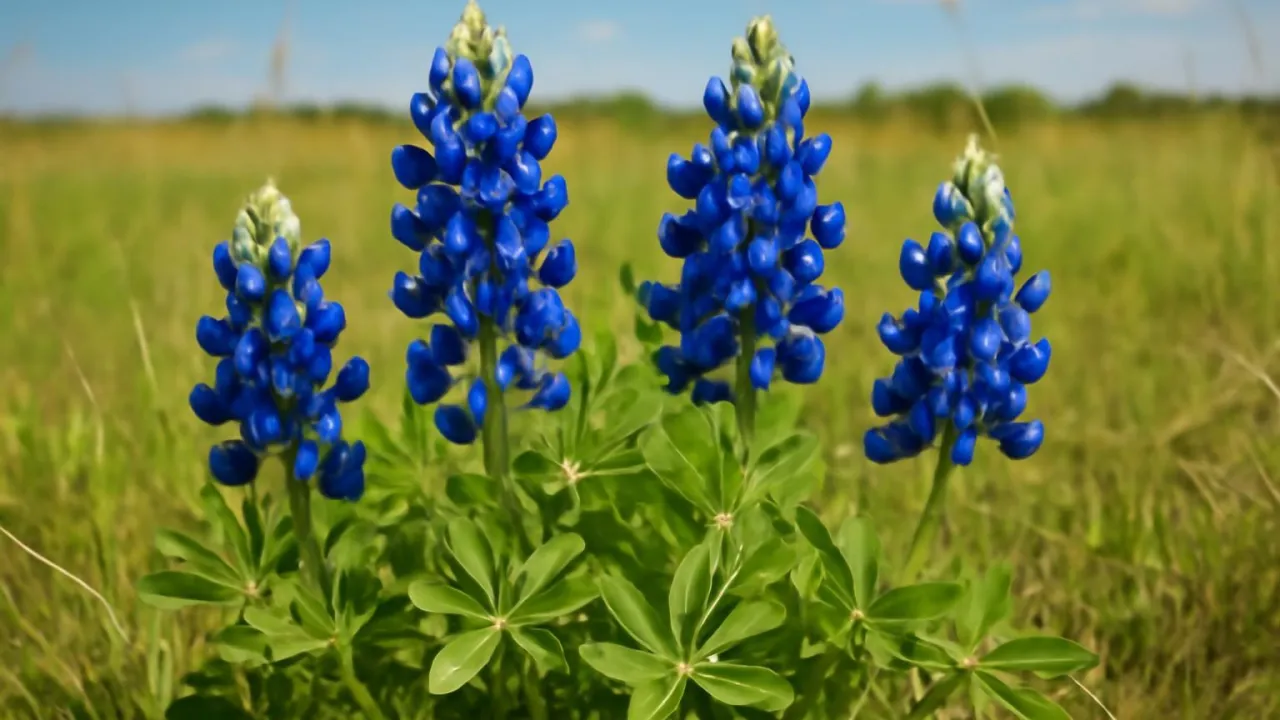
Bluebonnets are so loved that Texas has a special day to celebrate them!
✨ Word Sparks (Grade 2 Glossary)
Tap 🔊 to hear
bloom
When a flower opens up and grows
pollination
How flowers make seeds with help from animals
nectar
Sweet juice inside flowers that bees like
🪝
Have you ever seen a whole field covered in blue flowers?
1
Bluebonnets in Spring
Bluebonnets in the springtime when the weather is warm and sunny. They grow best in open fields and along roadsides where they get plenty of sunlight. Their bright blue petals stand out against the green grass, making the landscape look magical and colorful.
2
Where They Live
These flowers mostly grow in Texas, where the soil is sandy and well-drained. Bluebonnets need moderate water, so they do well after spring rains. They often grow in groups, creating large patches that attract many insects and animals.
3
Special Flower Parts
Bluebonnets have petals shaped like little flags that help attract bees and butterflies. These pollinators visit the flowers to collect and help the plants make seeds. This way, bluebonnets can grow again the next year.
Bluebonnets can grow up to two feet tall and cover large fields in blue!
✨ Word Sparks (Grade 3 Glossary)
Tap 🔊 to hear
pollination
How insects help flowers make seeds
adaptation
A special trait that helps plants survive
camouflage
Colors or shapes that help hide plants
🪝
Why do bluebonnets turn fields into seas of blue every spring?
1
Bluebonnets’ Bright Colors
Bluebonnets have bright blue petals that act as a natural signal to attract pollinators like bees and butterflies. This colorful display helps the flowers get pollinated, which is necessary for producing seeds and continuing their life cycle. Their petals also have white tips that add contrast and help insects find nectar more easily.
2
Where Bluebonnets Thrive
These flowers grow mainly in Texas grasslands where the soil is sandy and drains water well. Bluebonnets are adapted to survive in dry conditions by storing nutrients in their roots. Their preference for open sunny areas helps them avoid shade from taller plants that could block sunlight.
3
Pollination and Survival
happens when bees visit bluebonnets to collect nectar and pollen. This process allows the flowers to produce seeds inside pods. Once mature, the pods dry and burst open to spread seeds, helping bluebonnets colonize new areas. This ensures the species’ survival year after year.
4
Camouflage and Protection
Bluebonnets’ green leaves blend with the surrounding grass, which helps protect them from predators like grazing animals. Their hairy leaves reduce water loss by trapping moisture. These help bluebonnets survive Texas’s hot and dry spring climate.
Bluebonnets improve soil health by working with special bacteria in their roots!
✨ Word Sparks (Grade 4 Glossary)
Tap 🔊 to hear
symbiosis
A helpful relationship between two living things
nitrogen-fixing
Bacteria that help plants get nutrients from air
ecosystem
All plants and animals living together
🪝
How do bluebonnets shape Texas ecosystems every spring?
1
Bluebonnets and Their Environment
Bluebonnets grow in Texas grasslands and open fields where they receive full sunlight and moderate rainfall. Their presence helps prevent soil erosion by stabilizing the ground with their root systems. Because they thrive in well-drained sandy soils, bluebonnets avoid waterlogged areas that could harm their growth. This adaptation allows them to flourish in semi-arid climates where other plants might struggle.
2
Role in the Food Web
Bluebonnets provide nectar for many pollinators including bees, butterflies, and hummingbirds, which are essential for pollination. These pollinators, in turn, support other animals higher in the food chain. Additionally, some small animals feed on bluebonnet seeds, linking the flowers to the larger . This interconnected web helps maintain biodiversity in Texas grasslands.
3
Symbiosis with Soil Bacteria
Bluebonnets form a symbiotic relationship with bacteria in their roots, which converts nitrogen from the air into nutrients plants can use. This process enriches the soil, benefiting nearby plants and improving overall health. This natural fertilization reduces the need for chemical fertilizers in natural areas. It also helps sustain the growth of native plants around bluebonnet patches.
4
Geographic Distribution and Human Impact
While bluebonnets are native mainly to Texas, they have been planted in neighboring states for their beauty. Human activities such as farming and urban development sometimes reduce their natural habitats. However, conservation efforts and bluebonnet festivals help protect and celebrate these iconic wildflowers. These efforts raise awareness about the importance of preserving native plants and their environments.
Bluebonnets partner with nitrogen-fixing bacteria to naturally fertilize Texas soils every spring.
✨ Word Sparks (Grade 5 Glossary)
Tap 🔊 to hear
legume
A plant that makes seed pods and helps soil
anthocyanin
A pigment that gives flowers blue color
symbiosis
A helpful partnership between living things
🪝
What scientific secrets make bluebonnets thrive in Texas’s unique environment?
1
Taxonomy and Botanical Classification
Bluebonnets belong to the genus Lupinus within the Fabaceae family, commonly known as . Their scientific name is Lupinus texensis, indicating their primary association with Texas. As legumes, bluebonnets share characteristics such as producing seed pods and forming symbiotic relationships with nitrogen-fixing bacteria. This classification helps scientists understand their role in ecosystems and agriculture.
2
Physiological Adaptations for Survival
Bluebonnets have deep root systems that allow them to access moisture during dry periods typical of Texas springs. Their compound leaves reduce water loss by minimizing surface area exposed to sunlight. The flowers’ bright blue pigmentation results from compounds, which protect the petals from ultraviolet radiation damage. These adaptations enable bluebonnets to survive in challenging semi-arid environments.
3
Ecological Role and Conservation History
Bluebonnets play a vital role in Texas ecosystems by enriching soil nitrogen through their bacterial partnerships, supporting pollinators, and preventing erosion. Historically, urban expansion and agriculture have reduced their natural habitats, but conservation programs and public awareness campaigns have helped preserve and restore bluebonnet populations. These efforts ensure the flower’s continued presence in native landscapes.
4
Quantitative Growth and Distribution Data
Bluebonnets typically grow between 12 and 24 inches tall and can cover fields spanning several acres during peak bloom. They flourish in temperatures ranging from 60 to 80 degrees Fahrenheit and prefer sandy soils with good drainage. Pollinator visits can number in the hundreds per square meter during peak flowering periods, highlighting their ecological importance.
5
Human Cultural Impact and Botanical Significance
The bluebonnet is Texas’s state flower and features prominently in local art, festivals, and folklore. Its striking blue color and seasonal blooms attract tourists and photographers annually. Botanically, bluebonnets demonstrate classic traits and serve as an educational example of plant-bacteria and adaptation to semi-arid environments. This cultural and scientific significance makes them a cherished symbol of Texas.