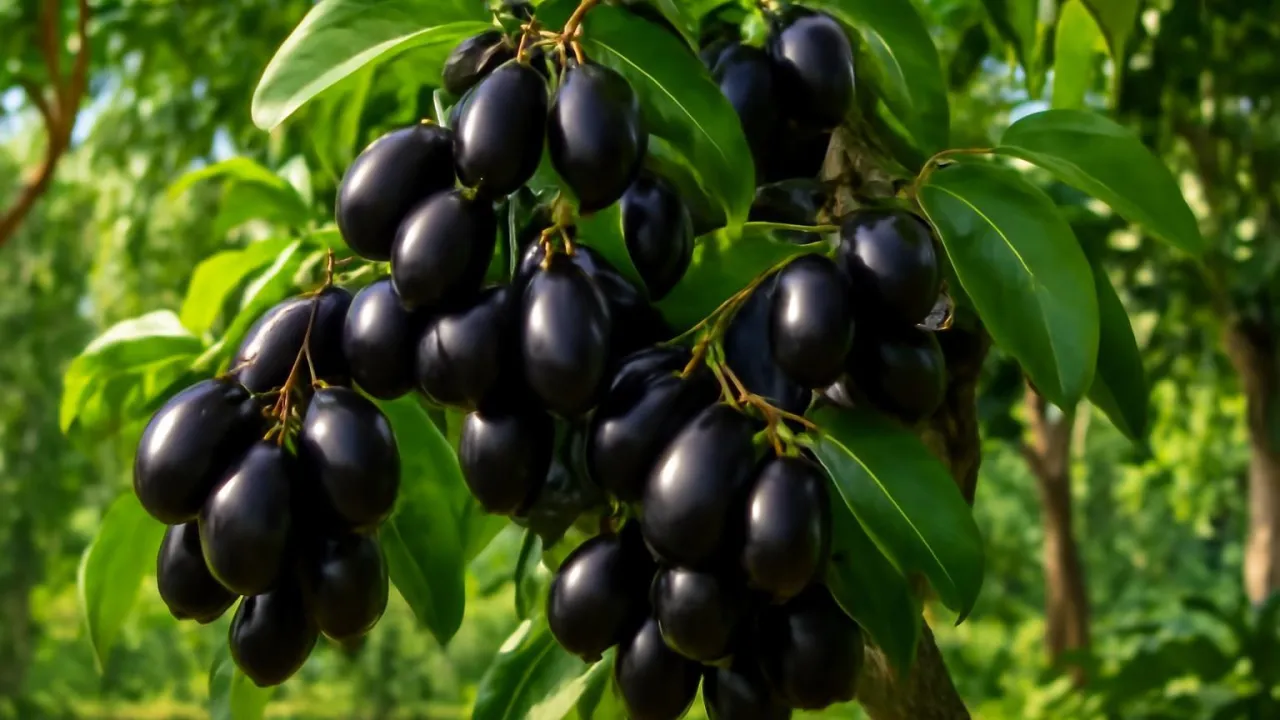
One black plum tree can grow hundreds of fruits every year!
✨ Word Sparks (Grade 2 Glossary)
Tap 🔊 to hear
juicy
Full of tasty liquid.
seed
The part that grows a new plant.
vitamin
A healthy thing your body needs.
🪝
Did you know some fruits can color your tongue purple?
1
A Colorful Fruit
Black plums are small, round, and very dark purple. Their skin is smooth and shiny, and their juice is sweet and tangy. When you eat one, your tongue turns purple! People love their flavor on hot days.
2
Where They Live
Black plum trees grow in warm, sunny places like India and Southeast Asia. The trees can grow very tall and have thick, green leaves. They need lots of sunlight and water to make fruit. Many birds and animals also eat the plums.
3
Growing and Eating
Each black plum has a hard inside its flesh. People eat the fruit fresh, or drink its juice for . Sometimes, plums are used in jams, candies, or even medicine. Eating black plums can help you stay healthy.
Black plums are not just fruits—they are also used in natural dyes and medicines!
✨ Word Sparks (Grade 3 Glossary)
Tap 🔊 to hear
camouflage
Hiding by blending in with surroundings.
antioxidant
A substance that helps protect your body.
ecosystem
A community of living things and their home.
🪝
What fruit can turn your tongue purple and grows on tall trees?
1
Meet the Black Plum
Black plums, also called jamun, are small, oval fruits with deep purple-black skin. Their juicy flesh is sweet and tangy, and the fruit is often eaten fresh or made into juice. When you bite into a black plum, your tongue and lips may turn purple! This colorful fruit grows on tall, leafy trees.
2
Where Black Plums Grow
Black plum trees thrive in tropical and subtropical regions, especially in India and Southeast Asia. They need warm temperatures, plenty of sunlight, and moist, well-drained soil to produce fruit. The trees can grow up to 50 feet tall and have shiny, green leaves. Birds, bats, and monkeys also enjoy eating the plums.
3
How Black Plums Grow
The black plum tree produces small white flowers before the fruits appear. Each fruit has a single hard seed inside its juicy flesh, which helps the tree spread new plants. The dark color of the fruit acts as , hiding it from some animals until it is ripe. People harvest the plums by hand when they turn deep purple.
4
Why Black Plums Matter
Black plums are rich in vitamins and , which help keep your body healthy. In some places, the fruit is used in traditional medicine to help with digestion and blood sugar. The trees also provide shade and food for many animals in their . Black plums are a fun and healthy treat for people and wildlife alike.
The pigment in black plums is so strong, it’s used as a natural fabric dye in India!
✨ Word Sparks (Grade 4 Glossary)
Tap 🔊 to hear
anthocyanin
A pigment that gives plants purple color.
erosion
When soil is worn away by wind or water.
pollinator
An animal that helps plants make seeds.
🪝
Imagine a fruit so powerful it can color your tongue and help wildlife thrive!
1
The Vibrant Black Plum Tree
The black plum, or Syzygium cumini, is a tall, evergreen tree native to tropical regions like India and Southeast Asia. Its glossy, green leaves and clusters of white flowers create a lush canopy that provides shade and shelter for countless animals. The tree’s deep roots help prevent soil , making it valuable for the environment. Black plum trees can live for decades, producing fruit year after year.
2
Fruit That Packs a Punch
Black plums are small, oval fruits with smooth, purple-black skin that stains easily. The juicy flesh inside is sweet and tart, with a single hard seed at the center. The fruit’s dark color comes from natural pigments called , which also act as antioxidants. Because the fruit is so juicy, it’s used in juices, jams, and even traditional medicine.
3
A Role in the Ecosystem
Black plum trees are important to their ecosystem because they provide food and shelter for birds, bats, monkeys, and insects. When animals eat the fruit, they help spread the seeds, allowing new trees to grow in different places. The tree’s flowers attract like bees, supporting the food web. Farmers sometimes plant black plum trees to protect crops and improve soil health.
4
From Ancient Roots to Modern Uses
People have enjoyed black plums for thousands of years, using them for food, medicine, and even natural dyes. In traditional medicine, the fruit and seeds are believed to help control blood sugar and aid digestion. Today, scientists study black plums for their health benefits and potential to fight disease. The tree’s wood is also used for furniture and tools in some cultures.
1. Why are black plum trees good for the environment?
2. What gives black plums their dark color?
🤯 Mind-Blowing Fact • Grade 5
Black plums can produce over 200 pounds of fruit a year—enough to feed a whole village and its wildlife!
✨ Word Sparks (Grade 5 Glossary)
Tap 🔊 to hear
anthocyanin
A natural pigment that makes plants purple or blue.
agroforestry
Growing trees and crops together for better land health.
antioxidant
A substance that helps protect our cells from damage.
🪝
Can a single fruit clean your blood, color your tongue, and help forests thrive?
1
Scientific Identity and Global Spread
The black plum, scientifically named Syzygium cumini, belongs to the Myrtaceae family and is native to the Indian subcontinent and Southeast Asia. Over centuries, it has been introduced to Africa, the Caribbean, and tropical regions of the Americas, where it sometimes grows wild. Mature black plum trees can reach up to 50 feet (15 meters) in height and feature dense, glossy foliage that provides year-round shade. The species is highly adaptable, thriving in both monsoon and semi-arid climates, and it is often planted along roadsides and in urban parks for its environmental benefits. Its extensive root system helps prevent soil erosion and supports local biodiversity.
2
Fruit Structure and Physiological Wonders
Black plums are botanically classified as drupes, with a single large seed surrounded by juicy, dark purple-black flesh. The skin contains high concentrations of , powerful pigments responsible for the fruit’s vibrant color and properties. When eaten, these pigments temporarily stain the tongue and lips, a fun trait for children and a sign of rich nutrients. The tree flowers in spring, producing clusters of small, fragrant white blossoms that attract bees and other pollinators. Each fruit measures about 1 inch (2.5 centimeters) long and ripens in early summer, often in large, heavy bunches.
3
Ecological Importance and Food Web Connections
Syzygium cumini plays a vital role in tropical ecosystems by providing food and shelter for a wide variety of wildlife. Birds, bats, and monkeys feed on the ripe plums, dispersing seeds across the landscape and enabling new trees to grow. The tree’s dense canopy offers nesting sites for birds and shade for understory plants, while its flowers support pollinator populations. Black plum trees are sometimes used in systems, where they help protect crops, enrich soil, and maintain water cycles. Their presence increases local biodiversity and strengthens ecosystem resilience against environmental changes.
4
Cultural, Medicinal, and Economic Impact
For centuries, black plums have been valued in traditional medicine for their potential to regulate blood sugar, improve digestion, and boost immunity. The fruit, seeds, bark, and leaves are used in Ayurvedic and Unani remedies, with modern research confirming and anti-inflammatory effects. In local markets, black plums are sold fresh, made into jams, pickles, and beverages, or used as natural dyes for textiles. The tree’s durable wood is used for making furniture, tools, and even railway sleepers in some countries. Its economic and cultural significance continues to grow as scientists discover new health benefits.
5
Fun Facts and Quantitative Comparisons
A single mature black plum tree can yield up to 200 pounds (90 kilograms) of fruit each year, feeding both people and wildlife. The content in black plums is among the highest of any tropical fruit, sometimes exceeding 200 milligrams per 100 grams of pulp. Compared to apples, black plums contain more vitamin C and dietary fiber per serving. The tree can live for over 100 years, outlasting many other fruit trees in tropical regions. In India, black plums are celebrated during summer festivals, and their juice is enjoyed as a refreshing drink to beat the heat. This remarkable fruit truly connects nature, culture, and nutrition in every bite.