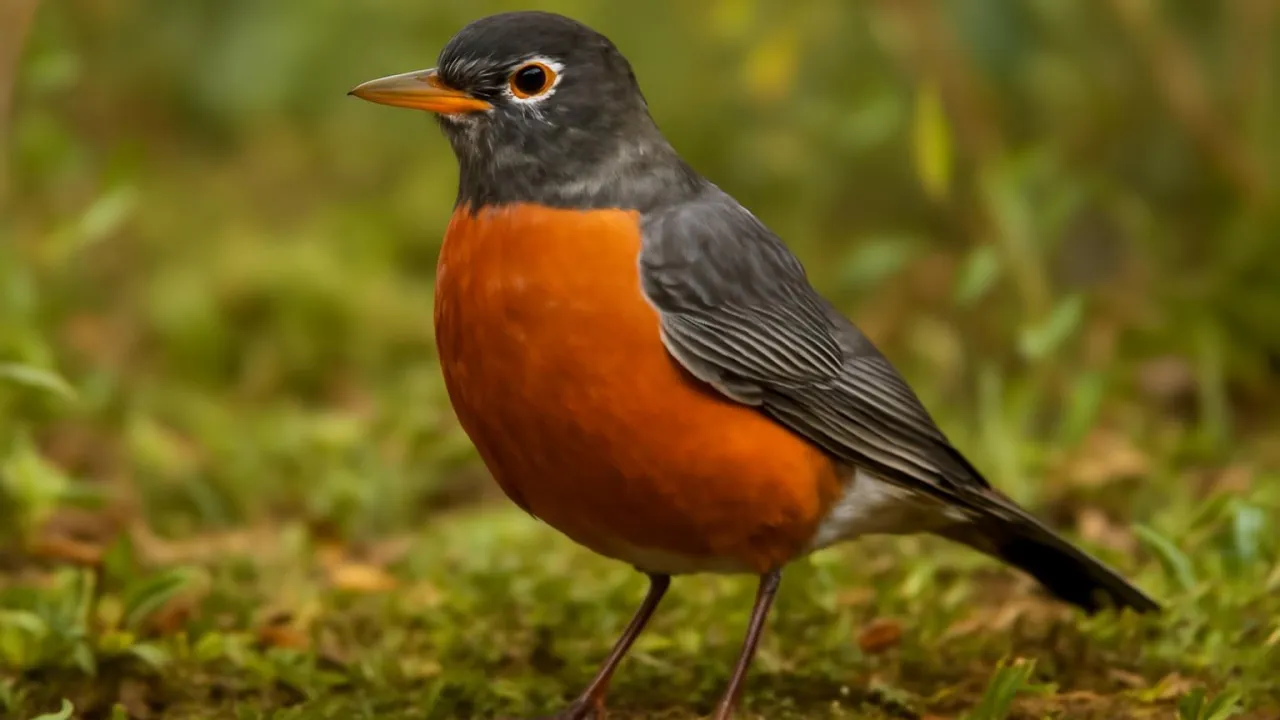
Robins are famous for their cheerful songs that signal spring’s arrival.
✨ Word Sparks (Grade 2 Glossary)
Tap 🔊 to hear
feather
Soft parts that cover a bird’s body
nest
A bird’s home made from twigs and grass
insect
A small animal with six legs
🪝
Have you ever seen a robin hopping on the grass?
1
Colorful Feathers
The American robin has a bright red chest and a gray back. It also has a white belly under its chest. Its help it hide in trees and bushes.
2
Home Sweet Home
Robins live in forests, gardens, and parks across North America. They build from twigs and grass in tree branches. The female robin lays eggs in the nest each spring.
3
Tasty Meals
Robins eat , worms, and berries to stay healthy. They often hop on the ground to find worms in the soil. Their sharp eyes help them spot food from far away.
Robins can see worms moving underground by spotting tiny soil movements.
✨ Word Sparks (Grade 3 Glossary)
Tap 🔊 to hear
camouflage
Colors that help animals hide
predator
An animal that hunts other animals
nutrients
Food parts that help animals grow
🪝
Why does the American robin’s red chest help it survive?
1
Bright Colors and Camouflage
The American robin has a bright red chest and gray feathers that help it blend in with trees. This protects it from like hawks. Its feathers also help it stay warm in cold weather.
2
Habitat and Nesting
Robins live in many habitats, including forests, gardens, and parks across North America. They build cup-shaped nests using mud and grass in trees or shrubs. This nest protects their eggs and young from weather and .
3
Diet and Foraging
Robins eat insects, worms, and berries to get . They use their sharp eyesight to spot worms in the soil. Their strong legs help them hop quickly while searching for food on the ground.
4
Role in the Ecosystem
Robins help control insect populations by eating many bugs. They also spread seeds from the berries they eat, helping plants grow. This shows how they support their ecosystem’s balance and health.
Robins’ spring songs help other animals know when to wake and start their seasons.
✨ Word Sparks (Grade 4 Glossary)
Tap 🔊 to hear
symbiosis
Two living things helping each other
biodiversity
Many different plants and animals living together
territory
An area an animal protects from others
🪝
How does the American robin’s song affect its environment and other animals?
1
Adaptations for Survival
The American robin’s bright red chest and gray feathers serve as camouflage among trees, helping it avoid predators like hawks and cats. Its sharp eyesight allows it to spot small insects and worms moving underground, which is crucial for finding food. Its strong legs and feet enable quick hopping and digging in the soil to catch prey. These adaptations increase its chances of survival in varied habitats.
2
Ecosystem Roles and Food Webs
Robins are important in food webs because they eat many insects and worms, controlling pest populations that could harm plants. They also consume berries, and by spreading seeds through their droppings, they help plants grow in different areas. This symbiotic relationship benefits both the robins and the plants, maintaining ecosystem balance and .
3
Human Impact and Geographic Range
American robins are common across North America, from Canada to Mexico, thriving in forests, suburban parks, and gardens. Human activities like urban development sometimes reduce natural habitats, but robins adapt well to cities by nesting in trees and shrubs near homes. People often welcome robins because their songs signal spring and they help control garden pests.
4
Cause and Effect in Behavior
When robins sing loudly at dawn, it marks and attracts mates, increasing their chances to reproduce. If predators are nearby, robins may stay silent or hide to avoid danger. Their early spring arrival triggers changes in other animals and plants, helping synchronize life cycles in their ecosystem.
American robins can spot worms moving just beneath the soil surface using their sharp vision.
✨ Word Sparks (Grade 5 Glossary)
Tap 🔊 to hear
taxonomy
How scientists group living things by traits
incubation
Keeping eggs warm until babies hatch
migration
Moving to new places when seasons change
🪝
What makes the American robin a key species in North American ecosystems?
1
Scientific Classification and Taxonomy
The American robin, Turdus migratorius, belongs to the thrush family Turdidae, which includes many songbirds. It is classified in the order Passeriformes, known as perching birds. This taxonomic placement reflects its evolutionary adaptations for singing and perching in trees. Its genus name Turdus means thrush in Latin, highlighting its relation to similar birds worldwide.
2
Physiological Adaptations and Mechanics
American robins have keen eyesight that detects subtle soil movements to find worms underground. Their muscular legs and feet allow rapid hopping and digging, while their sharp beaks efficiently catch and consume insects and berries. Their feathers provide insulation against cold temperatures, enabling survival in northern climates. Their vocal cords produce complex songs used in mating and territorial defense.
3
Conservation Status and Human Interaction
Currently, American robins are widespread and classified as Least Concern by conservation groups due to their adaptability. Urbanization has altered some natural habitats, but robins thrive in cities by nesting in parks and gardens. They benefit humans by controlling insect pests and signaling seasonal changes with their early spring songs. Conservation efforts focus on maintaining green spaces to support their populations.
4
Ecological Importance and Food Web Dynamics
Robins play a crucial role in North American food webs by consuming large quantities of insects and worms, thus reducing pest outbreaks. They also disperse seeds from various berry-producing plants, contributing to plant diversity and forest regeneration. Their presence influences predator populations, such as hawks and cats, which rely on them for food. This interconnectedness highlights their ecological significance.
5
Quantitative Comparisons and Behavior
American robins measure about 10 inches (25 centimeters) in length and weigh between 2.7 to 3 ounces (77 to 85 grams). They can fly at speeds up to 30 miles per hour (48 kilometers per hour) during . Robins typically lay 3 to 5 eggs per clutch, with lasting around 12 to 14 days. Their spring songs can last several minutes and are among the earliest bird calls heard each year.