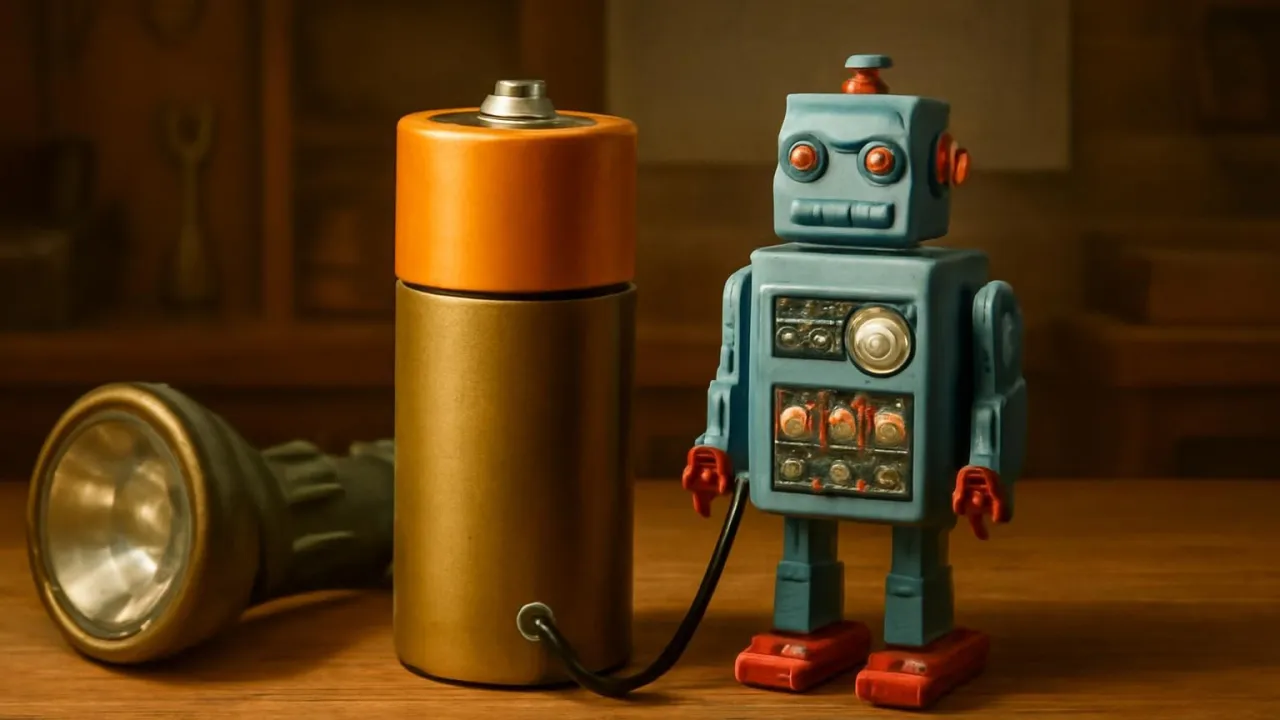
Alkaline batteries last much longer than old-style batteries.
✨ Word Sparks (Grade 2 Glossary)
Tap 🔊 to hear
electricity
Power that flows and lights things
chemical
Stuff that can change or react
remote
A tool to control things far away
🪝
Have you ever wondered how your flashlight shines so bright?
1
The Power Inside
Alkaline batteries are small tubes that store energy for us. When you put one in a toy, it sends power to make it move. The battery has special inside that help make this energy.
2
How It Works
When you turn on your toy or flashlight, the battery starts working. The inside react and create . This electricity flows out and makes things light up or spin.
3
Easy to Use Everywhere
People use alkaline batteries in many things, like and clocks. When a battery runs out, you can put in a new one. That way, your favorite things keep working!
The first portable cassette players and handheld video games used alkaline batteries.
✨ Word Sparks (Grade 3 Glossary)
Tap 🔊 to hear
electrochemistry
How chemicals make electricity
reaction
A change when things mix together
current
The flow of electricity
🪝
What if you could carry a little bit of lightning in your pocket?
1
A Tiny Power Plant
Alkaline batteries are like mini power plants you can hold in your hand. They use chemicals called zinc and manganese dioxide inside a metal case. When you connect the battery, a starts between these chemicals. This reaction releases electricity that powers toys, flashlights, and even game controllers.
2
The Science of Electricity
The battery's power comes from a process called . Inside, the zinc and manganese dioxide react with an alkaline paste. This makes electrons move, creating an electric . That current travels through wires to make things light up or spin.
3
Why Alkaline?
Alkaline batteries use a special alkaline electrolyte, not an acid. This makes them safer and longer-lasting than old batteries. Their design helps them resist leaking and work well in many devices.
4
Changing the World
When alkaline batteries were invented in 1959, they made portable electronics possible. People could now use radios, cameras, and toys anywhere they wanted. The invention sparked new ideas for gadgets all over the world.
1. Which chemicals help make power in alkaline batteries?
2. What made alkaline batteries better than old batteries?
🤯 Mind-Blowing Fact • Grade 4
Lewis Urry demonstrated his new battery by powering a toy car that outlasted all others in the lab.
✨ Word Sparks (Grade 4 Glossary)
Tap 🔊 to hear
electrolyte
A liquid or paste that helps make electricity
corrosion
When metal slowly breaks down
prototype
A first model of an invention
🪝
Imagine the world before you could take music or games anywhere—how did batteries change that?
1
How Alkaline Batteries Work
Alkaline batteries use a chemical reaction between zinc powder and manganese dioxide, separated by an alkaline potassium hydroxide paste. This reaction releases electrons, which flow through a circuit to create an electric current. The battery’s metal case keeps the chemicals safe and allows the current to travel out. Because of this design, alkaline batteries can power devices for a long time without leaking.
2
A 20th Century Breakthrough
Invented in 1959 by Lewis Urry and his team in the United States, the alkaline battery was a major leap from earlier carbon-zinc batteries. Urry’s lasted much longer, making it perfect for radios, cameras, and toys. The invention quickly spread worldwide and changed how people used portable electronics. Soon, families everywhere relied on these batteries for everyday gadgets.
3
Science in Your Pocket
The alkaline battery is an example of electrochemistry in action. When the battery is connected, zinc atoms lose electrons, and manganese dioxide gains them, creating a steady electric current. This process is safe and efficient because the alkaline paste prevents and leakage. The result is a small, reliable power source you can carry anywhere.
4
Global Impact
Alkaline batteries made it possible for people to enjoy music, games, and light wherever they went. Their long-lasting power helped inventors create new portable devices, from cassette players to handheld video games. Today, billions of alkaline batteries are used every year, powering everything from clocks to emergency flashlights around the world.
1. Why did Lewis Urry’s battery become so popular?
2. What does the alkaline paste do in the battery?
🤯 Mind-Blowing Fact • Grade 5
The world uses over 10 billion alkaline batteries every single year!
✨ Word Sparks (Grade 5 Glossary)
Tap 🔊 to hear
energy density
How much power fits in a small space
reduction-oxidation (redox)
A reaction where atoms swap electrons
environmental footprint
The effect something has on nature
🪝
Picture a world where a single click brings a toy robot to life or a flashlight beam to your hand—what’s happening inside that tiny tube?
1
A Chain Reaction of Power
Snap! The moment you flip a switch, a hidden process begins inside an alkaline battery. Zinc powder and manganese dioxide, separated by a potassium hydroxide paste, start a chemical dance. Electrons flow from the zinc anode to the manganese dioxide cathode, creating a steady electric current. The metal casing keeps the reaction safe and directs the current outward to your device. This clever design means you get reliable power for hours, whether you’re exploring the backyard or reading at night.
2
From Bright Idea to Everyday Essential
Back in 1959, engineer Lewis Urry wanted batteries to last longer for radios and toys. He built a prototype at Eveready’s Ohio lab and amazed everyone by powering a toy car far longer than any other battery could. His invention quickly became the standard for portable energy, making gadgets like cassette players, cameras, and handheld games possible around the globe. The alkaline battery’s impact was so big that it changed how families everywhere listened to music and played with electronics.
3
The Science Behind the Spark
Alkaline batteries rely on redox (reduction-oxidation) reactions, where zinc atoms lose electrons and manganese dioxide atoms gain them. Potassium hydroxide, an alkaline electrolyte, allows ions to move quickly and efficiently inside the cell. This setup produces a typical voltage of 1.5 volts per battery and a high , letting devices run longer than with older carbon-zinc batteries. The sealed metal case prevents leaks and corrosion, making these batteries safer and more dependable for everyday use.
4
A Power Revolution—and Its Price
Billions of alkaline batteries are made and used each year, powering clocks, remotes, toys, and emergency lights worldwide. Their invention sparked a revolution in portable technology, but it also brought new environmental challenges. When thrown away, batteries can leak chemicals into the ground and water. Scientists are now developing better recycling methods and greener battery chemistries to protect our planet for future generations.
5
What’s Next for Batteries?
Today, rechargeable batteries and new materials like lithium-ion are changing how we store portable power. Engineers are working on batteries that last even longer and are easier to recycle. The story of the alkaline battery shows how one invention can spark curiosity, change daily life, and inspire future breakthroughs in science and engineering.