Introduction
On the high bluffs overlooking the York River in Yorktown, Virginia, the United States of America won its independence! Here, in October 1781, after six years of war, General George Washington and America’s French allies trapped British General Lord Charles Cornwallis in the decisive of Yorktown—the last major land battle of the American Revolution!
A foundational concept in this investigation is (pronounced seej), which refers to: A military operation in which an army surrounds an enemy fortress or town, cutting off supplies and moving cannons closer in parallel trenches until it surrenders. Every part of Yorktown Battlefield & American Revolution Museum within 🔔 Revolution, Statehood & Civil War Turning Points builds upon this essential concept.
In Grade 3 History (American & Virginia) studies (🔔 Revolution, Statehood & Civil War Turning Points), understanding how , , and work together helps explain real-world patterns. As you read each chapter, notice how these key terms connect structure, process, and environment.
Key Features
Yorktown lies just 13 miles from Jamestown along Virginia’s Historic Triangle! While Jamestown in 1607 was where British colonial rule in America began, Yorktown in 1781 was where British colonial rule ended! In the summer of 1781, General Cornwallis marched 8,000 British and German Hessian soldiers into Yorktown to build defensive earthwork trenches (redoubts) and wait for British Navy supply ships.
To analyze these defining traits accurately, specialists examine (rih-DOWT): An enclosed defensive earthwork fort built outside a main defense line, such as British Redoubts #9 and #10 captured at Yorktown. Alongside (A military operation in which an army surrounds an enemy fortress or town, cutting off supplies and moving cannons closer in parallel trenches until it surrenders.), these specialized characteristics set Yorktown Battlefield & American Revolution Museum apart within 🔔 Revolution, Statehood & Civil War Turning Points.
Field Observation & Evidence: Researchers studying Yorktown Battlefield & American Revolution Museum observe how physical form matches function in History (American & Virginia). Each observable feature provides a clear advantage that supports stability, survival, or performance across changing conditions.
How It Works
General George Washington and French General Comte de Rochambeau saw their golden opportunity! In a brilliant strategic move, French Admiral Comte de Grasse sailed 28 French warships into the mouth of the Chesapeake Bay and defeated the British fleet at the Battle of the Capes (September 5, 1781)—blocking Cornwallis from escaping by sea! Meanwhile, Washington and Rochambeau marched their combined American and French armies 680 miles south from New York to surround Cornwallis on land! On the dark night of October 14, 1781, 400 French soldiers stormed #9 while 400 American soldiers led by Colonel Alexander Hamilton and the Marquis de Lafayette stormed Redoubt #10 with unloaded muskets (so no accidental gunshot would spoil the surprise!), capturing both forts in under 30 minutes!
This step-by-step process relies on (pronounced french uh-LY-uhns), defined as: The vital military partnership between the United States and France (General Rochambeau’s army and Admiral de Grasse’s navy) that made victory at Yorktown possible. Each stage of the process prepares the way for the next phase to unfold.
Cause-and-Effect Balance: When conditions remain balanced, and interact inside the to keep the system running smoothly. If any single link in this sequence is disrupted, the entire pace of activity shifts.
In Our World
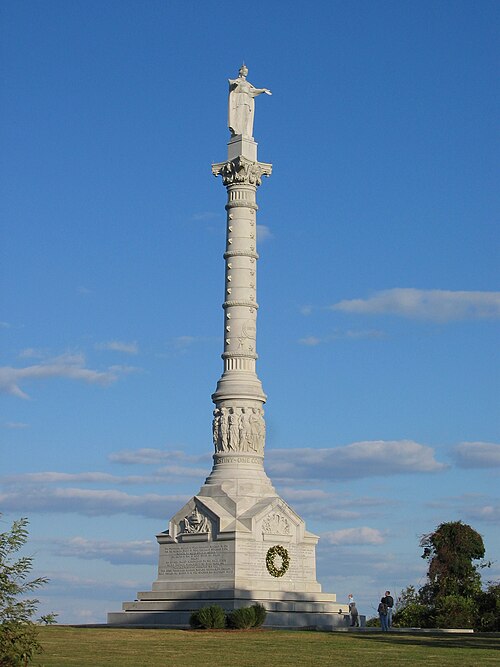
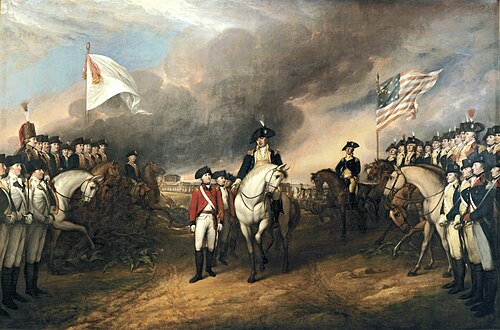
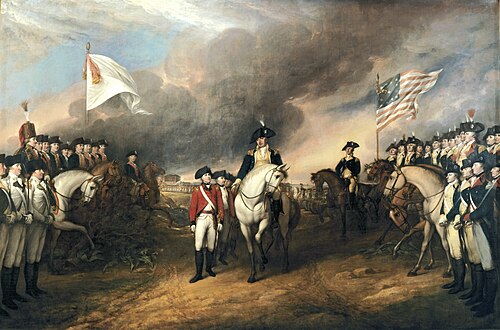
With Allied cannons now firing point-blank into Yorktown, Cornwallis saw no escape. On October 17, 1781, a British drummer boy mounted the parapet in a red coat while an officer waved a white handkerchief! Surrender terms were drafted inside the Moore House on October 18, and on October 19, 1781, over 7,000 British soldiers marched out onto Surrender Field and laid down their arms, leading directly to the 1783 Treaty of Paris recognizing the independent United States! Today, visitors explore both the National Park Service Yorktown Battlefield (original earthworks, cannons, and the Yorktown Victory Monument) and the American Revolution Museum at Yorktown (featuring a Continental Army encampment and a 1780s Revolutionary War farm)!
Understanding how Yorktown Battlefield & American Revolution Museum functions in real environments also involves (rih-DOWT): An enclosed defensive earthwork fort built outside a main defense line, such as British Redoubts #9 and #10 captured at Yorktown. Even when surrounding conditions shift across seasons or regions, the interaction between , Redoubt, and helps sustain balance and resilience in the wider environment.
Global & Practical Significance: The combination of French naval superiority at the Battle of the Capes and the Franco-American land sealed Cornwallis’s fate. Furthermore, Capturing Redoubts #9 and #10 completed the second Allied siege line within point-blank range of Cornwallis’s headquarters.
Amazing Facts
1. Remarkable Scale & Numbers: Why did Alexander Hamilton’s soldiers remove the flints and gunpowder from their muskets before charging British #10 at night? So nobody could accidentally fire a shot and alert the British sentries—they captured the fort in 10 minutes without firing a single bullet! This discovery highlights why is central to understanding Yorktown Battlefield & American Revolution Museum.
2. Extraordinary Adaptation & Design: Claiming to be sick on surrender day (October 19, 1781), British General Cornwallis sent his second-in-command, General Charles O’Hara, to hand over his sword. When O’Hara tried to hand the sword to French General Rochambeau, Rochambeau pointed to George Washington—and Washington had his own second-in-command, General Benjamin Lincoln, accept the sword! Specialized conditions involving make these adaptations possible.
3. Surprising Scientific & Historical Record: Heroic enslaved Virginian James Armistead (Lafayette) served as a double-agent spy inside General Cornwallis’s Yorktown headquarters—feeding false information to the British while sending Cornwallis’s real fortification secrets straight to the Marquis de Lafayette and George Washington! Over time, processes linked to leave a lasting mark across 🔔 Revolution, Statehood & Civil War Turning Points.
Read & Review
Chapter Synthesis: Throughout this investigation of Yorktown Battlefield & American Revolution Museum in History (American & Virginia) (🔔 Revolution, Statehood & Civil War Turning Points), we examined its core foundations, defining traits, step-by-step mechanisms, and real-world connections using key terms like , , and .
Academic Vocabulary Review: • (seej): A military operation in which an army surrounds an enemy fortress or town, cutting off supplies and moving cannons closer in parallel trenches until it surrenders. • (rih-DOWT): An enclosed defensive earthwork fort built outside a main defense line, such as British Redoubts #9 and #10 captured at Yorktown. • (french uh-LY-uhns): The vital military partnership between the United States and France (General Rochambeau’s army and Admiral de Grasse’s navy) that made victory at Yorktown possible.
Critical Thinking Check: (1) How did American and French forces work together by both LAND and SEA to trap British General Lord Cornwallis at Yorktown in 1781? — French Admiral de Grasse’s fleet blocked the Chesapeake Bay by sea while General Washington’s American army and General Rochambeau’s French army surrounded Yorktown by land. (2) What was the turning point on the night of October 14, 1781, led by Colonel Alexander Hamilton and French troops? — A silent nighttime bayonet assault that captured key British earthen forts #9 and Redoubt #10, allowing Allied cannons to overlook all of Yorktown.