Introduction
Flip a wall switch and a lamp lights up instantly! Electricity is the flow of tiny negatively charged particles called electrons moving from atom to atom. It powers our homes, computers, electric cars, and even the nerve signals inside your own brain!
An important word to know in this book is (kuhn-DUK-ter). Conductor means: A material such as copper, aluminum, or gold through which electric current (electrons) flows easily. Learning about Conductor helps us understand how What Is Electricity? fits into Everyday Physics & Chemistry.
Key Features
Every atom has a center nucleus with positive protons and neutral neutrons, orbited by negative electrons. In metals like copper, silver, and aluminum, the outer electrons are held loosely and flow easily from atom to atom—making metals excellent electrical conductors. Materials like rubber, plastic, glass, and dry wood hold their electrons tightly, acting as insulators that keep us safe from shocks.
Scientists and explorers also look closely at (IN-suh-lay-ter), which means: A material such as rubber, plastic, or glass that blocks the free flow of electric current. These special traits make What Is Electricity? easy to spot and study.

How It Works
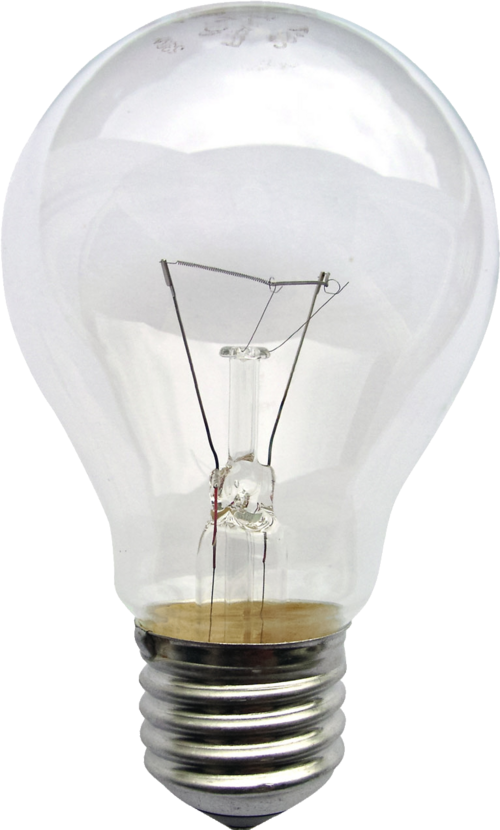
For electric current to power a lightbulb or motor, electrons need a complete, unbroken loop called a ! A battery or power plant provides voltage (the electrical push), copper wires guide the electrons through the lightbulb filament or LED, and the current returns to the source. When you flip a light switch OFF, it opens a tiny gap in the wire (an open circuit), stopping the flow immediately.
Here is another helpful term: (klohzd SUR-kit). It means: A complete, unbroken circular path that allows electric current to flow from a power source through a device and back. Step by step, and Closed Circuit work together in nature.
In Our World
How do power plants generate electricity? Almost all power plants—whether spun by falling water at a hydroelectric dam, wind turbines, or steam—use Michael Faraday’s 1831 discovery of electromagnetic induction: spinning a coil of copper wire inside a giant magnet pushes electrons through power lines! Solar panels use silicon crystals to convert sunlight directly into electric current.
Understanding how What Is Electricity? works in our world also involves (IN-suh-lay-ter): A material such as rubber, plastic, or glass that blocks the free flow of electric current. Even when surrounding conditions shift across seasons or regions, the interaction between , Insulator, and helps sustain balance and resilience in the wider environment.
Amazing Facts
Amazing Fact #1: Rubber plastic coatings around power cords are electrical insulators that keep electrons flowing safely inside the copper wire instead of shocking your hand!
Amazing Fact #2: Your own brain and heart run on bioelectricity—tiny electrical impulses jumping across nerve cells at up to 400 km/h (250 mph).
Amazing Fact #3: An LED (Light-Emitting Diode) bulb uses up to 85% less electricity than an old-fashioned incandescent bulb because it makes light without wasting energy as extreme heat.
Read & Review
Let's review what we discovered about What Is Electricity?! In this book, we explored how , , and connect to Everyday Physics & Chemistry.
Key Question #1: Why are electrical wires made of copper on the inside and coated with plastic or rubber on the outside? Answer: Copper is a that lets electrons flow easily, while plastic/rubber is an that prevents shocks. Metals conduct electric current while rubber and plastic insulate it safely.
Key Question #2: What happens inside the wires when you flip a classroom light switch to OFF? Answer: The switch opens a gap in the circuit (open circuit), stopping the flow of electrons. Current only flows through a closed, continuous circuit loop.