
Introduction
You spend about one-third of your entire life asleep—and while you rest, your brain and body are busy performing essential night-shift work! During sleep, your body repairs muscles, releases growth hormone, washes away brain waste, and files new memories.
An important word to know in this book is (sur-KAY-dee-uhn RITH-uhm). Circadian Rhythm means: The body’s internal 24-hour biological clock that regulates sleepiness and wakefulness in response to light and dark. Learning about Circadian Rhythm helps us understand how What Happens When You Sleep fits into The Human Body & Health.
Key Features
Inside your brain, a master biological clock called the responds to daylight and darkness. When evening darkness falls, your pineal gland releases a natural hormone called that signals your body that it is time to feel sleepy.
Scientists and explorers also look closely at (rem sleep), which means: Rapid Eye Movement sleep, the stage of the sleep cycle when vivid dreaming and memory consolidation occur. These special traits make What Happens When You Sleep easy to spot and study.
How It Works
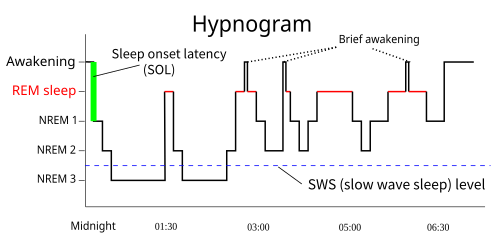
Every night, your brain cycles every 90 minutes through two main types of sleep: Non-REM (NREM) sleep and REM (Rapid Eye Movement) sleep. During deep Non-, your heart rate slows, your immune system strengthens, and your pituitary gland releases human growth hormone so kids literally grow overnight! During REM sleep, your eyes dart beneath closed eyelids, you have vivid dreams, and your brain locks in skills and facts you learned at school.
Here is another helpful term: (mel-uh-TOH-nin). It means: A natural hormone released by the brain in the evening dark to help the body fall asleep. Step by step, and Melatonin work together in nature.
In Our World
School-age kids (ages 6 to 12) need 9 to 11 hours of sleep every night! In the Animal Kingdom, sleep looks wild: dolphins sleep with only half their brain at a time so the other half can swim up to breathe air, and giraffes sleep for as little as 30 minutes a day!
Understanding how What Happens When You Sleep works in our world also involves (rem sleep): Rapid Eye Movement sleep, the stage of the sleep cycle when vivid dreaming and memory consolidation occur. Even when surrounding conditions shift across seasons or regions, the interaction between , REM Sleep, and helps sustain balance and resilience in the wider environment.
Amazing Facts
Amazing Fact #1: Kids actually grow taller mostly while sleeping because the pituitary gland releases up to 75% of daily human growth hormone during deep Non-!
Amazing Fact #2: During REM dream sleep, your brain stem temporarily switches off the nerves to your arm and leg muscles (atonia) so you don’t act out your dreams and fall out of bed!
Amazing Fact #3: Bottlenose dolphins and migrating frigatebirds practice "unihemispheric sleep"—putting one half of their brain to sleep while keeping the other half awake and one eye open.
Read & Review
Let's review what we discovered about What Happens When You Sleep! In this book, we explored how , , and connect to The Human Body & Health.
Key Question #1: Why is getting 9 to 11 hours of sleep so important for school-age children? Answer: Deep sleep releases growth hormone to build bones/muscles, while locks in new school memories. Physical growth/repair occurs during deep NREM sleep, and memory consolidation occurs during NREM and REM sleep.
Key Question #2: How does a bottlenose dolphin sleep in the ocean without drowning? Answer: It sleeps with only one half of its brain at a time so the other half can swim to the surface to breathe. Dolphins use unihemispheric slow-wave sleep, alternating which brain hemisphere rests.