Introduction
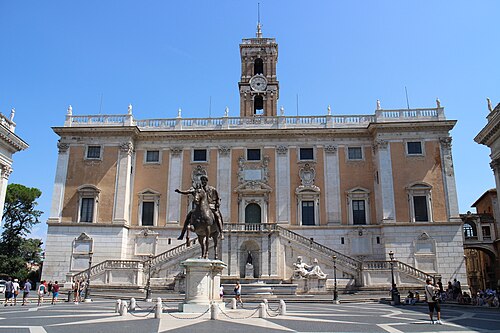
While the President leads the federal government in Washington, D.C., and the Governor leads the state government, who makes sure your town’s fire trucks roll, parks stay clean, snowplows clear neighborhood streets, and libraries stay open? Your local city government, led by the !
A foundational concept in this investigation is (pronounced MAY-er), which refers to: The elected head of a city or town’s municipal government who works at City Hall. Every part of What Does a Mayor Do? within Civics & Community builds upon this essential concept.
At the Grade 4 level of Social Sciences & Culture (Civics & Community), researchers compare structure, function, and environmental context to see how , , and shape measurable outcomes.
Key Features
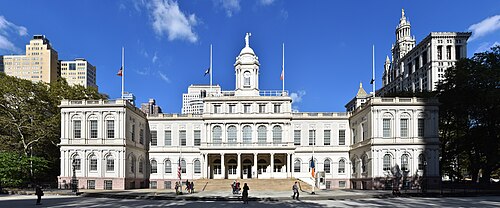
The is the elected chief executive leader of a city or town (municipal government) and works out of City Hall alongside an elected legislative group called the (or Town Council). Citizens of the city vote in local elections to choose their mayor.
To analyze these defining traits accurately, specialists examine (SIT-ee KOWN-suhl): The elected group of local lawmakers who vote on city ordinances (laws) and approve the city budget. Alongside (The elected head of a city or town’s municipal government who works at City Hall.), these specialized characteristics set What Does a Mayor Do? apart within Civics & Community.
Field Observation & Evidence: Researchers studying What Does a Do? observe how physical form matches function in Social Sciences & Culture. Each observable feature provides a clear advantage that supports stability, survival, or performance across changing conditions.
How It Works
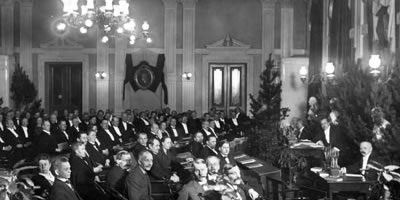
Working with the , the proposes the city’s annual budget—deciding how local tax dollars pay for police and fire departments, clean drinking water pipes, trash and recycling pickup, street lights, sidewalks, and community recreation centers! In a "Strong-Mayor" system, the mayor directly hires department heads; in a "Council-Manager" system, the mayor and council hire a professional City Manager to run daily operations.
This step-by-step process relies on (pronounced OR-duh-nuhns), defined as: A local law or regulation passed by a city or town council. Each stage of the process prepares the way for the next phase to unfold.
Cause-and-Effect Balance: When conditions remain balanced, and interact inside the to keep the system running smoothly. If any single link in this sequence is disrupted, the entire pace of activity shifts.
In Our World
Local government is the level of democracy closest to your everyday life! Kids and parents can attend public meetings at City Hall—or write letters to the —to ask for a new crosswalk near a school, a community garden, or a neighborhood skate park.
Understanding how What Does a Do? functions in real environments also involves (SIT-ee KOWN-suhl): The elected group of local lawmakers who vote on city ordinances (laws) and approve the city budget. Even when surrounding conditions shift across seasons or regions, the interaction between Mayor, City Council, and helps sustain balance and resilience in the wider environment.
Global & Practical Significance: Municipal governments led by the and manage local infrastructure, public safety, and community services. Furthermore, Municipal laws passed by a city or town council are called ordinances.
Amazing Facts
1. Remarkable Scale & Numbers: Because local government handles water, roads, parks, libraries, and emergency services, a city ’s decisions touch your family’s daily routine every single hour! This discovery highlights why Mayor is central to understanding What Does a Mayor Do?.
2. Extraordinary Adaptation & Design: In some small historic towns across the United States, citizens still gather once a year at an open "Town Meeting" to vote directly on the town budget by raising their hands! Specialized conditions involving make these adaptations possible.
3. Surprising Scientific & Historical Record: A city’s local laws—such as speed limits on neighborhood streets, leash rules at dog parks, or recycling days—are called "ordinances." Over time, processes linked to leave a lasting mark across Civics & Community.
Read & Review
Chapter Synthesis: Throughout this investigation of What Does a Do? in Social Sciences & Culture (Civics & Community), we examined its core foundations, defining traits, step-by-step mechanisms, and real-world connections using key terms like Mayor, , and .
Academic Vocabulary Review: • (MAY-er): The elected head of a city or town’s municipal government who works at City Hall. • (SIT-ee KOWN-suhl): The elected group of local lawmakers who vote on city ordinances (laws) and approve the city budget. • (OR-duh-nuhns): A local law or regulation passed by a city or town council.
Critical Thinking Check: (1) Which everyday community services are typically managed by a and local city government? — Fire and police departments, local streets and snowplows, parks, libraries, and clean water/trash services. (2) What is a local law passed by a called? — An .