Introduction
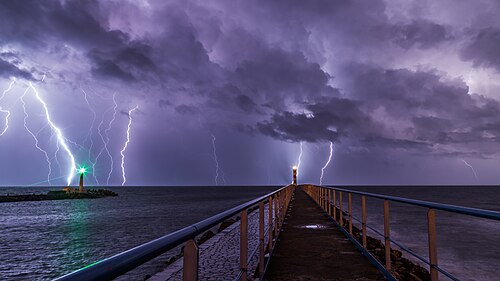
Every second, about 100 bolts of lightning flash across Earth’s sky! Lightning is a giant spark of —just like the tiny zap you feel when you shuffle across a wool carpet in winter and touch a metal doorknob, multiplied millions of times inside a storm cloud.
An important word to know in this book is (STAT-ik ih-lek-TRIS-uh-tee). Static Electricity means: An imbalance of positive and negative electric charges built up on the surface of objects or inside clouds. Learning about Static Electricity helps us understand how What Causes Lightning? fits into Extreme Weather.
Key Features
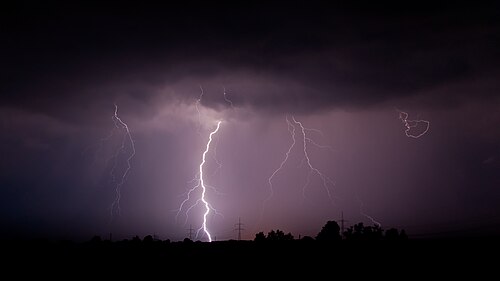
Towering thunderclouds can reach 12 to 18 kilometers (40,000 to 60,000 feet) high. Inside the cloud, turbulent updrafts and downdrafts slam tiny ice crystals, soft hail (graupel), and supercooled water droplets against one another.
Scientists and explorers also look closely at (kyoo-myuh-loh-NIM-buhs), which means: A towering, anvil-topped vertical cloud that produces thunderstorms, heavy rain, hail, and lightning. These special traits make What Causes Lightning? easy to spot and study.
How It Works
As ice particles collide, lighter positively charged ice crystals rise to the top of the cloud while heavier negatively charged hail sinks to the bottom. This negative charge attracts a positive charge on the ground below (especially on tall trees and towers). When the voltage gap becomes huge, an invisible "" races down and meets a rising streamer, completing the circuit in a brilliant flash!
Here is another helpful term: (stept LEE-der). It means: The initial invisible channel of negatively charged air that zigzags downward from a cloud just before a lightning flash. Step by step, and Stepped Leader work together in nature.
In Our World
A lightning bolt heats the air around it to 30,000°C (54,000°F)—five times hotter than the surface of the Sun! That extreme heat makes the air expand faster than the speed of sound, creating the shockwave we hear as thunder. Because light travels almost instantly while sound travels 1 mile every 5 seconds, counting the seconds between flash and thunder tells you how far away the storm is.
Understanding how What Causes Lightning? works in our world also involves (kyoo-myuh-loh-NIM-buhs): A towering, anvil-topped vertical cloud that produces thunderstorms, heavy rain, hail, and lightning. Even when surrounding conditions shift across seasons or regions, the interaction between , Cumulonimbus, and helps sustain balance and resilience in the wider environment.
Amazing Facts
Amazing Fact #1: A single bolt of lightning heats the air to five times hotter than the surface of the Sun in less than a millisecond!
Amazing Fact #2: If you count 10 seconds between seeing a lightning flash and hearing the thunder, the lightning struck about 2 miles (3.2 km) away.
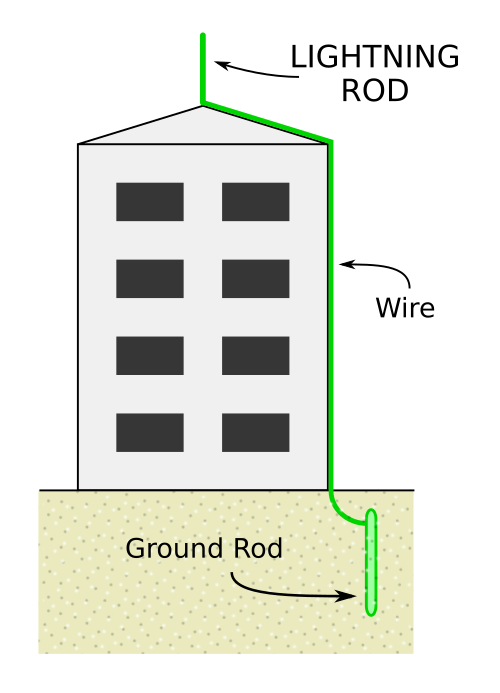
Amazing Fact #3: Benjamin Franklin invented the metal lightning rod in 1752 to safely guide lightning’s electrical charge into the ground without setting buildings on fire.
Read & Review
Let's review what we discovered about What Causes Lightning?! In this book, we explored how , , and connect to Extreme Weather.
Key Question #1: What causes the loud boom of thunder during a thunderstorm? Answer: Lightning superheats the air to 54,000°F, causing it to expand explosively as a sound shockwave. Rapid thermal expansion of air along the lightning channel creates the sonic shockwave of thunder.
Key Question #2: If you see a flash of lightning and hear thunder 5 seconds later, approximately how far away was the strike? Answer: About 1 mile (1.6 kilometers) away. Sound travels roughly 1 mile every 5 seconds (or 1 kilometer every 3 seconds).