Introduction
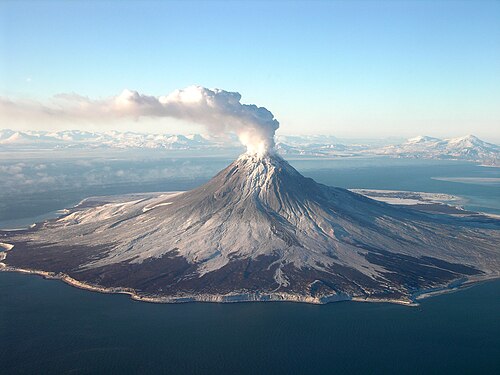
Deep beneath Earth’s solid rocky crust, temperatures are so hot that rock melts into glowing liquid . A volcano is an opening in Earth’s crust where magma, volcanic ash, and gases erupt onto the surface—where molten rock is renamed lava!
A foundational concept in this investigation is (pronounced MAG-muh), which refers to: Molten (melted) rock and dissolved gases stored beneath Earth’s crust before an eruption. Every part of Volcanoes within Earth's Wonders builds upon this essential concept.
In Grade 5 advanced nonfiction inquiry across Nature & Environment (Earth's Wonders), synthesizing primary evidence around , , and reveals how complex systems operate and adapt over time.
Key Features
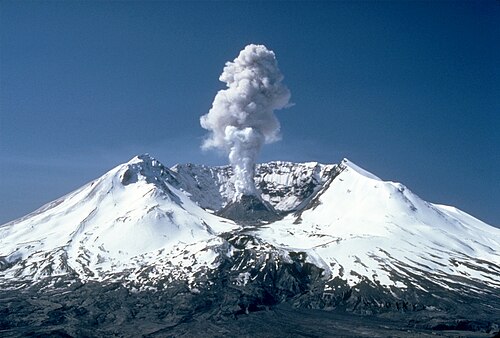
Geologists group volcanoes into three main shapes: broad, gently sloping shield volcanoes (like Mauna Loa in Hawaii) built by runny lava; steep, cone-shaped composite or stratovolcanoes (like Mount St. Helens and Mount Fuji) that erupt explosively; and smaller cinder cones.
To analyze these defining traits accurately, specialists examine (ring uv fyre): A horseshoe-shaped belt around the Pacific Ocean where tectonic plates collide, causing most of Earth’s volcanoes and earthquakes. Alongside (Molten (melted) rock and dissolved gases stored beneath Earth’s crust before an eruption.), these specialized characteristics set Volcanoes apart within Earth's Wonders.
Field Observation & Evidence: Researchers studying Volcanoes observe how physical form matches function in Nature & Environment. Each observable feature provides a clear advantage that supports stability, survival, or performance across changing conditions.
How It Works
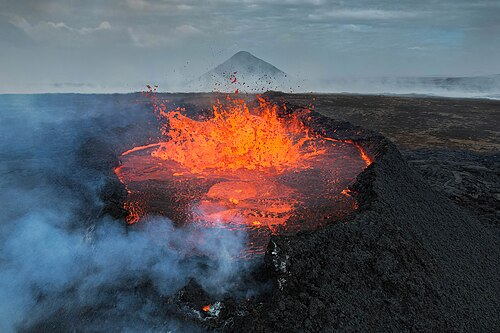
Why do some volcanoes ooze calm rivers of lava while others explode? It depends on silica and trapped gas! Runny basalt lava lets gas bubbles escape gently. Thick, sticky, silica-rich traps steam and gas under tremendous pressure until it blasts skyward like a shaken soda bottle.
This step-by-step process relies on (pronounced sheeld vol-KAY-noh), defined as: A wide, gently sloping volcano built by layers of runny, fast-flowing basalt lava, like those in Hawaii. Each stage of the process prepares the way for the next phase to unfold.
Cause-and-Effect Balance: When conditions remain balanced, and interact inside the to keep the system running smoothly. If any single link in this sequence is disrupted, the entire pace of activity shifts.
In Our World
Roughly 75% of the world’s 1,500 active volcanoes sit along the ""—a 40,000-kilometer horseshoe of tectonic plate boundaries circling the Pacific Ocean. Over millions of years, underwater volcanoes built the entire Hawaiian island chain and enrich volcanic soils with minerals.
Understanding how Volcanoes functions in real environments also involves (ring uv fyre): A horseshoe-shaped belt around the Pacific Ocean where tectonic plates collide, causing most of Earth’s volcanoes and earthquakes. Even when surrounding conditions shift across seasons or regions, the interaction between , Ring of Fire, and helps sustain balance and resilience in the wider environment.
Global & Practical Significance: Molten rock is called beneath the crust and lava once it erupts. Furthermore, Subduction zones around the Pacific generate most of the world’s volcanic activity.
Amazing Facts
1. Remarkable Scale & Numbers: and lava are the exact same molten rock: it is called magma while underground and lava the moment it breaks through Earth’s surface! This discovery highlights why Magma is central to understanding Volcanoes.
2. Extraordinary Adaptation & Design: Mauna Kea in Hawaii is taller than Mount Everest when measured from its underwater base on the Pacific Ocean floor (over 10,000 meters tall!). Specialized conditions involving make these adaptations possible.
3. Surprising Scientific & Historical Record: Pumice is a volcanic rock filled with so many hardened gas bubbles that it is the only rock on Earth that floats on water! Over time, processes linked to leave a lasting mark across Earth's Wonders.
Read & Review
Chapter Synthesis: Throughout this investigation of Volcanoes in Nature & Environment (Earth's Wonders), we examined its core foundations, defining traits, step-by-step mechanisms, and real-world connections using key terms like , , and .
Academic Vocabulary Review: • (MAG-muh): Molten (melted) rock and dissolved gases stored beneath Earth’s crust before an eruption. • (ring uv fyre): A horseshoe-shaped belt around the Pacific Ocean where tectonic plates collide, causing most of Earth’s volcanoes and earthquakes. • (sheeld vol-KAY-noh): A wide, gently sloping volcano built by layers of runny, fast-flowing basalt lava, like those in Hawaii.
Critical Thinking Check: (1) What is the difference between and lava? — Magma is molten rock underground; lava is molten rock that has erupted onto Earth’s surface. (2) Where are about 75% of Earth’s active volcanoes located? — Along the Pacific "" where tectonic plates meet.