Introduction
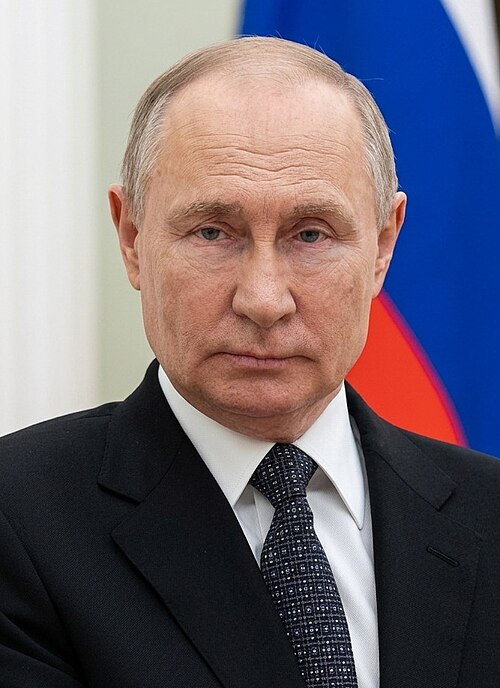
Stretching across 11 time zones from the Baltic Sea in Europe to the Pacific Ocean near Alaska, Russia is the largest country on Earth by land area! Since December 31, 1999, Vladimir Putin (born 1952) has served as Russia’s central political figure—either as President or Prime Minister—making him the longest-serving Russian or Soviet leader since the mid-20th century and a central figure in 21st-century global .
A foundational concept in this investigation is (pronounced jee-oh-POL-ih-tiks), which refers to: The study of how a country’s geography—its borders, natural resources, sea ports, and neighbors—influences international politics and foreign relations. Every part of Vladimir Putin: Russia & 21st-Century Geopolitics within 🌍 World Leaders, Statesmen & Global Voices builds upon this essential concept.
In Grade 5 advanced nonfiction inquiry across Famous People (Movers & Shakers) (🌍 World Leaders, Statesmen & Global Voices), synthesizing primary evidence around , , and Dissolution of the Soviet Union (1991) reveals how complex systems operate and adapt over time.
Key Features
Born on October 7, 1952, in Leningrad (today once again called Saint Petersburg, the historic port city founded by Tsar Peter the Great in 1703), Vladimir Putin grew up in a communal apartment with parents who had survived the 872-day World War II Siege of Leningrad. A dedicated practitioner of judo and sambo martial arts from age 12, he graduated from the Leningrad State University Law Faculty in 1975 and spent 16 years as an intelligence officer in the Soviet KGB—including a five-year posting in Dresden, East Germany (1985–1990), when the Berlin Wall fell.
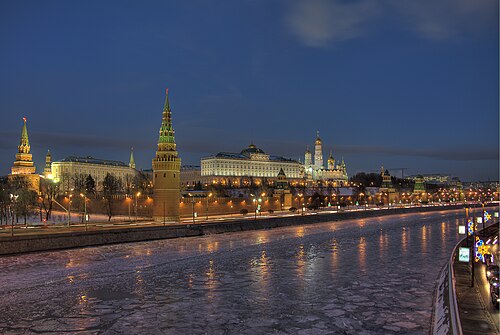
To analyze these defining traits accurately, specialists examine (MOS-koh KREM-lin): The historic fortified complex in the heart of Moscow overlooking Red Square that serves as the official residence and workplace of the President of Russia. Alongside (The study of how a country’s geography—its borders, natural resources, sea ports, and neighbors—influences international politics and foreign relations.), these specialized characteristics set Vladimir Putin: Russia & 21st-Century Geopolitics apart within 🌍 World Leaders, Statesmen & Global Voices.
Field Observation & Evidence: Researchers studying Vladimir Putin: Russia & 21st-Century observe how physical form matches function in Famous People (Movers & Shakers). Each observable feature provides a clear advantage that supports stability, survival, or performance across changing conditions.
How It Works
Following the dissolution of the Soviet Union (USSR) in December 1991 into 15 independent republics, Putin returned to Saint Petersburg to work in the mayor’s administration under his former law professor Anatoly Sobchak, then moved to Moscow in 1996. On New Year’s Eve—December 31, 1999—Russia’s first post-Soviet president, Boris Yeltsin, unexpectedly resigned on live television and named Prime Minister Putin Acting President. Putin won the March 2000 presidential election and has remained at the center of the across multiple terms.
This step-by-step process relies on Dissolution of the Soviet Union (1991) (pronounced dis-uh-LOO-shuhn), defined as: The December 1991 breakup of the Union of Soviet Socialist Republics (USSR) into 15 separate independent nations, ending the Cold War. Each stage of the process prepares the way for the next phase to unfold.
Cause-and-Effect Balance: When conditions remain balanced, and Dissolution of the Soviet Union (1991) interact inside the to keep the system running smoothly. If any single link in this sequence is disrupted, the entire pace of activity shifts.
In Our World
To understand 21st-century international affairs, geographers study how Russia’s vast geography—holding the world’s largest reserves of natural gas, vast Siberian forests (the Taiga), Arctic coastlines, and Lake Baikal (the deepest freshwater lake on Earth)—shapes global energy markets and diplomacy. While the early 2000s saw Russian economic recovery fueled by oil and gas exports and cooperation on the International Space Station, recent decades brought sharp geopolitical tensions and sanctions with Western nations and NATO, particularly following the 2014 annexation of Crimea and the 2022 conflict with Ukraine.
Understanding how Vladimir Putin: Russia & 21st-Century functions in real environments also involves (MOS-koh KREM-lin): The historic fortified complex in the heart of Moscow overlooking Red Square that serves as the official residence and workplace of the President of Russia. Even when surrounding conditions shift across seasons or regions, the interaction between Geopolitics, Moscow Kremlin, and Dissolution of the Soviet Union (1991) helps sustain balance and resilience in the wider environment.
Global & Practical Significance: Stretching from Kaliningrad on the Baltic Sea to the Bering Strait near Alaska, Russia covers roughly one-eighth of Earth’s inhabited land area. Furthermore, The 1991 dissolution of the USSR created 15 sovereign republics and ended the 20th-century Cold War.
Amazing Facts
1. Remarkable Scale & Numbers: Russia is so vast—covering 17.1 million square kilometers (6.6 million square miles)—that it spans 11 different time zones and has a greater surface area than the dwarf planet Pluto! This discovery highlights why is central to understanding Vladimir Putin: Russia & 21st-Century Geopolitics.
2. Extraordinary Adaptation & Design: The word "Kremlin" means "fortress inside a city"; the , with its red brick walls and 20 towers along the Moskva River, has been the seat of Russian government for centuries! Specialized conditions involving Moscow Kremlin make these adaptations possible.
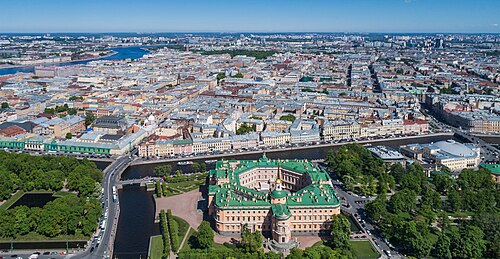
3. Surprising Scientific & Historical Record: Vladimir Putin’s hometown of Saint Petersburg is built across 42 islands connected by 342 bridges over the Neva River and canals, earning it the nickname "the Venice of the North"—and it is home to the world-famous Hermitage Museum! Over time, processes linked to Dissolution of the Soviet Union (1991) leave a lasting mark across 🌍 World Leaders, Statesmen & Global Voices.
Read & Review
Chapter Synthesis: Throughout this investigation of Vladimir Putin: Russia & 21st-Century in Famous People (Movers & Shakers) (🌍 World Leaders, Statesmen & Global Voices), we examined its core foundations, defining traits, step-by-step mechanisms, and real-world connections using key terms like Geopolitics, , and Dissolution of the Soviet Union (1991).
Academic Vocabulary Review: • (jee-oh-POL-ih-tiks): The study of how a country’s geography—its borders, natural resources, sea ports, and neighbors—influences international politics and foreign relations. • (MOS-koh KREM-lin): The historic fortified complex in the heart of Moscow overlooking Red Square that serves as the official residence and workplace of the President of Russia. • Dissolution of the Soviet Union (1991) (dis-uh-LOO-shuhn): The December 1991 breakup of the Union of Soviet Socialist Republics (USSR) into 15 separate independent nations, ending the Cold War.
Critical Thinking Check: (1) Why does Russia span 11 different time zones from west to east? — Because at 17.1 million square kilometers across Europe and northern Asia (), Russia is the largest country on Earth by land area. (2) What happened in December 1991 at the end of the Cold War that reshaped the map of Eastern Europe and Northern Asia? — The Soviet Union (USSR) dissolved into 15 independent nations, with the Russian as the largest successor state.