Introduction
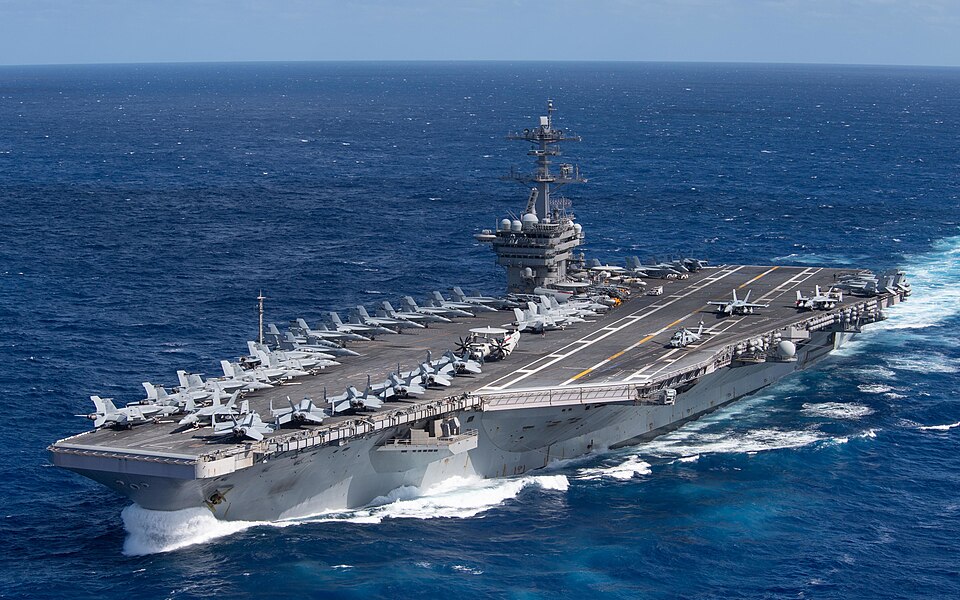
USS Theodore Roosevelt (CVN-71) is a Nimitz-Class Nuclear Aircraft Carrier nuclear-powered supercarrier of the United States Navy (October 25, 1986), universally recognized by its nickname "The Big Stick" and ship motto "Qui Plantavit Curabit ("He Who Has Planted Will Preserve")." Constructed by master shipbuilders at Newport News Shipbuilding on the James River in Virginia, it honors 26th U.S. President Theodore Roosevelt, conservationist and former Assistant Secretary of the Navy.
A foundational concept in this investigation is (pronounced NOO-klee-er proh-PUL-shun), which refers to: Using heat from a shielded naval nuclear reactor to produce steam that spins propulsion turbines for 20+ years without refueling. Every part of USS Theodore Roosevelt (CVN-71): "The Big Stick" Supercarrier within ⚓ U.S. Navy Nuclear-Powered Aircraft Carriers (All 11 Active + CVN-79 & CVN-65) builds upon this essential concept.
In Grade 3 United States Armed Forces studies (⚓ U.S. Navy Nuclear-Powered Aircraft Carriers (All 11 Active + CVN-79 & CVN-65)), understanding how , , and work together helps explain real-world patterns. As you read each chapter, notice how these key terms connect structure, process, and environment.
Key Features
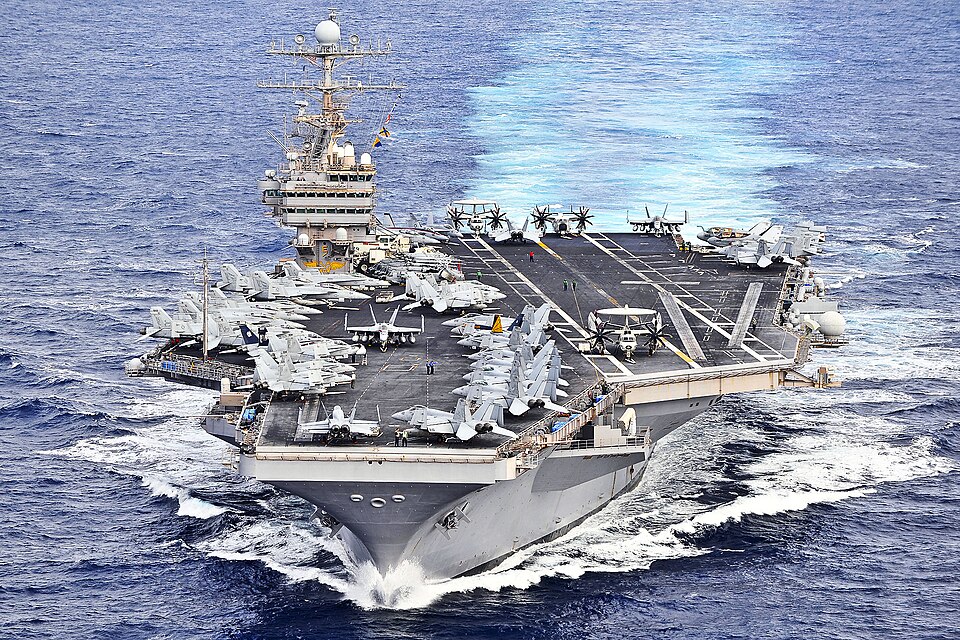
Displacing approximately 100,000 tons at full load and stretching 1,092 feet (332.8 meters) from bow to stern, USS Theodore Roosevelt features a 4.5-acre equipped with four steam catapults and high-strength arresting gear wires capable of launching and recovering aircraft in seconds.
To analyze these defining traits accurately, specialists examine (ANG-guld flyt dek): A carrier runway angled slightly off the ship's centerline so aircraft can launch from bow catapults while others land safely aft. Alongside (Using heat from a shielded naval nuclear reactor to produce steam that spins propulsion turbines for 20+ years without refueling.), these specialized characteristics set USS Theodore Roosevelt (CVN-71): "The Big Stick" Supercarrier apart within ⚓ U.S. Navy Nuclear-Powered Aircraft Carriers (All 11 Active + CVN-79 & CVN-65).
Field Observation & Evidence: Researchers studying USS Theodore Roosevelt (CVN-71): "The Big Stick" Supercarrier observe how physical form matches function in United States Armed Forces. Each observable feature provides a clear advantage that supports stability, survival, or performance across changing conditions.
How It Works
Powered by two Westinghouse A4W nuclear reactors driving four massive bronze propellers to speeds exceeding 30 knots, USS Theodore Roosevelt generates enough electrical and thermal energy to power a city of 100,000 homes and distill over 400,000 gallons of fresh drinking water from seawater every single day.
This step-by-step process relies on (pronounced KAT-uh-pult and uh-RES-ting geer), defined as: High-powered deck launchers that accelerate jets from 0 to 165 mph in 2 seconds, paired with steel wires that stop landing planes in 300 feet. Each stage of the process prepares the way for the next phase to unfold.
Cause-and-Effect Balance: When conditions remain balanced, and interact inside the to keep the system running smoothly. If any single link in this sequence is disrupted, the entire pace of activity shifts.
In Our World
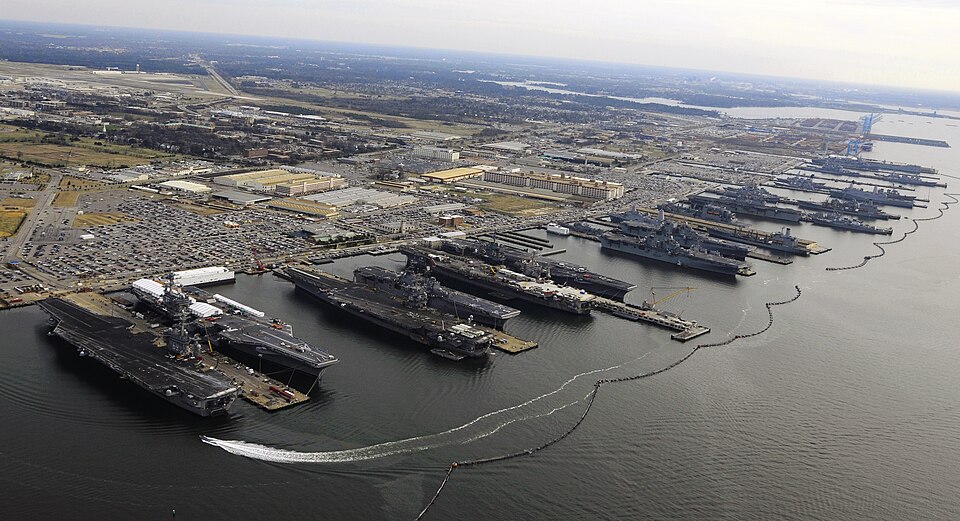
Constructed at Newport News Shipbuilding in Virginia using modular mega-block assembly—which shaved 16 months off construction time—USS Theodore Roosevelt ("The Big Stick") was homeported at Naval Station Norfolk for decades before shifting to the Pacific Fleet. Homeported at Naval Air Station North Island, San Diego, CA (Formerly Norfolk, VA) with deep operational and shipbuilding roots in Built by Modular Construction & Commissioned at Newport News, Virginia (1986), USS Theodore Roosevelt serves as a mobile diplomatic, defense, and disaster-relief flagship across global oceans.
Understanding how USS Theodore Roosevelt (CVN-71): "The Big Stick" Supercarrier functions in real environments also involves (ANG-guld flyt dek): A carrier runway angled slightly off the ship's centerline so aircraft can launch from bow catapults while others land safely aft. Even when surrounding conditions shift across seasons or regions, the interaction between , Angled Flight Deck, and helps sustain balance and resilience in the wider environment.
Global & Practical Significance: USS Theodore Roosevelt carries hull classification symbol CVN-71 as part of the Nimitz-Class Nuclear Aircraft Carrier. Furthermore, USS Theodore Roosevelt sails under the motto "Qui Plantavit Curabit ("He Who Has Planted Will Preserve")" and is known across the fleet as "The Big Stick."
Amazing Facts
1. Remarkable Scale & Numbers: USS Theodore Roosevelt's nickname, "The Big Stick," comes from President Roosevelt's famous proverb: "Speak softly and carry a big stick; you will go far." This discovery highlights why is central to understanding USS Theodore Roosevelt (CVN-71): "The Big Stick" Supercarrier.
2. Extraordinary Adaptation & Design: Virginia shipbuilders pioneered modular construction on CVN-71, pre-building giant steel hull sections on land and lifting them into drydock with a 900-ton crane! Specialized conditions involving make these adaptations possible.
3. Surprising Scientific & Historical Record: The carrier's onboard hospital has an intensive-care unit, operating room, dental clinic, and X-ray lab. Over time, processes linked to leave a lasting mark across ⚓ U.S. Navy Nuclear-Powered Aircraft Carriers (All 11 Active + CVN-79 & CVN-65).
Read & Review
Chapter Synthesis: Throughout this investigation of USS Theodore Roosevelt (CVN-71): "The Big Stick" Supercarrier in United States Armed Forces (⚓ U.S. Navy Nuclear-Powered Aircraft Carriers (All 11 Active + CVN-79 & CVN-65)), we examined its core foundations, defining traits, step-by-step mechanisms, and real-world connections using key terms like , , and .
Academic Vocabulary Review: • (NOO-klee-er proh-PUL-shun): Using heat from a shielded naval nuclear reactor to produce steam that spins propulsion turbines for 20+ years without refueling. • (ANG-guld flyt dek): A carrier runway angled slightly off the ship's centerline so aircraft can launch from bow catapults while others land safely aft. • (KAT-uh-pult and uh-RES-ting geer): High-powered deck launchers that accelerate jets from 0 to 165 mph in 2 seconds, paired with steel wires that stop landing planes in 300 feet.
Critical Thinking Check: (1) What is the official hull number and ship class of USS Theodore Roosevelt? — CVN-71 — Nimitz-Class Nuclear Aircraft Carrier. (2) What is the official motto and nickname of USS Theodore Roosevelt (CVN-71)? — Motto: "Qui Plantavit Curabit ("He Who Has Planted Will Preserve")" • Nickname: "The Big Stick".