Introduction
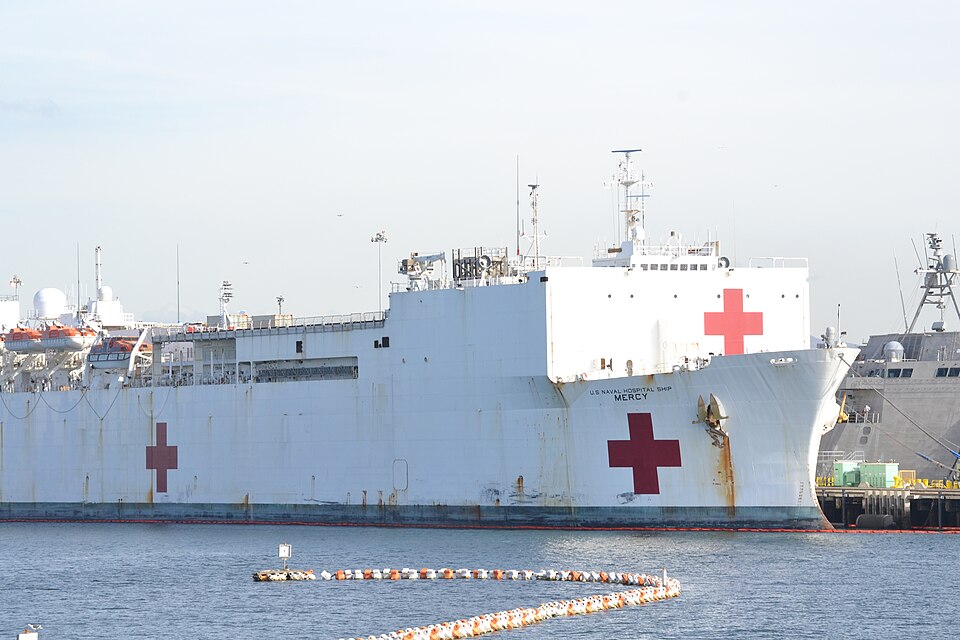
Operated by Military Sealift Command and staffed by U.S. Navy Medical Corps doctors, nurses, and hospital corpsmen, USNS Mercy (T-AH-19) and USNS Comfort (T-AH-20) are among the largest floating trauma and surgical hospitals on planet Earth.
A foundational concept in this investigation is (pronounced HOS-pih-tul ship), which refers to: An unarmed ship painted white with red crosses designed solely to provide medical and surgical care in emergencies and wartime. Every part of Mercy-Class Hospital Ships: USNS Mercy (T-AH-19) & USNS Comfort (T-AH-20) within 🚢 U.S. Navy Surface Fleet, Submarines ("The Silent Service") & Hospital Ships builds upon this essential concept.
In Grade 3 United States Armed Forces studies (🚢 U.S. Navy Surface Fleet, Submarines ("The Silent Service") & Hospital Ships), understanding how , , and work together helps explain real-world patterns. As you read each chapter, notice how these key terms connect structure, process, and environment.
Key Features
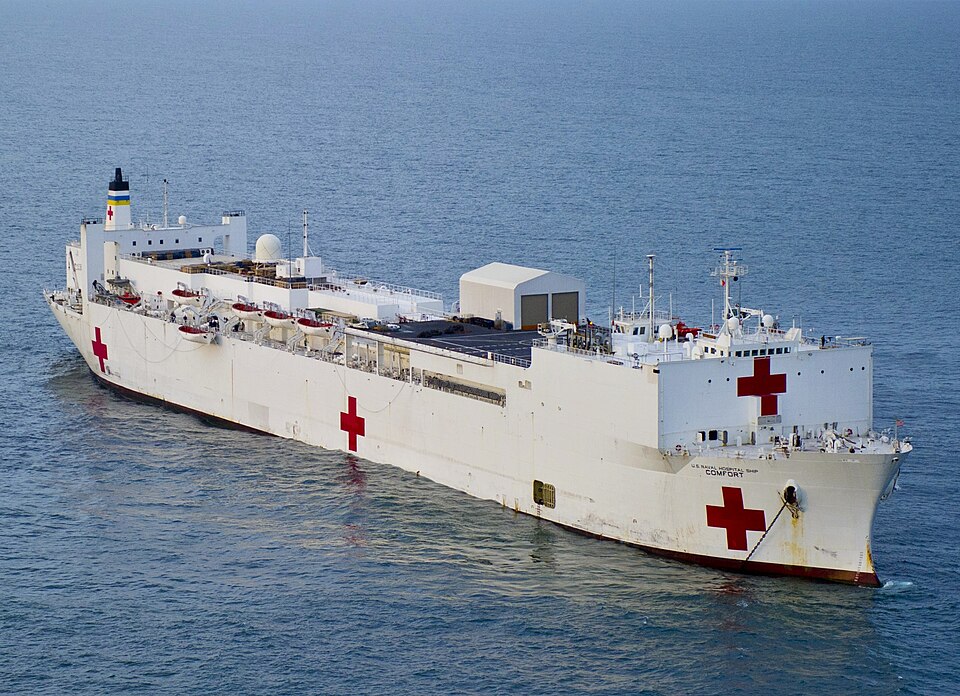
Converted from 894-foot (272-meter), 69,552-ton San Clemente-class tankers in the late 1980s, both ships are painted brilliant white with internationally protected Geneva Convention Red Crosses. Inside, each vessel houses 1,000 patient beds (including 80 intensive-care beds), 12 fully equipped operating rooms, a CT scanner, radiology suites, a medical laboratory, an optometry lab that grinds prescription eyeglasses on board, two oxygen-producing plants, and a blood bank.
To analyze these defining traits accurately, specialists examine (dee-sal-ih-NAY-shun): The engineering process of removing salt and minerals from ocean water to produce pure, sterile drinking and medical water. Alongside (An unarmed ship painted white with red crosses designed solely to provide medical and surgical care in emergencies and wartime.), these specialized characteristics set Mercy-Class Hospital Ships: USNS Mercy (T-AH-19) & USNS Comfort (T-AH-20) apart within 🚢 U.S. Navy Surface Fleet, Submarines ("The Silent Service") & Hospital Ships.
Field Observation & Evidence: Researchers studying Mercy-Class Hospital Ships: USNS Mercy (T-AH-19) & USNS Comfort (T-AH-20) observe how physical form matches function in United States Armed Forces. Each observable feature provides a clear advantage that supports stability, survival, or performance across changing conditions.
How It Works
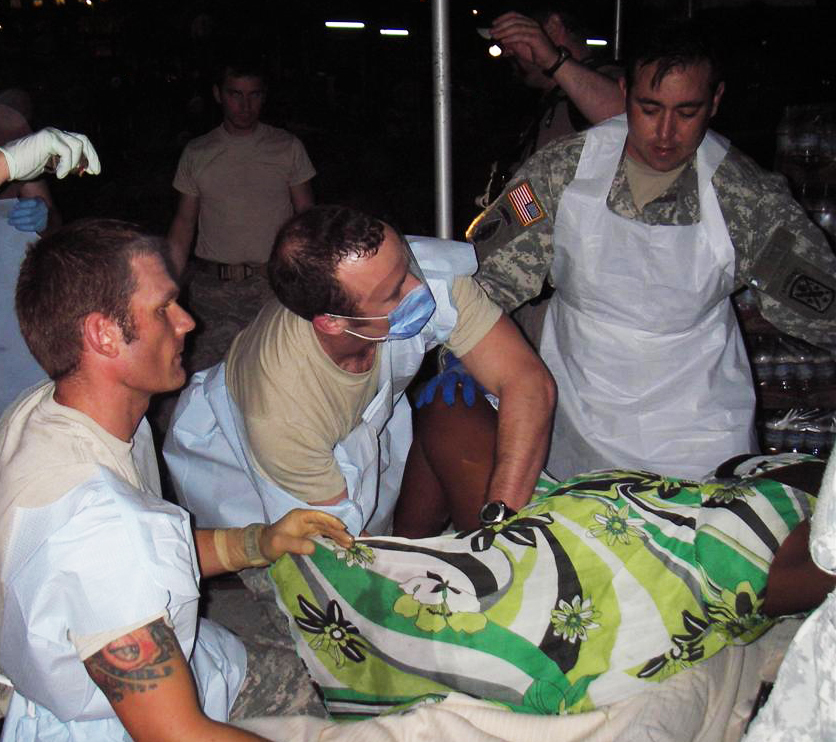
Patients arrive aboard via a rooftop flight deck capable of landing the largest military helicopters (including CH-53 Sea Stallions and MV-22 Ospreys) or via side ports from shuttle boats. Two onboard plants purify 300,000 gallons of sterile fresh water per day for surgeries and patient care.
This step-by-step process relies on (pronounced tree-AHZH), defined as: The medical practice of rapidly evaluating incoming patients so the most critically injured receive immediate surgical care first. Each stage of the process prepares the way for the next phase to unfold.
Cause-and-Effect Balance: When conditions remain balanced, and interact inside the to keep the system running smoothly. If any single link in this sequence is disrupted, the entire pace of activity shifts.
In Our World
Homeported at Naval Station Norfolk, Virginia, USNS Comfort (T-AH-20) serves the Atlantic, Caribbean, and Latin America (including Operation Unified Response in Haiti, Hurricane Maria relief in Puerto Rico, and Continuing Promise), while USNS Mercy (T-AH-19) in San Diego serves the Pacific and Indian Oceans (including the 2004 Indian Ocean Tsunami and Pacific Partnership).
Understanding how Mercy-Class Hospital Ships: USNS Mercy (T-AH-19) & USNS Comfort (T-AH-20) functions in real environments also involves (dee-sal-ih-NAY-shun): The engineering process of removing salt and minerals from ocean water to produce pure, sterile drinking and medical water. Even when surrounding conditions shift across seasons or regions, the interaction between , Desalination, and helps sustain balance and resilience in the wider environment.
Global & Practical Significance: Mercy-Class Hospital Ships: USNS Mercy (T-AH-19) & USNS Comfort (T-AH-20) operates as Mercy-Class Floating Hospital Ships (Military Sealift Command) supporting Global Humanitarian Medical Care, Disaster Surgery & Goodwill Missions. Furthermore, Key technical specification: 894 ft Length • 1,000 Hospital Beds • 12 Operating Rooms • White Hull with Red Crosses.
Amazing Facts
1. Remarkable Scale & Numbers: With 1,000 beds and 12 operating rooms each, USNS Comfort (based in Norfolk, Virginia) and USNS Mercy rank among the largest trauma hospitals in the United States—and they can sail anywhere at 17.5 knots! This discovery highlights why is central to understanding Mercy-Class Hospital Ships: USNS Mercy (T-AH-19) & USNS Comfort (T-AH-20).
2. Extraordinary Adaptation & Design: Since 2004, the crews of USNS Mercy and USNS Comfort have treated more than 550,000 patients and performed over 10,000 free surgeries on humanitarian missions! Specialized conditions involving make these adaptations possible.
3. Surprising Scientific & Historical Record: Both hospital ships have onboard optometry labs that can test a child's vision and custom-make a brand-new pair of eyeglasses on the spot! Over time, processes linked to leave a lasting mark across 🚢 U.S. Navy Surface Fleet, Submarines ("The Silent Service") & Hospital Ships.
Read & Review
Chapter Synthesis: Throughout this investigation of Mercy-Class Hospital Ships: USNS Mercy (T-AH-19) & USNS Comfort (T-AH-20) in United States Armed Forces (🚢 U.S. Navy Surface Fleet, Submarines ("The Silent Service") & Hospital Ships), we examined its core foundations, defining traits, step-by-step mechanisms, and real-world connections using key terms like , , and .
Academic Vocabulary Review: • (HOS-pih-tul ship): An unarmed ship painted white with red crosses designed solely to provide medical and surgical care in emergencies and wartime. • (dee-sal-ih-NAY-shun): The engineering process of removing salt and minerals from ocean water to produce pure, sterile drinking and medical water. • (tree-AHZH): The medical practice of rapidly evaluating incoming patients so the most critically injured receive immediate surgical care first.
Critical Thinking Check: (1) What is the primary classification and role of Mercy-Class Hospital Ships: USNS Mercy (T-AH-19) & USNS Comfort (T-AH-20)? — Mercy-Class Floating Hospital Ships (Military Sealift Command) — Global Humanitarian Medical Care, Disaster Surgery & Goodwill Missions. (2) Which key engineering or performance specification defines Mercy-Class Hospital Ships: USNS Mercy (T-AH-19) & USNS Comfort (T-AH-20)? — 894 ft Length • 1,000 Hospital Beds • 12 Operating Rooms • White Hull with Red Crosses.