Introduction
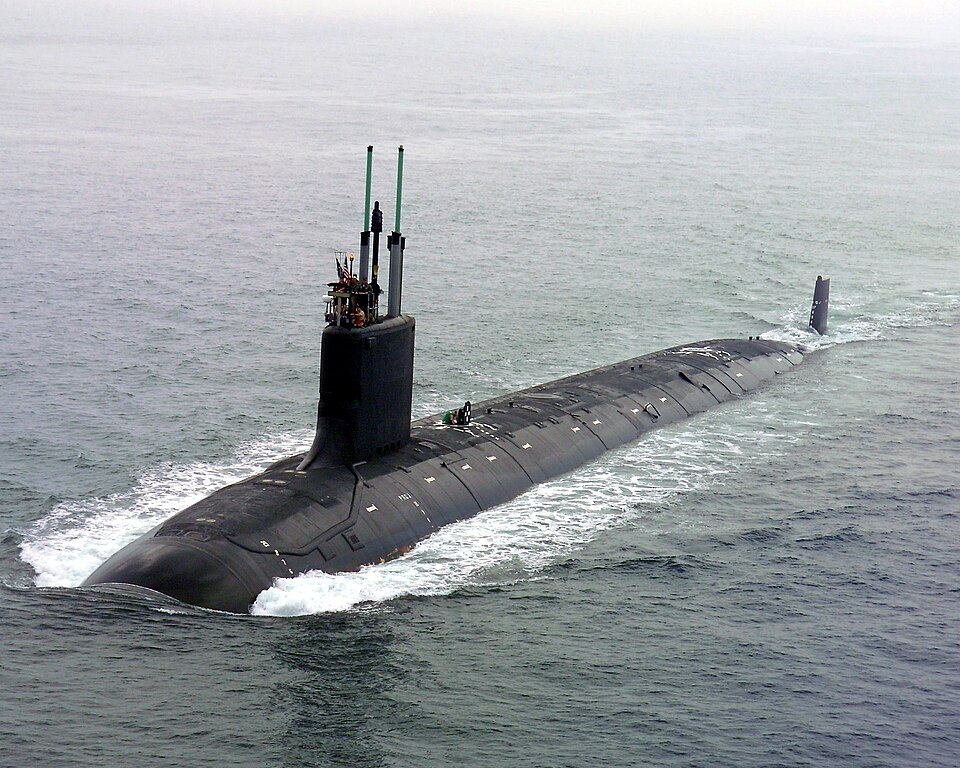
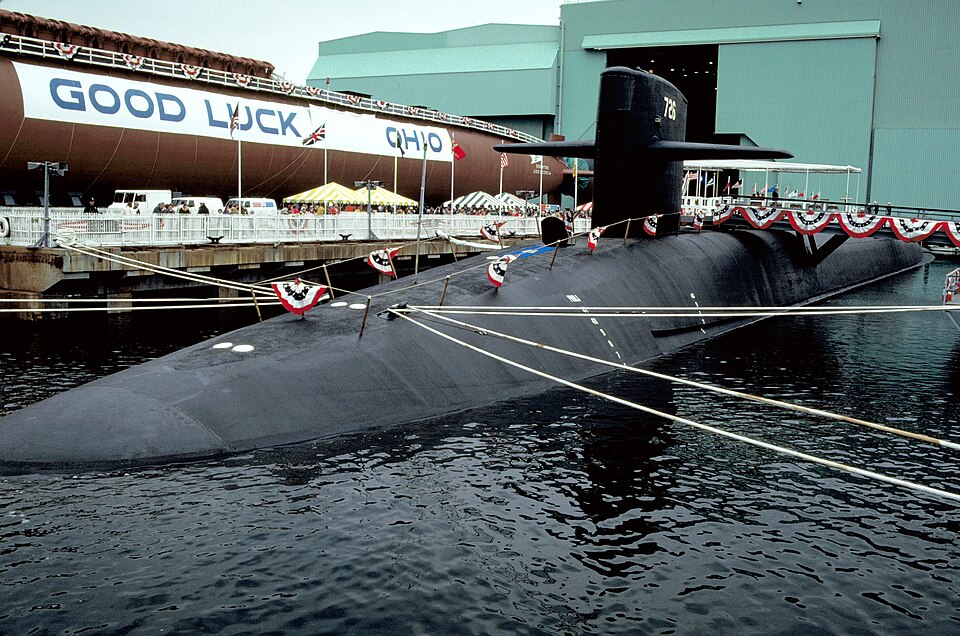
Known as "The Silent Service," U.S. Navy submarines like the Virginia-class (SSN-774) and Ohio-class travel deep beneath the ocean waves for months at a time!
An important word to know in this book is (BAL-ust tanks). Ballast Tanks means: Large chambers between a submarine's inner and outer hulls that fill with seawater to dive or fill with compressed air to surface. Learning about Ballast Tanks helps us understand how Submarines ("The Silent Service"): Virginia (SSN-774) & Ohio/Columbia-Class fits into 🚢 U.S. Navy Surface Fleet, Submarines ("The Silent Service") & Hospital Ships.
Key Features
How does a heavy steel submarine dive and surface? It uses Archimedes' principle of buoyancy! To dive, vents open so seawater fills the ; to surface, compressed air blows the water back out!
Scientists and explorers also look closely at (foh-TON-iks mast), which means: A telescoping digital camera sensor mast on Virginia-class submarines that sends high-definition images via fiber-optic cable without piercing the pressure hull. These special traits make Submarines ("The Silent Service"): Virginia (SSN-774) & Ohio/Columbia-Class easy to spot and study.
How It Works
Virginia-class submarines don't even have an old-fashioned optical periscope tube! Instead, they use high-definition digital fiber-optic cameras called "photonics masts" controlled with a joystick.
Here is another helpful term: (NOO-trul BOY-un-see). It means: The physical balance where a submerged submarine's weight exactly equals the weight of the seawater it displaces, allowing it to hover effortlessly at depth. Step by step, and Neutral Buoyancy work together.
In Our World
Virginia-class submarines are named after the Commonwealth of Virginia and are co-built right in Newport News, Virginia!
Understanding how Submarines ("The Silent Service"): Virginia (SSN-774) & Ohio/Columbia-Class works in our world also involves (foh-TON-iks mast): A telescoping digital camera sensor mast on Virginia-class submarines that sends high-definition images via fiber-optic cable without piercing the pressure hull. Even when surrounding conditions shift across seasons or regions, the interaction between , Photonics Mast, and helps sustain balance and resilience in the wider environment.
Amazing Facts
Amazing Fact #1: Because a nuclear submarine splits water molecules (H2O) to make fresh oxygen to breathe and distills seawater to drink, the only thing that limits how long it can stay underwater is how much food the kitchen can store!
Amazing Fact #2: Since sunlight cannot reach the deep ocean, submariners navigate using passive and active sonar—listening to sound waves echoing off undersea mountains and canyons.
Amazing Fact #3: Instead of a steering wheel, the control room on a Virginia-class submarine uses digital touchscreen displays and an ergonomic controller!
Read & Review
Let's review what we discovered about Submarines ("The Silent Service"): Virginia (SSN-774) & Ohio/Columbia-Class! In this book, we explored how , , and connect to 🚢 U.S. Navy Surface Fleet, Submarines ("The Silent Service") & Hospital Ships.
Key Question #1: What is the primary classification and role of Submarines ("The Silent Service"): Virginia-Class (SSN-774) & Ohio / Columbia-Class? Answer: Virginia-Class Fast Attack (SSN) & Ohio/Columbia-Class Submarines (SSBN) — Undersea Reconnaissance, Maritime Security & Strategic Deterrence ("The Silent Service"). Submarines ("The Silent Service"): Virginia-Class (SSN-774) & Ohio / Columbia-Class operates as Virginia-Class Fast Attack (SSN) & Ohio/Columbia-Class Submarines (SSBN) supporting Undersea Reconnaissance, Maritime Security & Strategic Deterrence ("The Silent Service").
Key Question #2: Which key engineering or performance specification defines Submarines ("The Silent Service"): Virginia-Class (SSN-774) & Ohio / Columbia-Class? Answer: Nuclear Propulsion • • Ballast Tank Buoyancy & Sonar. Key technical specification: Nuclear Propulsion • Photonics Mast • Ballast Tank Buoyancy & Sonar.