Introduction
Founded on October 13, 1775, when the Continental Congress authorized the first Continental Navy vessels, the United States Navy safeguards global sea lanes, , and maritime security under its unofficial Latin motto, "Non Sibi Sed Patriae" ("Not Self, But Country").
A foundational concept in this investigation is (pronounced FREE-dum uv nav-ih-GAY-shun), which refers to: The international principle that ships of all nations may sail safely across open oceans for trade and travel. Every part of U.S. Navy: Global Maritime Security & Carrier Fleet (Oct 13, 1775) within 🛡️ All 6 Branches of the U.S. Armed Services (Insignia, Seals & History) builds upon this essential concept.
In Grade 5 advanced nonfiction inquiry across United States Armed Forces (🛡️ All 6 Branches of the U.S. Armed Services (Insignia, Seals & History)), synthesizing primary evidence around , , and reveals how complex systems operate and adapt over time.
Key Features
The official Emblem of the United States Navy displays an American bald eagle grasping the shank of a fouled anchor on the shoreline, framed by heavy anchor chain and a square-rigged three-masted frigate modeled after USS Constitution ("Old Ironsides") under full sail.
To analyze these defining traits accurately, specialists examine (HOHM-port): The primary naval harbor where a ship is permanently based, maintained, and crewed—such as Norfolk, Virginia. Alongside (The international principle that ships of all nations may sail safely across open oceans for trade and travel.), these specialized characteristics set U.S. Navy: Global Maritime Security & Carrier Fleet (Oct 13, 1775) apart within 🛡️ All 6 Branches of the U.S. Armed Services (Insignia, Seals & History).
Field Observation & Evidence: Researchers studying U.S. Navy: Global Maritime Security & Carrier Fleet (Oct 13, 1775) observe how physical form matches function in United States Armed Forces. Each observable feature provides a clear advantage that supports stability, survival, or performance across changing conditions.
How It Works
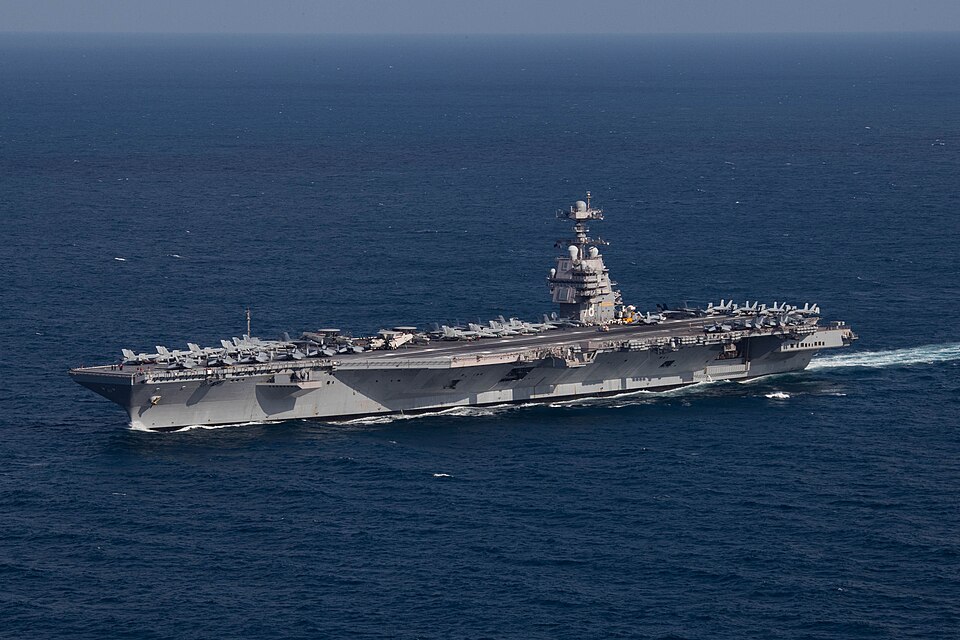
Naval operations combine nuclear-powered Carrier Strike Groups (CSGs), Amphibious Ready Groups, ballistic-missile and fast-attack submarines ("The Silent Service"), naval aviation squadrons, and Military Sealift Command hospital and replenishment vessels to project peacekeeping presence and rapid humanitarian aid across 70% of Earth's surface.
This step-by-step process relies on (pronounced KAIR-ee-er stryk groop), defined as: A naval fleet formation centered on an aircraft carrier escorted by cruisers, destroyers, submarines, and supply ships. Each stage of the process prepares the way for the next phase to unfold.
Cause-and-Effect Balance: When conditions remain balanced, and interact inside the to keep the system running smoothly. If any single link in this sequence is disrupted, the entire pace of activity shifts.
In Our World
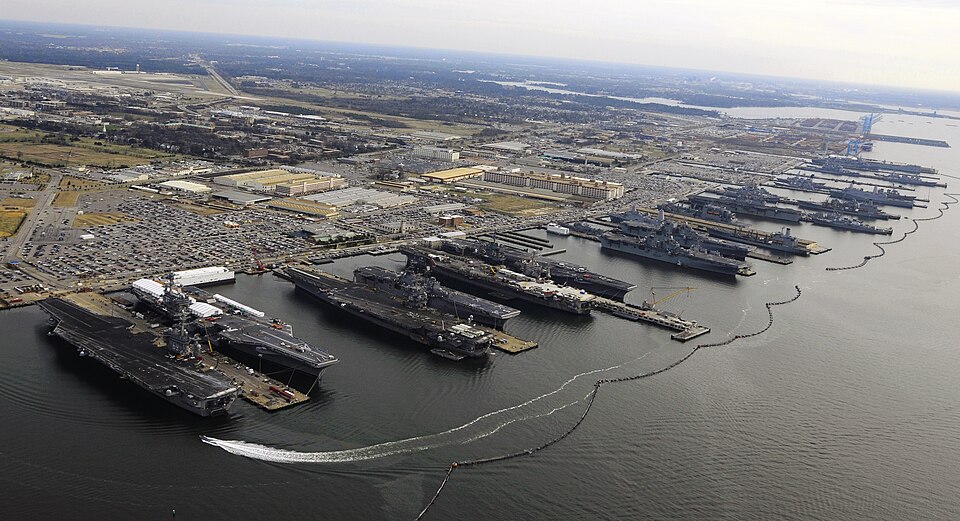
Hampton Roads, Virginia, is the beating heart of American naval power: Naval Station Norfolk is the largest naval installation on Earth ( to 75+ ships and 130+ aircraft); Newport News Shipbuilding is the sole shipyard in the United States that designs and constructs nuclear-powered aircraft carriers; Naval Air Station Oceana in Virginia Beach serves as the East Coast Master Jet Base; and Norfolk Naval Shipyard in Portsmouth is America's oldest industrial naval facility.
Understanding how U.S. Navy: Global Maritime Security & Carrier Fleet (Oct 13, 1775) functions in real environments also involves (HOHM-port): The primary naval harbor where a ship is permanently based, maintained, and crewed—such as Norfolk, Virginia. Even when surrounding conditions shift across seasons or regions, the interaction between , Homeport, and helps sustain balance and resilience in the wider environment.
Global & Practical Significance: October 13, 1775, marks the birth of the Continental Navy, and "Non Sibi Sed Patriae" translates to "Not Self, But Country." Furthermore, Naval Station Norfolk in Hampton Roads, Virginia, is the world's largest naval base.
Amazing Facts
1. Remarkable Scale & Numbers: Naval Station Norfolk in Virginia covers over 4,600 acres with 14 piers and 11 aircraft hangars—making it the largest naval base on planet Earth! This discovery highlights why is central to understanding U.S. Navy: Global Maritime Security & Carrier Fleet (Oct 13, 1775).
2. Extraordinary Adaptation & Design: Every single active nuclear-powered aircraft carrier in the U.S. Navy fleet was built by skilled shipbuilders in Newport News, Virginia. Specialized conditions involving make these adaptations possible.
3. Surprising Scientific & Historical Record: Launched in 1797, the wooden three-masted heavy frigate USS Constitution ("Old Ironsides") is the world's oldest commissioned naval warship still afloat. Over time, processes linked to leave a lasting mark across 🛡️ All 6 Branches of the U.S. Armed Services (Insignia, Seals & History).
Read & Review
Chapter Synthesis: Throughout this investigation of U.S. Navy: Global Maritime Security & Carrier Fleet (Oct 13, 1775) in United States Armed Forces (🛡️ All 6 Branches of the U.S. Armed Services (Insignia, Seals & History)), we examined its core foundations, defining traits, step-by-step mechanisms, and real-world connections using key terms like , , and .
Academic Vocabulary Review: • (FREE-dum uv nav-ih-GAY-shun): The international principle that ships of all nations may sail safely across open oceans for trade and travel. • (HOHM-port): The primary naval harbor where a ship is permanently based, maintained, and crewed—such as Norfolk, Virginia. • (KAIR-ee-er stryk groop): A naval fleet formation centered on an aircraft carrier escorted by cruisers, destroyers, submarines, and supply ships.
Critical Thinking Check: (1) When was the United States Navy founded, and what does "Non Sibi Sed Patriae" mean? — October 13, 1775 — "Not Self, But Country". (2) Which Virginia city is home to Naval Station Norfolk, the largest naval base in the world? — Norfolk, Virginia.