Introduction
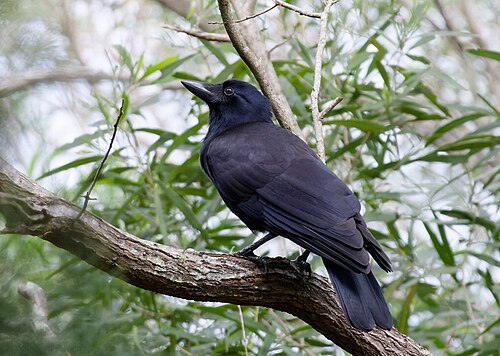
For a long time, scientists believed only humans and chimpanzees made tools. Then researchers studied the family—crows, ravens, jays, and magpies—and discovered that New Caledonian crows craft hooked tools, solve multi-step puzzles, and remember human faces for years!
An important word to know in this book is (KOR-vid). Corvid means: A member of the highly intelligent bird family that includes crows, ravens, rooks, jays, and magpies. Learning about Corvid helps us understand how Tool-Using Crows fits into Animal Behavior & Working Animals.
Key Features
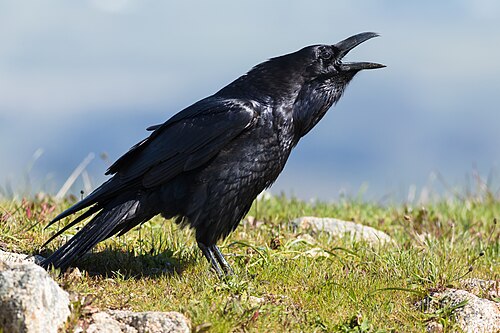
Although a crow’s brain is the size of a walnut, it is packed with tightly clustered neurons in its forebrain (pallium), giving crows problem-solving intelligence comparable to a 7-year-old human child.
Scientists and explorers also look closely at (kog-NISH-uhn), which means: Mental processes of thinking, reasoning, remembering, and solving new problems. These special traits make Tool-Using Crows easy to spot and study.
How It Works
New Caledonian crows break twigs and trim pandanus leaves with their beaks to manufacture barbed hooks, which they poke into deep tree crevices to fish out fat wood-boring grubs. In laboratory tests, a crow named Betty even bent a straight piece of wire into a hook on her own!
Here is another helpful term: (FOR-ij). It means: To search actively through an environment for wild food resources. Step by step, and Forage work together in nature.
In Our World
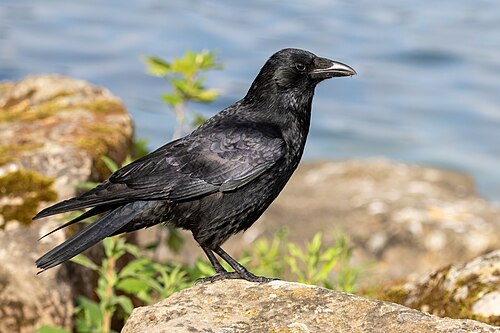
In Japan, carrion crows drop hard-shelled walnuts onto busy street crosswalks so passing cars crack the nuts open—and then wait patiently for the pedestrian walk signal to turn green before hopping out to eat the walnut meat!
Understanding how Tool-Using Crows works in our world also involves (kog-NISH-uhn): Mental processes of thinking, reasoning, remembering, and solving new problems. Even when surrounding conditions shift across seasons or regions, the interaction between , Cognition, and helps sustain balance and resilience in the wider environment.
Amazing Facts
Amazing Fact #1: Just like Aesop’s ancient fable "The Crow and the Pitcher," real crows drop stones into narrow tubes of water to raise the water level and reach floating food!
Amazing Fact #2: Wild crows can recognize individual human faces and will scold—and warn their chicks about—a person who bothered them years earlier.
Amazing Fact #3: Crows can use "meta-tools"—using a short stick to pull a longer stick out of a box, and then using the long stick to reach food.
Read & Review
Let's review what we discovered about Tool-Using Crows! In this book, we explored how , , and connect to Animal Behavior & Working Animals.
Key Question #1: Why do New Caledonian crows craft hooked tools out of twigs and leaves? Answer: To poke into narrow tree crevices and pull out hidden beetle grubs. Hooked twig and leaf tools allow crows to extract wood-boring larvae that their beaks cannot reach.
Key Question #2: How did crows in Aesop’s fable—and in real scientific experiments—reach food floating deep inside a pitcher of water? Answer: By dropping heavy stones into the water to raise the water level. Crows understand water displacement, choosing sinking stones over floating foam blocks.