Introduction
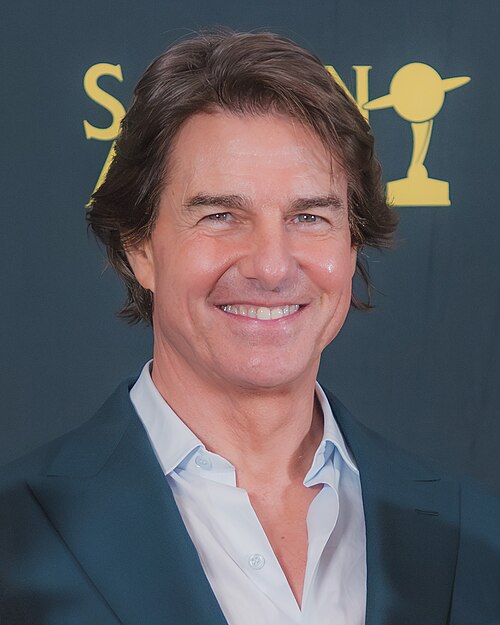
When you watch secret agent Ethan Hunt climb the glass windows on the outside of the 163-story Burj Khalifa skyscraper in Dubai (1,700 feet above the street!), cling with his bare hands to the outside door of a giant Airbus A400M military cargo plane as it takes off at 160 mph, or pull 9.5 Gs of gravitational force inside a real U.S. Navy F/A-18 Super Hornet fighter jet in Top Gun: Maverick (2022), you are NOT looking at a computer-generated stunt double in front of a green screen! That is really Tom Cruise (born 1962)—an licensed commercial airplane and helicopter pilot, skydiver, and four-time Academy Award nominee who trains for years in physics, aerodynamics, and stunt engineering to perform his own practical cinema stunts!
A foundational concept in this investigation is G-Force (Gravitational Acceleration) (pronounced JEE fors), which refers to: A unit of acceleration force equal to Earth’s normal gravity (1 G); when a fighter jet pulls a sharp 8-G turn (as in Top Gun: Maverick), the pilot’s body experiences eight times its normal weight! Every part of Tom Cruise: Practical Stunts & Aviation on the Big Screen within 🎬 Film, Television, Directors & Storytelling Titans builds upon this essential concept.
At the Grade 4 level of Sports & Entertainment (🎬 Film, Television, Directors & Storytelling Titans), researchers compare structure, function, and environmental context to see how G-Force (Gravitational Acceleration), HALO Jump (High Altitude, Low Opening), and Aerodynamics (Lift, Thrust, Drag & Weight) shape measurable outcomes.

Key Features
Born Thomas Cruise Mapother IV on July 3, 1962, in Syracuse, New York, young Tom moved so often as a child while his electrical-engineer father looked for work across the United States and Ottawa, Canada, that he attended 15 different schools in 14 years! Even tougher, young Tom had severe dyslexia—meaning letters and words on a printed page appeared scrambled and backwards when he tried to read aloud in class. How did he overcome dyslexia to memorize hundreds of pages of complex movie scripts? By learning auditory and visual study techniques: interviewing teachers and directors, listening to scripts read aloud on tape, and mentally visualizing every scene in 3D space so he could picture the entire story like a map!
To analyze these defining traits accurately, specialists examine HALO Jump (High Altitude, Low Opening) (HAY-loh jump): An extreme skydiving technique where jumpers exit an aircraft at 25,000 to 30,000 feet wearing oxygen masks (because the upper atmosphere is freezing and thin), free-fall at 200 mph, and open their parachute near 2,000 feet. Alongside G-Force (Gravitational Acceleration) (A unit of acceleration force equal to Earth’s normal gravity (1 G); when a fighter jet pulls a sharp 8-G turn (as in Top Gun: Maverick), the pilot’s body experiences eight times its normal weight!), these specialized characteristics set Tom Cruise: Practical Stunts & Aviation on the Big Screen apart within 🎬 Film, Television, Directors & Storytelling Titans.
Field Observation & Evidence: Researchers studying Tom Cruise: Practical Stunts & Aviation on the Big Screen observe how physical form matches function in Sports & Entertainment. Each observable feature provides a clear advantage that supports stability, survival, or performance across changing conditions.
How It Works
When Tom Cruise starred as Naval Aviator Pete "Maverick" Mitchell in the original Top Gun (1986) at age 23, he fell so deeply in love with the physics of flight that he went to flight school and earned his real FAA private and commercial pilot’s licenses—flying everything from a vintage World War II P-51 Mustang propeller plane to twin-engine jets and Airbus H125 helicopters! Ten years later, in 1996, he became a film producer for the very first time on Mission: Impossible—turning a 1960s television series into a 30-year global cinema showcase for practical stunt engineering!
This step-by-step process relies on Aerodynamics (Lift, Thrust, Drag & Weight) (pronounced air-oh-dy-NAM-iks), defined as: The four physical forces of flight that every licensed airplane and helicopter pilot (including Tom Cruise) must master to keep an aircraft flying safely. Each stage of the process prepares the way for the next phase to unfold.
Cause-and-Effect Balance: When conditions remain balanced, G-Force (Gravitational Acceleration) and Aerodynamics (Lift, Thrust, Drag & Weight) interact inside the HALO Jump (High Altitude, Low Opening) to keep the system running smoothly. If any single link in this sequence is disrupted, the entire pace of activity shifts.
In Our World
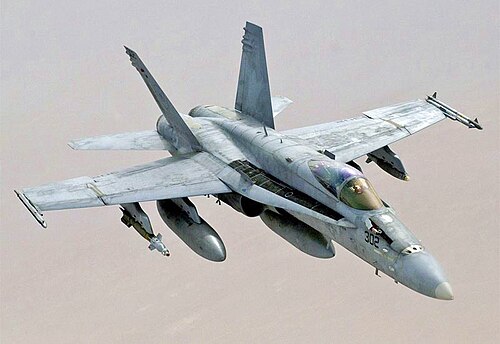
Look at the real physics and training behind Cruise’s most famous practical film stunts: 1) For Mission: Impossible – Ghost Protocol (2011), he scaled the exterior glass wall of the 2,717-foot Burj Khalifa (the tallest building on Earth!) attached only to thin piano-wire safety cables while engineer teams monitored wind shear at the 130th floor; 2) For Rogue Nation (2015), he trained with world-champion freedivers to hold his breath underwater for over 6 minutes during a single unbroken camera take, and wore special rigid scleral contact lenses so he could keep his eyes wide open against 160-mph wind blast while strapped to the outside of a taking-off Airbus A400M eight times in a row!; 3) For Fallout (2018), he became the first actor in history to perform a real military HALO (High Altitude, Low Opening) skydive on camera—jumping out of a C-17 cargo plane at 25,000 feet (requiring a pure-oxygen helmet!) 106 times so a skydiving cameraman falling inches from his face could film it at sunset; and 4) For Top Gun: Maverick (2022), he designed a three-month flight-training bootcamp so all the young actors could be filmed inside the cockpits of real U.S. Navy F/A-18F Super Hornets pulling 7 to 9.5 Gs (where gravity presses down with 9 times your body weight!)—earning Top Gun: Maverick 6 Academy Award nominations (including Best Picture) and an Honorary Palme d’Or at the Cannes Film Festival!
Understanding how Tom Cruise: Practical Stunts & Aviation on the Big Screen functions in real environments also involves HALO Jump (High Altitude, Low Opening) (HAY-loh jump): An extreme skydiving technique where jumpers exit an aircraft at 25,000 to 30,000 feet wearing oxygen masks (because the upper atmosphere is freezing and thin), free-fall at 200 mph, and open their parachute near 2,000 feet. Even when surrounding conditions shift across seasons or regions, the interaction between G-Force (Gravitational Acceleration), HALO Jump (High Altitude, Low Opening), and Aerodynamics (Lift, Thrust, Drag & Weight) helps sustain balance and resilience in the wider environment.
Global & Practical Significance: Diagnosed with dyslexia at age seven, Cruise learned to master scripts through active listening, questioning, and 3D spatial visualization. Furthermore, Custom full-eye scleral lenses protected his corneas so he could keep his eyes open on camera while the Airbus A400M climbed to 5,000 feet.
Amazing Facts
1. Remarkable Scale & Numbers: Because he was diagnosed with dyslexia at age seven and attended 15 different schools in 14 years, Tom Cruise serves on the board of educational literacy programs and encourages kids with dyslexia everywhere that their visual-spatial thinking is a superpower, not a limitation! This discovery highlights why G-Force (Gravitational Acceleration) is central to understanding Tom Cruise: Practical Stunts & Aviation on the Big Screen.
2. Extraordinary Adaptation & Design: When Tom Cruise hung onto the outside door of a real Airbus A400M Atlas turboprop transport plane as it roared down the runway and climbed to 5,000 feet in Mission: Impossible – Rogue Nation (2015), how did he keep his eyes open in 160-mph freezing wind without blinking or being blinded by runway dust? An optometrist engineered custom full-eye scleral contact lenses that shielded his corneas from the wind and jet fuel fumes across all 8 real takeoffs! Specialized conditions involving HALO Jump (High Altitude, Low Opening) make these adaptations possible.
3. Surprising Scientific & Historical Record: To film the single-take underwater vault scene in Rogue Nation without any camera cuts, 52-year-old Cruise trained with champion freediver Kirk Krack to slow his heart rate down and hold his breath underwater for over 6 minutes while swimming against turbulent water currents! Over time, processes linked to Aerodynamics (Lift, Thrust, Drag & Weight) leave a lasting mark across 🎬 Film, Television, Directors & Storytelling Titans.
Read & Review
Chapter Synthesis: Throughout this investigation of Tom Cruise: Practical Stunts & Aviation on the Big Screen in Sports & Entertainment (🎬 Film, Television, Directors & Storytelling Titans), we examined its core foundations, defining traits, step-by-step mechanisms, and real-world connections using key terms like G-Force (Gravitational Acceleration), HALO Jump (High Altitude, Low Opening), and Aerodynamics (Lift, Thrust, Drag & Weight).
Academic Vocabulary Review: • G-Force (Gravitational Acceleration) (JEE fors): A unit of acceleration force equal to Earth’s normal gravity (1 G); when a fighter jet pulls a sharp 8-G turn (as in Top Gun: Maverick), the pilot’s body experiences eight times its normal weight! • HALO Jump (High Altitude, Low Opening) (HAY-loh jump): An extreme skydiving technique where jumpers exit an aircraft at 25,000 to 30,000 feet wearing oxygen masks (because the upper atmosphere is freezing and thin), free-fall at 200 mph, and open their parachute near 2,000 feet. • Aerodynamics (Lift, Thrust, Drag & Weight) (air-oh-dy-NAM-iks): The four physical forces of flight that every licensed airplane and helicopter pilot (including Tom Cruise) must master to keep an aircraft flying safely.
Critical Thinking Check: (1) What childhood learning challenge did Tom Cruise overcome while attending 15 different schools in 14 years before becoming a world-famous actor and producer? — Severe dyslexia (which he overcame by using auditory learning and 3D visual-spatial storytelling techniques). (2) How did Tom Cruise keep his eyes open against 160-mph winds and runway debris while clinging to the outside of a real Airbus A400M cargo plane during 8 real takeoffs for Mission: Impossible – Rogue Nation? — An eye doctor engineered custom rigid "scleral" contact lenses that covered his entire eyeballs to shield them from the wind blast and particles.