Introduction
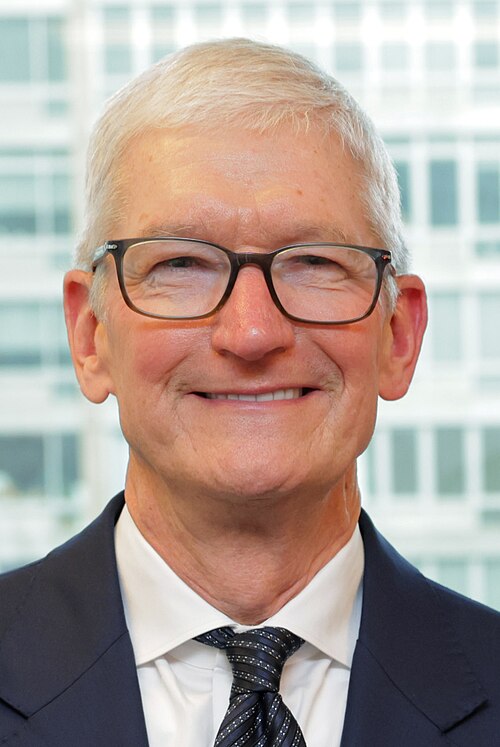
How do you manufacture and deliver hundreds of millions of precision devices—each containing over 1,500 microscopic components from dozens of countries—to people around the globe with almost zero wasted inventory sitting in warehouses? Tim Cook (born 1960), an industrial engineer from a small shipyard town in Alabama, mastered the science of global supply chains and, after succeeding Steve Jobs as CEO of Apple in 2011, led Apple to pioneer the Apple Watch, custom Apple Silicon (M-series) chips, and 100% renewable-energy operations!
A foundational concept in this investigation is (pronounced in-DUS-tree-uhl en-juh-NEER-ing), which refers to: The branch of engineering that designs and optimizes complex systems of people, materials, factories, and transportation to eliminate waste and improve quality. Every part of Tim Cook: Supply Chain Genius & CEO of Apple within 💻 Tech, Business & Innovation Icons builds upon this essential concept.
At the Grade 4 level of Famous People (Movers & Shakers) (💻 Tech, Business & Innovation Icons), researchers compare structure, function, and environmental context to see how , , and System on a Chip (Apple Silicon) shape measurable outcomes.
Key Features
Born on November 1, 1960, and raised in Robertsdale, Alabama (population ~2,000), where his father Donald was a shipyard worker and his mother Geraldine worked at a local pharmacy, young Timothy Donald Cook delivered newspapers before dawn and worked after school flipped burgers and helping in his mother’s pharmacy. He earned his bachelor’s degree in from Auburn University in 1982 and an MBA from Duke University’s Fuqua School of Business in 1988, spending 12 years managing North American PC manufacturing at IBM before joining Compaq.
To analyze these defining traits accurately, specialists examine (just in tym suh-PLY chayn): A logistics strategy where parts arrive at the assembly line right as they are needed and finished products ship directly to customers rather than sitting for months in warehouses. Alongside (The branch of engineering that designs and optimizes complex systems of people, materials, factories, and transportation to eliminate waste and improve quality.), these specialized characteristics set Tim Cook: Supply Chain Genius & CEO of Apple apart within 💻 Tech, Business & Innovation Icons.
Field Observation & Evidence: Researchers studying Tim Cook: Supply Chain Genius & CEO of Apple observe how physical form matches function in Famous People (Movers & Shakers). Each observable feature provides a clear advantage that supports stability, survival, or performance across changing conditions.
How It Works
In 1998, shortly after Steve Jobs returned to rescue a struggling Apple, Jobs interviewed Tim Cook—and within five minutes Cook decided to leave safe, giant Compaq to become Apple’s Senior Vice President of Worldwide Operations! Cook famously told his team that computer inventory is "like dairy products—nobody wants to buy spoiled milk!" He cut Apple’s warehouse inventory from months down to just a few days, forged long-term partnerships with specialized component makers, and ensured Apple could manufacture hundreds of millions of iPods, iPhones, and iPads at world-class quality.
This step-by-step process relies on System on a Chip (Apple Silicon) (pronounced SIS-tuhm on uh chip), defined as: Integrating the CPU, GPU, AI Neural Engine, and unified memory onto a single ultra-efficient silicon microchip for maximum speed and battery life. Each stage of the process prepares the way for the next phase to unfold.
Cause-and-Effect Balance: When conditions remain balanced, and System on a Chip (Apple Silicon) interact inside the to keep the system running smoothly. If any single link in this sequence is disrupted, the entire pace of activity shifts.
In Our World
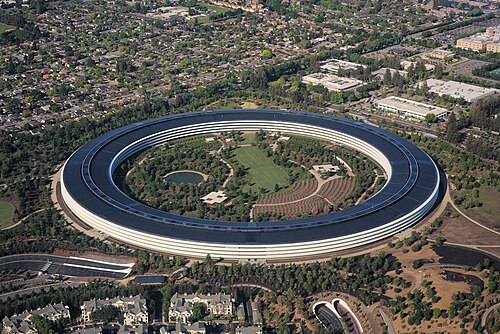
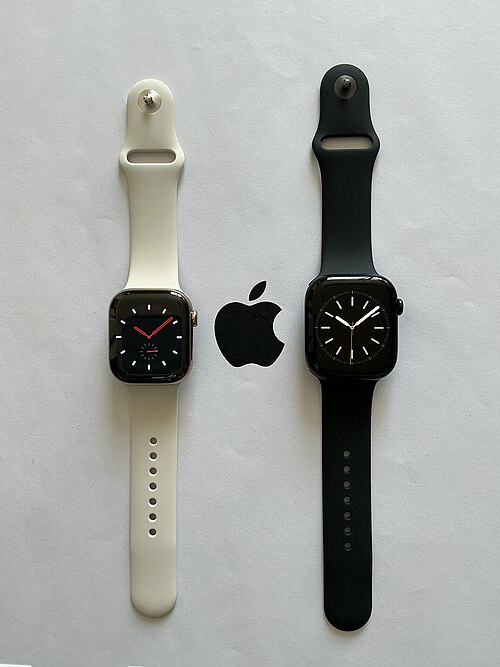
Named CEO of Apple in August 2011 shortly before Steve Jobs passed away, Cook never tried to imitate Jobs—instead following Jobs’s advice to "just do what’s right." Under Cook’s leadership, Apple launched the Apple Watch (whose optical heart-rate and ECG sensors have alerted thousands of wearers to life-threatening heart conditions) and AirPods, transitioned Mac computers to ultra-efficient Apple Silicon processors, opened the solar-powered ring-shaped Apple Park campus in Cupertino, and grew into the first company in history to reach a $1 trillion, $2 trillion, and $3 trillion market valuation!
Understanding how Tim Cook: Supply Chain Genius & CEO of Apple functions in real environments also involves (just in tym suh-PLY chayn): A logistics strategy where parts arrive at the assembly line right as they are needed and finished products ship directly to customers rather than sitting for months in warehouses. Even when surrounding conditions shift across seasons or regions, the interaction between , Just-In-Time (JIT) Supply Chain, and System on a Chip (Apple Silicon) helps sustain balance and resilience in the wider environment.
Global & Practical Significance: By keeping only days of inventory ("Just-In-Time" logistics), Apple eliminated waste and always shipped the latest components. Furthermore, Cook earned his Bachelor of Science in from Auburn University in 1982.
Amazing Facts
1. Remarkable Scale & Numbers: Tim Cook famously compared unsold electronics sitting in a warehouse to fresh milk at a grocery store: if technology sits on a shelf for months, newer parts come out and it "spoils" before reaching customers! This discovery highlights why is central to understanding Tim Cook: Supply Chain Genius & CEO of Apple.
2. Extraordinary Adaptation & Design: Apple’s circular headquarters in Cupertino, California—Apple Park (nicknamed "the Spaceship")—is 1.6 kilometers (1 mile) in circumference, has one of the largest rooftop solar panel arrays on Earth (17 megawatts), and is surrounded by 9,000 drought-resistant trees and fruit orchards! Specialized conditions involving make these adaptations possible.
3. Surprising Scientific & Historical Record: When Apple Silicon (the M1 chip) launched in 2020, it packed 16 billion microscopic transistors only 5 nanometers apart—smaller than a single strand of human DNA—allowing laptops to run all day without even needing a noisy cooling fan! Over time, processes linked to System on a Chip (Apple Silicon) leave a lasting mark across 💻 Tech, Business & Innovation Icons.
Read & Review
Chapter Synthesis: Throughout this investigation of Tim Cook: Supply Chain Genius & CEO of Apple in Famous People (Movers & Shakers) (💻 Tech, Business & Innovation Icons), we examined its core foundations, defining traits, step-by-step mechanisms, and real-world connections using key terms like , , and System on a Chip (Apple Silicon).
Academic Vocabulary Review: • (in-DUS-tree-uhl en-juh-NEER-ing): The branch of engineering that designs and optimizes complex systems of people, materials, factories, and transportation to eliminate waste and improve quality. • (just in tym suh-PLY chayn): A logistics strategy where parts arrive at the assembly line right as they are needed and finished products ship directly to customers rather than sitting for months in warehouses. • System on a Chip (Apple Silicon) (SIS-tuhm on uh chip): Integrating the CPU, GPU, AI Neural Engine, and unified memory onto a single ultra-efficient silicon microchip for maximum speed and battery life.
Critical Thinking Check: (1) Why did industrial engineer Tim Cook famously compare computer and smartphone inventory in a warehouse to "dairy products" like milk? — Because electronics technology advances so fast that parts sitting in a warehouse for months lose value and become outdated before reaching customers. (2) What branch of engineering did Tim Cook study at Auburn University in Alabama before joining IBM and later Apple? — .