Introduction
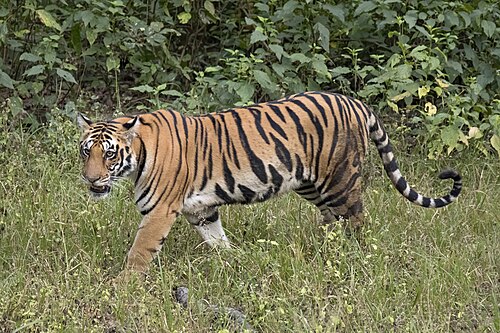
The Tiger (Panthera tigris) is the largest and heaviest wild cat on Earth! Moving like a silent shadow through Asian rainforests, tall elephant grass, and snowy northern pine forests, an adult Amur (Siberian) or Bengal tiger can measure over 3 meters (10 feet) from nose to tail and weigh up to 300 kilograms (660 pounds) of pure muscle.
A foundational concept in this investigation is (pronounced dis-RUP-tiv kul-er-AY-shuhn), which refers to: Bold vertical stripes that break up a tiger’s body outline so prey cannot recognize its shape in tall grass and shadows. Every part of Tigers: Striped Phantoms of the Jungle within 🦁 Big Cats & Apex Land Predators builds upon this essential concept.
At the Grade 4 level of Animals (🦁 Big Cats & Apex Land Predators), researchers compare structure, function, and environmental context to see how , , and shape measurable outcomes.
Key Features
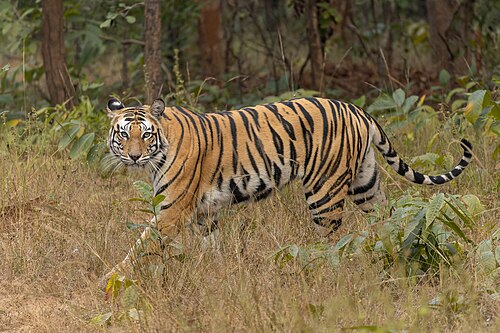
A tiger’s bright orange coat and vertical black stripes look bold in a zoo, but in the wild they provide master-class disruptive camouflage! First, vertical stripes mimic swaying blades of tall grass and dappled vertical tree shadows. Second, most hoofed prey animals (like deer and wild boar) have (red-green colorblindness)—to a deer’s eyes, bright orange looks dull green, blending the tiger seamlessly into the jungle!
To analyze these defining traits accurately, specialists examine (dy-kroh-MAT-ik VIZH-uhn): Two-color vision found in deer and cattle that cannot separate orange from green, making orange tigers appear green to their prey. Alongside (Bold vertical stripes that break up a tiger’s body outline so prey cannot recognize its shape in tall grass and shadows.), these specialized characteristics set Tigers: Striped Phantoms of the Jungle apart within 🦁 Big Cats & Apex Land Predators.
Field Observation & Evidence: Researchers studying Tigers: Striped Phantoms of the Jungle observe how physical form matches function in Animals. Each observable feature provides a clear advantage that supports stability, survival, or performance across changing conditions.
How It Works
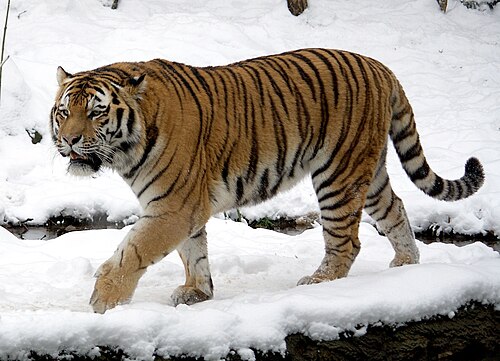
Every single tiger has a stripe pattern as unique as a human fingerprint—and the stripes are even pigmented right into the tiger’s skin underneath its fur! Unlike domestic cats that avoid water, tigers are powerful, enthusiastic swimmers with partially webbed toes; they soak in forest rivers to cool off in tropical heat and regularly swim several kilometers across wide river channels to hunt.
This step-by-step process relies on (pronounced oh-SEL-eye), defined as: The bright white circular "false eyespots" on the back of a tiger’s black ears used for communication and defense. Each stage of the process prepares the way for the next phase to unfold.
Cause-and-Effect Balance: When conditions remain balanced, and interact inside the to keep the system running smoothly. If any single link in this sequence is disrupted, the entire pace of activity shifts.
In Our World
Tigers are apex predators that mark vast territories across Asia—from the snowy birch forests of the Russian Far East (Amur tigers) and the grasslands of India (Bengal tigers) to the tropical islands of Sumatra and the mangrove swamps of the Sundarbans. On the back of each black ear, tigers have a bright white circular spot called an "ocellus" (false eyespot) that helps cubs follow their mother in dim light and deters ambush attacks from behind.
Understanding how Tigers: Striped Phantoms of the Jungle functions in real environments also involves (dy-kroh-MAT-ik VIZH-uhn): Two-color vision found in deer and cattle that cannot separate orange from green, making orange tigers appear green to their prey. Even when surrounding conditions shift across seasons or regions, the interaction between , Dichromatic Vision, and helps sustain balance and resilience in the wider environment.
Global & Practical Significance: Ungulates like sambar deer lack red-sensitive cone cells, perceiving orange and green as the same hue. Furthermore, No two tigers share the same stripe pattern, allowing computer software and researchers to track individuals for life.
Amazing Facts
1. Remarkable Scale & Numbers: If you shaved a tiger’s fur completely off, its dark stripes would still be visible because the stripe pigment is dyed directly into its skin! This discovery highlights why is central to understanding Tigers: Striped Phantoms of the Jungle.
2. Extraordinary Adaptation & Design: Because deer have red-green colorblind eyes, they cannot distinguish a tiger’s orange coat from green forest bushes! Specialized conditions involving make these adaptations possible.
3. Surprising Scientific & Historical Record: Tigers are champion swimmers that have been recorded swimming up to 29 kilometers (18 miles) across rivers in a single day! Over time, processes linked to leave a lasting mark across 🦁 Big Cats & Apex Land Predators.
Read & Review
Chapter Synthesis: Throughout this investigation of Tigers: Striped Phantoms of the Jungle in Animals (🦁 Big Cats & Apex Land Predators), we examined its core foundations, defining traits, step-by-step mechanisms, and real-world connections using key terms like , , and .
Academic Vocabulary Review: • (dis-RUP-tiv kul-er-AY-shuhn): Bold vertical stripes that break up a tiger’s body outline so prey cannot recognize its shape in tall grass and shadows. • (dy-kroh-MAT-ik VIZH-uhn): Two-color vision found in deer and cattle that cannot separate orange from green, making orange tigers appear green to their prey. • (oh-SEL-eye): The bright white circular "false eyespots" on the back of a tiger’s black ears used for communication and defense.
Critical Thinking Check: (1) Why doesn’t a tiger’s bright orange fur give it away when stalking deer in a green forest? — Deer have dichromatic (red-green colorblind) vision, so orange fur looks green to them while vertical stripes break up the tiger’s outline. (2) How do wildlife biologists identify individual wild tigers on camera-trap photos? — By matching each tiger’s unique pattern of stripes, which is as individual as a human fingerprint.