Introduction
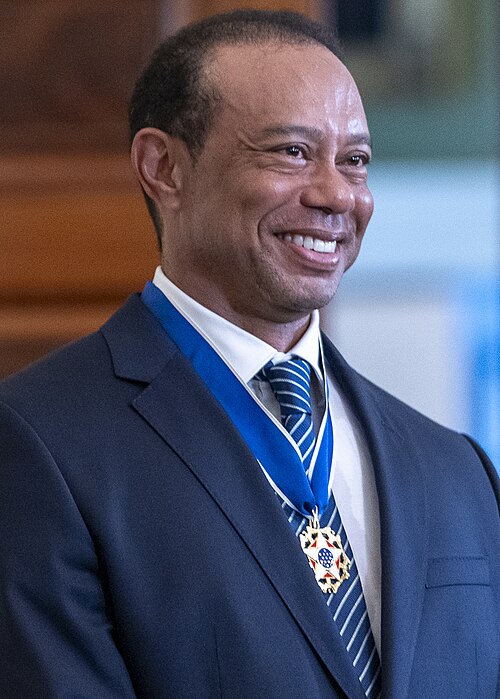
Before Eldrick "Tiger" Woods (born 1975) burst onto the professional golf tour in 1996, golf was often viewed as a slow-paced pastime rather than an explosive, athletic powerhouse sport. Then 21-year-old Tiger won the 1997 Masters Tournament at Augusta National by a record 12 strokes—becoming the youngest champion and first African American and Asian American winner of the famous Green Jacket—and went on to win 15 major championships and a record-tying 82 PGA Tour victories while transforming golf forever!
A foundational concept in this investigation is Par, Birdie & Eagle (Golf Scoring) (pronounced pahr / BUR-dee / EE-guhl), which refers to: In golf, fewer strokes win: "Par" is the expected number of strokes for a hole (e.g., 4); a "Birdie" is 1 stroke under par (-1); and an "Eagle" is 2 strokes under par (-2). Every part of Tiger Woods: Changing the Game of Golf Forever within ⚽ Global Sports Legends: Soccer, Basketball, Golf, Tennis & Track builds upon this essential concept.
In Grade 5 advanced nonfiction inquiry across Sports & Entertainment (⚽ Global Sports Legends: Soccer, Basketball, Golf, Tennis & Track), synthesizing primary evidence around Par, Birdie & Eagle (Golf Scoring), , and The "Tiger Slam" (2000–2001) reveals how complex systems operate and adapt over time.

Key Features
Born on December 30, 1975, in Cypress, California, to Earl Woods (an African American U.S. Army lieutenant colonel) and Kultida "Tida" Woods (originally from Thailand), young Eldrick was nicknamed "Tiger" by his father in honor of Earl’s brave South Vietnamese friend Colonel Vuong Dang "Tiger" Phong! Sitting in his high chair in the garage at six months old, baby Tiger watched his dad hit golf balls into a net—and as soon as he could walk at ten months old, he picked up a sawed-off putter and imitated his father’s swing!
To analyze these defining traits accurately, specialists examine (MAY-jer CHAM-pee-uhn-ships): Golf’s four premier annual tournaments: The Masters (Augusta National), the PGA Championship, the U.S. Open, and The Open Championship (British Open). Alongside Par, Birdie & Eagle (Golf Scoring) (In golf, fewer strokes win: "Par" is the expected number of strokes for a hole (e.g., 4); a "Birdie" is 1 stroke under par (-1); and an "Eagle" is 2 strokes under par (-2).), these specialized characteristics set Tiger Woods: Changing the Game of Golf Forever apart within ⚽ Global Sports Legends: Soccer, Basketball, Golf, Tennis & Track.
Field Observation & Evidence: Researchers studying Tiger Woods: Changing the Game of Golf Forever observe how physical form matches function in Sports & Entertainment. Each observable feature provides a clear advantage that supports stability, survival, or performance across changing conditions.

How It Works
At just two years old, Tiger appeared on national television (The Mike Douglas Show) putting against comedian Bob Hope; at age three he shot a score of 48 over nine holes; and as a teenager he won three straight U.S. Junior Amateur championships followed by three straight U.S. Amateur championships—a six-year streak never matched before or since! After two years at Stanford University, Tiger turned professional in 1996 and stunned the sporting world in 2000–2001 by achieving the "Tiger Slam": winning four consecutive Major championships in a row (the 2000 U.S. Open by a record 15 strokes, the 2000 British Open at St Andrews, the 2000 PGA Championship, and the 2001 Masters)—making him the only golfer in history to hold all four modern Major trophies at the exact same time!
This step-by-step process relies on The "Tiger Slam" (2000–2001) (pronounced TY-ger slam), defined as: Tiger Woods’s historic achievement of winning all four Major championships in succession (2000 U.S. Open, 2000 Open, 2000 PGA, and 2001 Masters) to hold all four trophies at once. Each stage of the process prepares the way for the next phase to unfold.
Cause-and-Effect Balance: When conditions remain balanced, Par, Birdie & Eagle (Golf Scoring) and The "Tiger Slam" (2000–2001) interact inside the to keep the system running smoothly. If any single link in this sequence is disrupted, the entire pace of activity shifts.
In Our World
Tiger Woods brought weight training, high-speed swing physics (125+ mph clubhead speed!), and electric stadium-style crowds (dressed in his signature "Sunday Red" shirt, a tradition suggested by his mother Kultida as his power color!) to golf courses around the world. Even more unforgettably, after enduring four back surgeries that left him barely able to walk in 2017, 43-year-old Tiger staged one of the greatest comebacks in sports history by winning the 2019 Masters Tournament! Through the TGR Foundation he founded with his father in 1996, his TGR Learning Labs have provided free STEM, coding, robotics, and college-prep programs to over 2 million underserved students!
Understanding how Tiger Woods: Changing the Game of Golf Forever functions in real environments also involves (MAY-jer CHAM-pee-uhn-ships): Golf’s four premier annual tournaments: The Masters (Augusta National), the PGA Championship, the U.S. Open, and The Open Championship (British Open). Even when surrounding conditions shift across seasons or regions, the interaction between Par, Birdie & Eagle (Golf Scoring), The Four Major Championships, and The "Tiger Slam" (2000–2001) helps sustain balance and resilience in the wider environment.
Global & Practical Significance: Tiger’s 18-under-par victory by 12 strokes at the 1997 Masters changed the face and popularity of golf worldwide. Furthermore, Tiger Woods is the only golfer in history to hold all four modern Major championship trophies simultaneously.
Amazing Facts
1. Remarkable Scale & Numbers: Why does Tiger Woods always wear a red polo shirt and black pants on Sunday (the final championship round of every tournament)? Because his mother, Kultida Woods, told him when he was a boy that red was his power color—and he has worn "Sunday Red" in every final round of his career! This discovery highlights why Par, Birdie & Eagle (Golf Scoring) is central to understanding Tiger Woods: Changing the Game of Golf Forever.
2. Extraordinary Adaptation & Design: When Tiger Woods won the 2000 U.S. Open at Pebble Beach, he finished at 12-under-par (-12) while the second-place golfers finished at 3-over-par (+3)—a 15-stroke margin of victory, the largest blowout in the 160+ year history of Major golf championships! Specialized conditions involving make these adaptations possible.
3. Surprising Scientific & Historical Record: During the "Tiger Slam" (2000–2001), Tiger became the only golfer in history to keep all four modern Major trophies—the Masters, U.S. Open, Open Championship, and PGA Championship—on his mantelpiece at the exact same time! Over time, processes linked to The "Tiger Slam" (2000–2001) leave a lasting mark across ⚽ Global Sports Legends: Soccer, Basketball, Golf, Tennis & Track.
Read & Review
Chapter Synthesis: Throughout this investigation of Tiger Woods: Changing the Game of Golf Forever in Sports & Entertainment (⚽ Global Sports Legends: Soccer, Basketball, Golf, Tennis & Track), we examined its core foundations, defining traits, step-by-step mechanisms, and real-world connections using key terms like Par, Birdie & Eagle (Golf Scoring), , and The "Tiger Slam" (2000–2001).
Academic Vocabulary Review: • Par, Birdie & Eagle (Golf Scoring) (pahr / BUR-dee / EE-guhl): In golf, fewer strokes win: "Par" is the expected number of strokes for a hole (e.g., 4); a "Birdie" is 1 stroke under par (-1); and an "Eagle" is 2 strokes under par (-2). • (MAY-jer CHAM-pee-uhn-ships): Golf’s four premier annual tournaments: The Masters (Augusta National), the PGA Championship, the U.S. Open, and The Open Championship (British Open). • The "Tiger Slam" (2000–2001) (TY-ger slam): Tiger Woods’s historic achievement of winning all four Major championships in succession (2000 U.S. Open, 2000 Open, 2000 PGA, and 2001 Masters) to hold all four trophies at once.
Critical Thinking Check: (1) What historic milestone did 21-year-old Tiger Woods achieve at Augusta National Golf Club in April 1997? — He won the Masters Tournament by a record 12 strokes, becoming the youngest Masters champion and the first African American and Asian American winner. (2) What was the "Tiger Slam" of 2000–2001? — Winning four consecutive Major championships in a row so that he held all four modern Major trophies (U.S. Open, British Open, PGA, and Masters) at the exact same time.