Introduction
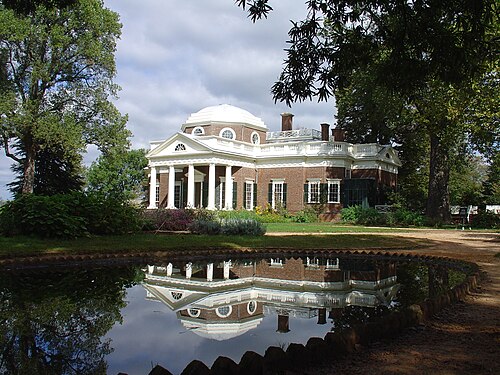
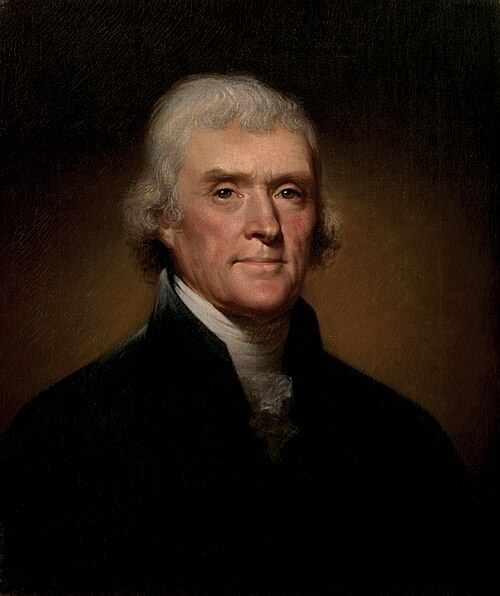
Atop an 865-foot wooded peak in Albemarle County overlooking Charlottesville, Virginia, sits Monticello (Italian for "Little Mountain")—the extraordinary self-designed home of Thomas Jefferson, author of the Declaration of Independence, 3rd President of the United States, and founder of the University of Virginia!
An important word to know in this book is (nee-oh-KLAS-ih-kuhl ar-kuh-TEK-cher). Neoclassical Architecture means: A building style championed by Thomas Jefferson that revives the columns, domes, and symmetry of ancient Greece and Rome. Learning about Neoclassical Architecture helps us understand how Thomas Jefferson’s Monticello fits into 🏛️ Virginia's Founding Fathers & Presidential Estates.
Key Features
Jefferson spent 40 years (1769–1809) designing, tearing down, and rebuilding Monticello after falling in love with ancient Roman temples and the classical architecture of Andrea Palladio while serving as American minister to France. Crowned by America’s first residential octagonal dome, the 43-room red-brick house uses clever optical tricks—such as stacking second-floor windows directly atop first-floor windows—so the three-story house appears to be a single graceful story from the lawn!
Scientists and explorers also look closely at (POL-ee-graf muh-SHEEN), which means: An 1800s mechanical two-pen device used by Jefferson that moved a second pen in parallel to copy every letter as he wrote it. These special traits make Thomas Jefferson’s Monticello easy to spot and study.

How It Works
Inside, Monticello is packed with Jefferson’s mechanical inventions and gadgets! In the Entrance Hall hangs the Great Clock, powered by heavy iron cannonball weights that slowly drop down the wall past markers for the days of the week (and right through a hole cut in the floor into the basement takes you to Friday and Saturday!). In the Dining Room, hidden dumbwaiters built inside the fireplace mantel brought bottles up from the wine cellar; double glass automatic doors open together in unison via hidden chains beneath the floor; and in Jefferson’s study sits the —a twin-pen mechanical frame that wrote an exact duplicate copy of every letter Jefferson penned!
Here is another helpful term: (dum-WAY-ter). It means: A small hand-pulled pulley elevator hidden inside Monticello’s dining room fireplace mantel to lift items from the basement cellar. Step by step, and Dumbwaiter work together in nature.
In Our World
Along the tree-lined lane of and across the 5,000-acre plantation lived and worked over 130 enslaved men, women, and children at a time (more than 600 over Jefferson’s lifetime), including master joiner John Hemings (who crafted Monticello’s fine furniture and dome woodwork), blacksmiths at the nailery, and Sally Hemings and her children. Along the sunny south slope stretches Jefferson’s 1,000-foot terraced Vegetable Garden, where he tested over 330 varieties of vegetables and 170 varieties of fruit from around the world! Together with the University of Virginia’s Academical Village four miles away, Monticello is the ONLY private home in the United States designated a .
Understanding how Thomas Jefferson’s Monticello works in our world also involves (POL-ee-graf muh-SHEEN): An 1800s mechanical two-pen device used by Jefferson that moved a second pen in parallel to copy every letter as he wrote it. Even when surrounding conditions shift across seasons or regions, the interaction between , Polygraph Machine, and helps sustain balance and resilience in the wider environment.
Amazing Facts
Amazing Fact #1: Look closely at the back of an American five-cent nickel coin—that domed building is Thomas Jefferson’s Monticello!
Amazing Fact #2: When hanging the cannonball weights for Monticello’s Great Clock, Jefferson ran out of wall height before Saturday—so he cut a hole in the floor so the cannonballs descend into the cellar on Friday and Saturday!
Amazing Fact #3: Monticello and Jefferson’s nearby University of Virginia are recognized together by the United Nations as a —alongside the Pyramids of Egypt and the Taj Mahal!
Read & Review
Let's review what we discovered about Thomas Jefferson’s Monticello! In this book, we explored how , , and connect to 🏛️ Virginia's Founding Fathers & Presidential Estates.
Key Question #1: What does the Italian name "Monticello" mean, and which U.S. coin features an image of Monticello on the back? Answer: "Little Mountain," and it is featured on the back of the U.S. 5-cent nickel. Jefferson named his 865-foot hilltop estate Monticello ("Little Mountain"), and it has appeared on the U.S. nickel since 1938.
Key Question #2: What did the "" on Thomas Jefferson’s desk at Monticello actually do? Answer: It used a linked mechanical arm holding a second ink pen to write an exact duplicate copy of every letter as Jefferson wrote. Inventor John Isaac Hawkins’s polygraph allowed Jefferson to keep a handwritten archive copy of thousands of letters.