Introduction
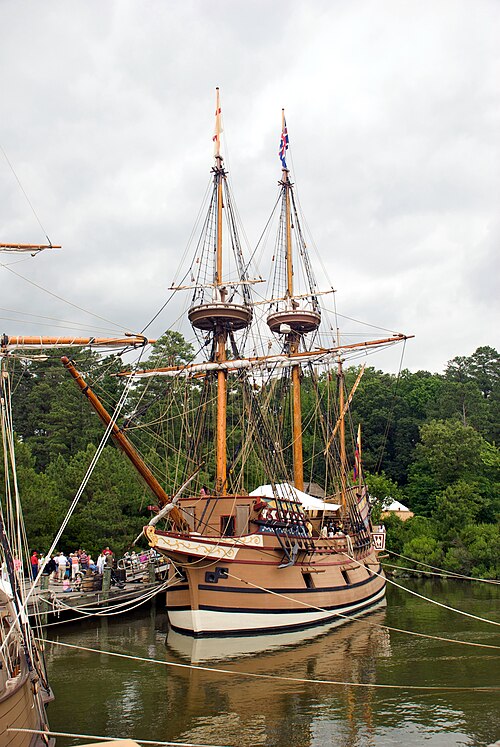
On December 20, 1606, three small wooden merchant ships—the Susan Constant, the Godspeed, and the tiny Discovery—set sail from London, England, carrying 104 men and boys across the stormy Atlantic Ocean to establish Jamestown, the first permanent English settlement in North America!
An important word to know in this book is (FLAG-ship). Flagship means: The lead ship in a fleet that carries the overall commander—in 1607, the Susan Constant captained by Christopher Newport. Learning about Flagship helps us understand how The Voyage of the Susan Constant fits into Colonial Times & Jamestown.
Key Features
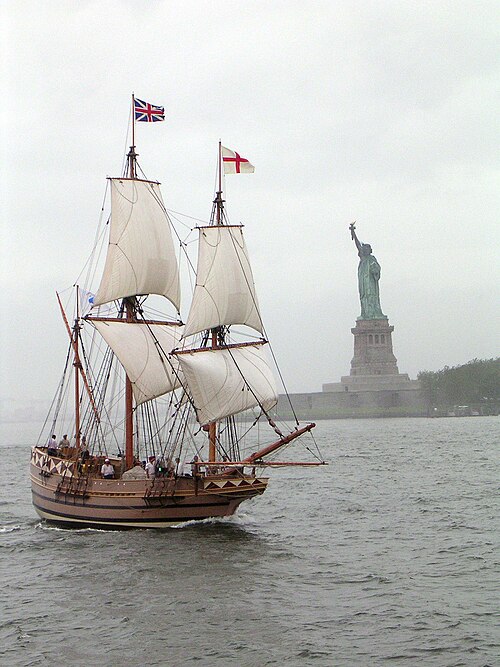
The Susan Constant, captained by Christopher Newport, was the largest of the three ships, yet it measured only 35 meters (116 feet) long—roughly the length of three school buses! The Godspeed was 21 meters long, and the Discovery was just 15 meters (50 feet) long.
Scientists and explorers also look closely at (ver-JIN-yuh KUM-puh-nee), which means: The English joint-stock company granted a royal charter by King James I to finance and establish the Jamestown colony. These special traits make The Voyage of the Susan Constant easy to spot and study.
How It Works
The expedition was financed by the , a joint-stock company hoping to find gold, silver, and a water route to Asia. Instead of sailing straight across the icy North Atlantic, Captain Newport steered south to catch the trade winds past the Canary Islands and the Caribbean before turning north along the Virginia coast—a grueling 144-day voyage!
Here is another helpful term: (HARD-tak). It means: A rock-hard, twice-baked biscuit of flour and water carried on long wooden sailing voyages because it wouldn’t spoil. Step by step, and Hardtack work together in nature.
In Our World
Below the wooden deck of the Susan Constant, passengers endured cramped quarters with a ceiling less than 1.5 meters (5 feet) high, eating salted beef, dried peas, and rock-hard ship’s biscuit (). On April 26, 1607, they sighted Cape Henry at the mouth of the Chesapeake Bay and sailed up the James River on May 14, 1607.
Understanding how The Voyage of the Susan Constant works in our world also involves (ver-JIN-yuh KUM-puh-nee): The English joint-stock company granted a royal charter by King James I to finance and establish the Jamestown colony. Even when surrounding conditions shift across seasons or regions, the interaction between , Virginia Company of London, and helps sustain balance and resilience in the wider environment.
Amazing Facts
Amazing Fact #1: Even though the Susan Constant carried 71 of the 144 total sailors and settlers, the passengers’ living deck below was shorter than a basketball court!
Amazing Fact #2: The smallest ship, the 20-ton Discovery, stayed behind in Virginia when the other ships sailed back to England so colonists could explore the Chesapeake Bay.
Amazing Fact #3: You can climb aboard full-scale, seaworthy wooden replicas of the Susan Constant, Godspeed, and Discovery today at Jamestown Settlement in Virginia!
Read & Review
Let's review what we discovered about The Voyage of the Susan Constant! In this book, we explored how , , and connect to Colonial Times & Jamestown.
Key Question #1: What were the names of the three ships that brought the English colonists to Virginia in 1607? Answer: The Susan Constant, the Godspeed, and the Discovery. The Susan Constant, Godspeed, and Discovery landed in Virginia in April–May 1607.
Key Question #2: Who commanded the Susan Constant during the 144-day voyage to Virginia? Answer: Captain Christopher Newport. Experienced mariner Captain Christopher Newport led the 1606–1607 fleet across the Atlantic.