Introduction
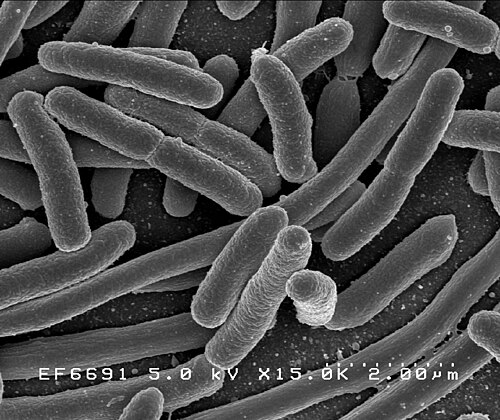
All around us—on doorknobs, in soil, in water, and even inside our own bodies—live trillions of microscopic organisms called microbes! Most microbes are completely harmless or helpful, while the tiny fraction that cause sickness are what we call "germs" (pathogens).
A foundational concept in this investigation is (pronounced PATH-uh-juhn), which refers to: A microscopic organism (germ), such as a specific virus or bacterium, that can cause disease. Every part of The Science of Germs within The Human Body & Health builds upon this essential concept.
At the Grade 4 level of Science & Technology (The Human Body & Health), researchers compare structure, function, and environmental context to see how , , and shape measurable outcomes.
Key Features
The four main types of microbes are: 1) Bacteria (single-celled organisms shaped like spheres, rods, or spirals), 2) Viruses (tiny packets of genetic code inside a protein coat that are 100 times smaller than bacteria), 3) Fungi (like yeasts and molds), and 4) Protozoa.
To analyze these defining traits accurately, specialists examine (ih-MYOON SIS-tuhm): The body’s defense network of white blood cells, antibodies, and barriers that fights off germs. Alongside (A microscopic organism (germ), such as a specific virus or bacterium, that can cause disease.), these specialized characteristics set The Science of Germs apart within The Human Body & Health.
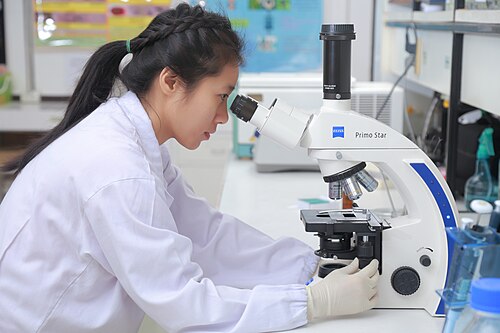
Field Observation & Evidence: Researchers studying The Science of Germs observe how physical form matches function in Science & Technology. Each observable feature provides a clear advantage that supports stability, survival, or performance across changing conditions.
How It Works
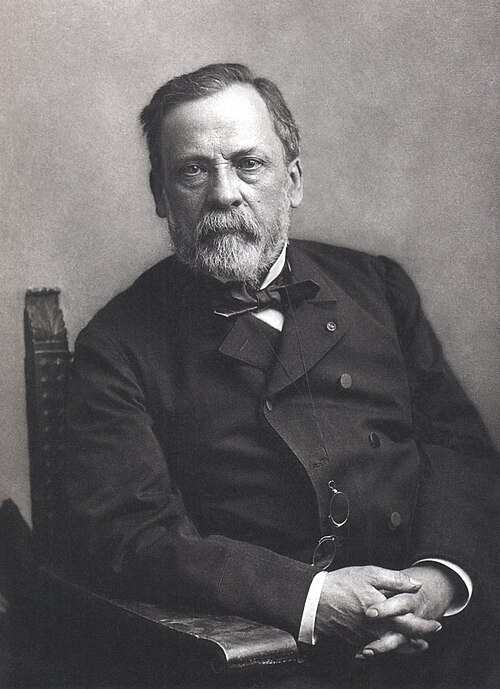
In the 1670s, Dutch scientist Antonie van Leeuwenhoek built powerful hand-ground microscopes and became the first human to see bacteria ("animalcules"). In the 1860s, Louis Pasteur proved the Germ Theory of Disease—showing that specific microbes cause specific illnesses and that heating milk () kills harmful bacteria. When germs do enter your body, white blood cells and antibodies in your team up to destroy them!
This step-by-step process relies on (pronounced pas-cher-uh-ZAY-shuhn), defined as: Heating milk or juice to a specific temperature to destroy harmful bacteria, invented by Louis Pasteur. Each stage of the process prepares the way for the next phase to unfold.
Cause-and-Effect Balance: When conditions remain balanced, and interact inside the to keep the system running smoothly. If any single link in this sequence is disrupted, the entire pace of activity shifts.
In Our World
Why does washing your hands with soap and water for 20 seconds work so well? Soap molecules have one end that loves water and another end that wedges into the oily fat coat of viruses and bacteria, prying germs off your skin and breaking them apart! Plus, over 99% of bacteria on Earth are "good bacteria" that help us digest food in our gut and turn milk into yogurt and cheese.
Understanding how The Science of Germs functions in real environments also involves (ih-MYOON SIS-tuhm): The body’s defense network of white blood cells, antibodies, and barriers that fights off germs. Even when surrounding conditions shift across seasons or regions, the interaction between , Immune System, and helps sustain balance and resilience in the wider environment.
Global & Practical Significance: Less than 1% of bacterial species are pathogens; beneficial bacteria are essential for human digestion and soil health. Furthermore, Soap is a surfactant whose hydrophobic tails disrupt lipid envelopes and loosen microbes from skin oils.
Amazing Facts
1. Remarkable Scale & Numbers: More than 99% of all bacteria on Earth are completely harmless or helpful—your digestive tract relies on trillions of friendly gut bacteria to help digest food and make vitamins! This discovery highlights why is central to understanding The Science of Germs.
2. Extraordinary Adaptation & Design: Antibiotic medicines (like penicillin, discovered from mold by Alexander Fleming in 1928) cure bacterial infections, but do NOT work against viruses like the common cold. Specialized conditions involving make these adaptations possible.
3. Surprising Scientific & Historical Record: A sneeze can launch microscopic droplets traveling at up to 160 km/h (100 mph), which is why sneezing into your elbow stops germs from spreading! Over time, processes linked to leave a lasting mark across The Human Body & Health.
Read & Review
Chapter Synthesis: Throughout this investigation of The Science of Germs in Science & Technology (The Human Body & Health), we examined its core foundations, defining traits, step-by-step mechanisms, and real-world connections using key terms like , , and .
Academic Vocabulary Review: • (PATH-uh-juhn): A microscopic organism (germ), such as a specific virus or bacterium, that can cause disease. • (ih-MYOON SIS-tuhm): The body’s defense network of white blood cells, antibodies, and barriers that fights off germs. • (pas-cher-uh-ZAY-shuhn): Heating milk or juice to a specific temperature to destroy harmful bacteria, invented by Louis Pasteur.
Critical Thinking Check: (1) Are all bacteria harmful "germs"? — No—over 99% of bacteria are harmless or helpful, including the friendly bacteria that help digest food in our gut. (2) Why does washing hands with soap and water for 20 seconds defeat many viruses and bacteria? — Soap molecules break apart the oily outer membranes of many germs and lift them off the skin into the rinse water.