Introduction
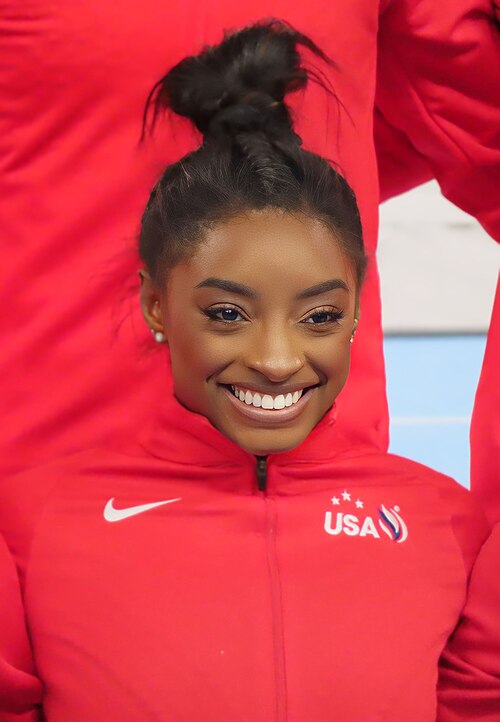
When Olympic gymnast Simone Biles sprints down the vault runway or launches two stories into the air during a floor routine to twist and flip twice before sticking a rock-solid landing, she is not defying the laws of physics—she is mastering them like a human rocket!
A foundational concept in this investigation is (pronounced ANG-gyuh-ler moh-MEN-tuhm), which refers to: The rotational momentum of a spinning body, which stays constant in midair—meaning tucking tightly makes a gymnast spin much faster. Every part of The Physics of Gymnastics within The Science of Sports builds upon this essential concept.
At the Grade 4 level of Sports & Entertainment (The Science of Sports), researchers compare structure, function, and environmental context to see how , , and shape measurable outcomes.
Key Features
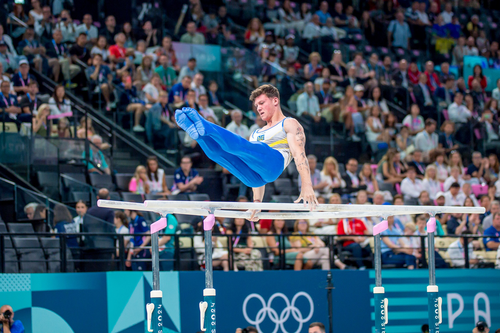
Every gymnastics flip, handspring, and pirouette relies on Newton’s Three Laws of Motion, , and Conservation of . The gymnastics springboard and floor exercise mat contain hundreds of steel coils and foam springs that store elastic when compressed and launch it back upward.
To analyze these defining traits accurately, specialists examine (SEN-ter uv mas): The balance point of an athlete’s body around which all weight is evenly distributed and around which the body flips in midair. Alongside (The rotational momentum of a spinning body, which stays constant in midair—meaning tucking tightly makes a gymnast spin much faster.), these specialized characteristics set The Physics of Gymnastics apart within The Science of Sports.
Field Observation & Evidence: Researchers studying The Physics of Gymnastics observe how physical form matches function in Sports & Entertainment. Each observable feature provides a clear advantage that supports stability, survival, or performance across changing conditions.
How It Works
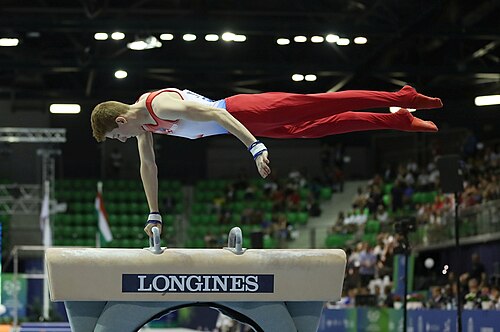
How does a gymnast spin faster in midair without anyone pushing them after they leave the mat? By changing their body shape (Moment of Inertia)! When a gymnast stretches out tall in a layout position, their mass is far from their center of rotation, so they rotate more slowly. The instant they pull their knees and arms tightly into a tuck position, their mass moves close to their axis—and because is conserved, their spinning speed automatically doubles or triples! When ready to land, they open their arms and legs wide again to slow the spin right on target.
This step-by-step process relies on (pronounced puh-TEN-shuhl EN-er-jee), defined as: Stored energy—such as the elastic energy stored inside a compressed gymnastics springboard just before it launches an athlete upward. Each stage of the process prepares the way for the next phase to unfold.
Cause-and-Effect Balance: When conditions remain balanced, and interact inside the to keep the system running smoothly. If any single link in this sequence is disrupted, the entire pace of activity shifts.
In Our World
On the 10-centimeter-wide (4-inch) balance beam, a gymnast stays balanced only as long as their (located just behind the belly button) stays positioned directly over their feet or hands on the beam! Bending knees on landing spreads the impact force over a longer fraction of a second, protecting ankles and knees.
Understanding how The Physics of Gymnastics functions in real environments also involves (SEN-ter uv mas): The balance point of an athlete’s body around which all weight is evenly distributed and around which the body flips in midair. Even when surrounding conditions shift across seasons or regions, the interaction between , Center of Mass, and helps sustain balance and resilience in the wider environment.
Global & Practical Significance: In the absence of external torque in midair, decreasing the radius of rotation increases rotational velocity. Furthermore, As long as the vertical line from the falls within the 4-inch base of support, the gymnast remains balanced.
Amazing Facts
1. Remarkable Scale & Numbers: The Olympic balance beam is only 10 centimeters (4 inches) wide—roughly the width of a smartphone—and stands 1.25 meters (4 feet) off the ground! This discovery highlights why is central to understanding The Physics of Gymnastics.
2. Extraordinary Adaptation & Design: Simone Biles has five different world-championship gymnastics skills officially named after her because she was the first woman in history to land them in international competition! Specialized conditions involving make these adaptations possible.
3. Surprising Scientific & Historical Record: Pulling your arms and legs into a tight tuck to spin faster in midair is the exact same physics (Conservation of ) that figure skaters use on the ice and divers use off a 10-meter platform! Over time, processes linked to leave a lasting mark across The Science of Sports.
Read & Review
Chapter Synthesis: Throughout this investigation of The Physics of Gymnastics in Sports & Entertainment (The Science of Sports), we examined its core foundations, defining traits, step-by-step mechanisms, and real-world connections using key terms like , , and .
Academic Vocabulary Review: • (ANG-gyuh-ler moh-MEN-tuhm): The rotational momentum of a spinning body, which stays constant in midair—meaning tucking tightly makes a gymnast spin much faster. • (SEN-ter uv mas): The balance point of an athlete’s body around which all weight is evenly distributed and around which the body flips in midair. • (puh-TEN-shuhl EN-er-jee): Stored energy—such as the elastic energy stored inside a compressed gymnastics springboard just before it launches an athlete upward.
Critical Thinking Check: (1) Why does a gymnast or figure skater spin much faster the instant they pull their arms and knees tightly inward into a tuck? — Conservation of —moving mass closer to the center axis reduces rotational inertia and speeds up the spin. (2) To stay balanced on the 4-inch-wide balance beam without falling off, where must a gymnast keep their ""? — Positioned directly above their base of support (their feet or hands on the beam).