
Introduction
Right after the Olympic flame is extinguished in the host city, the stadium roars back to life for the Paralympic Games—one of the largest, fastest, and most inspiring elite sporting events on the planet! The prefix "Para" comes from the Greek word meaning "beside" or "alongside," signifying that the run parallel to the Olympics as equal elite competitions.
A foundational concept in this investigation is (pronounced pair-uh-LIM-piks), which refers to: The elite international multi-sport Games for athletes with physical, visual, or intellectual impairments, held parallel ("para") to the Olympics. Every part of The Paralympic Games within The Olympic Games builds upon this essential concept.
In Grade 3 Sports & Entertainment studies (The Olympic Games), understanding how , , and work together helps explain real-world patterns. As you read each chapter, notice how these key terms connect structure, process, and environment.
Key Features
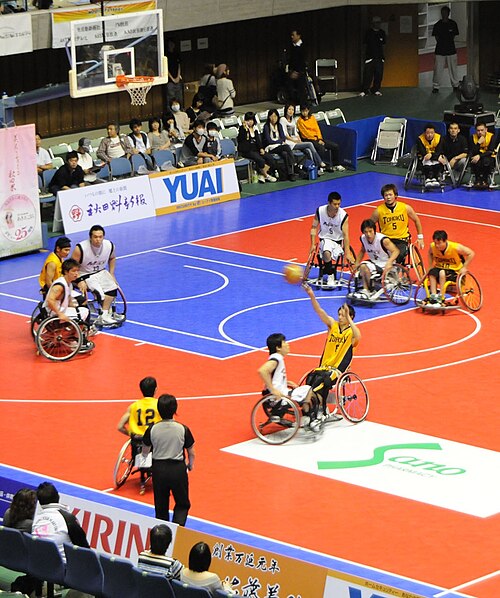
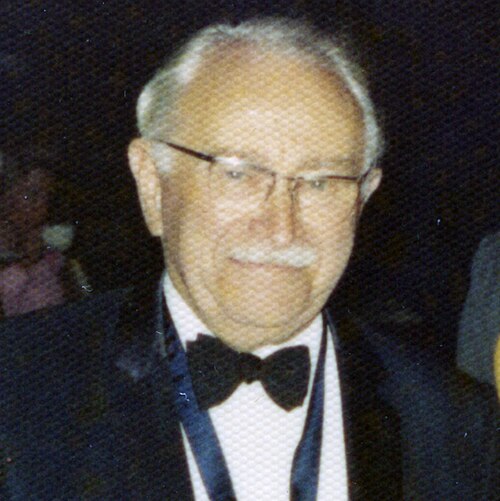
The Paralympic movement was born in 1948 thanks to neurosurgeon Dr. Ludwig Guttmann at Stoke Mandeville Hospital in England! While treating World War II veterans with spinal cord injuries, Dr. Guttmann realized that competitive sports—starting with wheelchair archery on the exact opening day of the 1948 London Olympics—rebuilt physical strength, coordination, and joy far faster than bed rest!
To analyze these defining traits accurately, specialists examine (pros-THET-ik blayd): A J-shaped carbon-fiber running prosthesis that compresses on impact and springs back to propel amputee sprinters and jumpers. Alongside (The elite international multi-sport Games for athletes with physical, visual, or intellectual impairments, held parallel ("para") to the Olympics.), these specialized characteristics set The Paralympic Games apart within The Olympic Games.
Field Observation & Evidence: Researchers studying The Paralympic Games observe how physical form matches function in Sports & Entertainment. Each observable feature provides a clear advantage that supports stability, survival, or performance across changing conditions.
How It Works
By 1960 in Rome, Italy, the Stoke Mandeville Games grew into the first official Paralympic Games with 400 athletes from 23 countries! Today, thousands of Summer and Winter Paralympians compete using cutting-edge adaptive engineering: J-shaped carbon-fiber running blades (modeled after a cheetah’s hind leg to store and release spring energy!), lightweight cambered racing wheelchairs with angled wheels for high-speed turns, and —a silent-arena team sport for blind athletes who dive to block a ball containing ringing bells inside!
This step-by-step process relies on (pronounced GOHL-bawl), defined as: A sport designed specifically for blind and visually impaired athletes, played in total silence with a ball containing internal bells. Each stage of the process prepares the way for the next phase to unfold.
Cause-and-Effect Balance: When conditions remain balanced, and interact inside the to keep the system running smoothly. If any single link in this sequence is disrupted, the entire pace of activity shifts.
In Our World
To guarantee fair competition, the use an evidence-based classification system (such as T11 for blind track runners competing alongside a tethered guide runner, or S1–S14 in Para swimming) so athletes compete against rivals with similar functional mobility. The Paralympic symbol—three swooshes called Agitos ("I move" in Latin)—celebrates athletes bringing the world into motion!
Understanding how The Paralympic Games functions in real environments also involves (pros-THET-ik blayd): A J-shaped carbon-fiber running prosthesis that compresses on impact and springs back to propel amputee sprinters and jumpers. Even when surrounding conditions shift across seasons or regions, the interaction between , Prosthetic Blade, and helps sustain balance and resilience in the wider environment.
Global & Practical Significance: Dr. Ludwig Guttmann’s 1948 Stoke Mandeville archery competition launched the modern Paralympic movement. Furthermore, Acoustic tracking of the internal bells allows blindfolded athletes to locate and block shots.
Amazing Facts
1. Remarkable Scale & Numbers: During Paralympic matches, the entire stadium crowd of 10,000 fans must stay completely silent during play so blindfolded players on the court can hear the bells jingling inside the 1.25-kilogram ball hurtling at 60 km/h! This discovery highlights why is central to understanding The Paralympic Games.
2. Extraordinary Adaptation & Design: Elite Paralympic wheelchair marathon racers push their aerodynamic carbon-fiber chairs so fast downhill and on flats that they finish the 26.2-mile marathon in around 1 hour and 20 minutes—nearly 40 minutes faster than Olympic foot runners! Specialized conditions involving make these adaptations possible.
3. Surprising Scientific & Historical Record: In blind Paralympic track sprinting (T11), the athlete and their human guide runner run side-by-side linked by a short wrist tether, matching every single stride in perfect sync! Over time, processes linked to leave a lasting mark across The Olympic Games.
Read & Review
Chapter Synthesis: Throughout this investigation of The Paralympic Games in Sports & Entertainment (The Olympic Games), we examined its core foundations, defining traits, step-by-step mechanisms, and real-world connections using key terms like , , and .
Academic Vocabulary Review: • (pair-uh-LIM-piks): The elite international multi-sport Games for athletes with physical, visual, or intellectual impairments, held parallel ("para") to the Olympics. • (pros-THET-ik blayd): A J-shaped carbon-fiber running prosthesis that compresses on impact and springs back to propel amputee sprinters and jumpers. • (GOHL-bawl): A sport designed specifically for blind and visually impaired athletes, played in total silence with a ball containing internal bells.
Critical Thinking Check: (1) Who founded the Stoke Mandeville Games in 1948 that grew into the global Paralympic Games? — Dr. Ludwig Guttmann, a neurosurgeon who introduced competitive sports to rehabilitate veterans with spinal cord injuries. (2) Why must spectators stay completely quiet during a Paralympic game? — All players wear blackout eyeshades and rely on their hearing to track the bells ringing inside the rolling ball.