Introduction
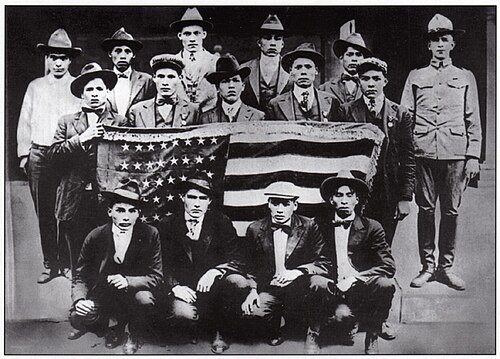
During World War II in the Pacific Theater, the United States Marine Corps needed a battlefield radio code so fast and complex that enemy cryptographers could never crack it. The heroes who answered the call were the Navajo Code Talkers— Diné (Navajo) Marines whose unwritten ancestral language helped win the war!
A foundational concept in this investigation is (pronounced krip-TOG-ruh-fee), which refers to: The science of creating and decoding secret codes to protect confidential messages. Every part of The Navajo Code Talkers within Indigenous Peoples builds upon this essential concept.
In Grade 3 History (American & Virginia) studies (Indigenous Peoples), understanding how , Diné, and work together helps explain real-world patterns. As you read each chapter, notice how these key terms connect structure, process, and environment.
Key Features
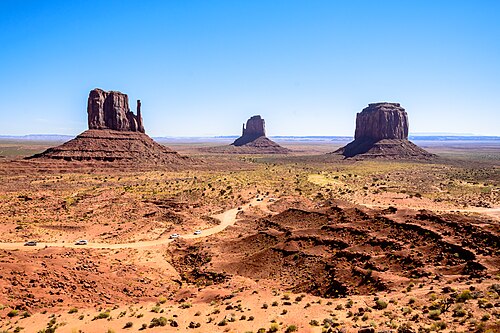
In 1942, Philip Johnston and the US Marines recruited an initial group of 29 Navajo men—the "Original 29"—at Camp Pendleton, California, to design a top-secret military code based on the Diné (Navajo) language of the American Southwest.
To analyze these defining traits accurately, specialists examine Diné (dih-NEH): The Navajo people’s name for themselves, meaning "The People." Alongside (The science of creating and decoding secret codes to protect confidential messages.), these specialized characteristics set The Navajo Code Talkers apart within Indigenous Peoples.
Field Observation & Evidence: Researchers studying The Navajo Code Talkers observe how physical form matches function in History (American & Virginia). Each observable feature provides a clear advantage that supports stability, survival, or performance across changing conditions.
How It Works
The Navajo Code Talkers built a brilliant two-layer code! First, for military terms that didn’t exist in traditional Navajo, they used nature code words: a fighter plane was da-he-tih-hi ("hummingbird"), a bomber was jay-sho ("buzzard"), a submarine was besh-lo ("iron fish"), and a general was so-na-kih ("two stars"). Second, to spell out place names, each English letter had three different Navajo animal or object words translated from their English initials!
This step-by-step process relies on (pronounced by-LING-gwuhl), defined as: Able to speak and understand two languages fluently—such as both Navajo and English. Each stage of the process prepares the way for the next phase to unfold.
Cause-and-Effect Balance: When conditions remain balanced, and interact inside the Diné to keep the system running smoothly. If any single link in this sequence is disrupted, the entire pace of activity shifts.
In Our World
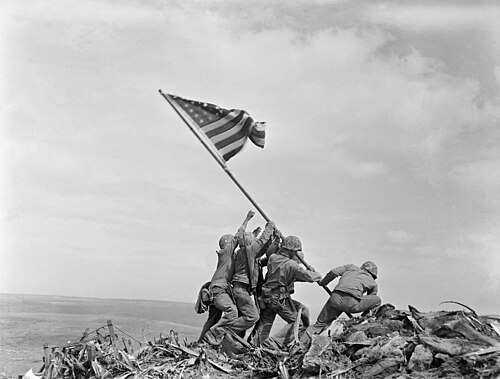
While mechanical coding machines took 30 minutes to encrypt and decrypt a message, two Navajo Code Talkers could transmit a three-line battlefield message in just 20 seconds! At the Battle of Iwo Jima in 1945, six Navajo Code Talkers sent over 800 messages without a single error. It became the only spoken military code in modern history never broken by an enemy!
Understanding how The Navajo Code Talkers functions in real environments also involves Diné (dih-NEH): The Navajo people’s name for themselves, meaning "The People." Even when surrounding conditions shift across seasons or regions, the interaction between , Diné, and helps sustain balance and resilience in the wider environment.
Global & Practical Significance: Metaphorical nature code words plus a phonetic alphabet made the code impossible for enemy listeners to decipher. Furthermore, Instantaneous spoken translation by trained Code Talkers saved critical battlefield minutes and lives.
Amazing Facts
1. Remarkable Scale & Numbers: During the first 48 hours of the Battle of Iwo Jima, six Navajo Code Talkers worked around the clock sending over 800 vital radio messages with zero mistakes! This discovery highlights why is central to understanding The Navajo Code Talkers.
2. Extraordinary Adaptation & Design: In the Navajo code, "iron fish" (besh-lo) meant submarine, and "tortoise" (chay-da-gahi) meant tank! Specialized conditions involving Diné make these adaptations possible.
3. Surprising Scientific & Historical Record: Over 400 Navajo Code Talkers served in World War II, and their mission remained classified as a military secret until 1968 so it could be protected. Over time, processes linked to leave a lasting mark across Indigenous Peoples.
Read & Review
Chapter Synthesis: Throughout this investigation of The Navajo Code Talkers in History (American & Virginia) (Indigenous Peoples), we examined its core foundations, defining traits, step-by-step mechanisms, and real-world connections using key terms like , Diné, and .
Academic Vocabulary Review: • (krip-TOG-ruh-fee): The science of creating and decoding secret codes to protect confidential messages. • Diné (dih-NEH): The Navajo people’s name for themselves, meaning "The People." • (by-LING-gwuhl): Able to speak and understand two languages fluently—such as both Navajo and English.
Critical Thinking Check: (1) Why did the Navajo Code Talkers use nature words like "hummingbird" (fighter plane) and "iron fish" (submarine)? — To create a double-layered secret code so even someone who knew ordinary Navajo words wouldn’t know the military meaning. (2) How fast could Navajo Code Talkers transmit a three-line radio message compared to 30 minutes on a mechanical cipher machine? — In about 20 seconds.