Introduction
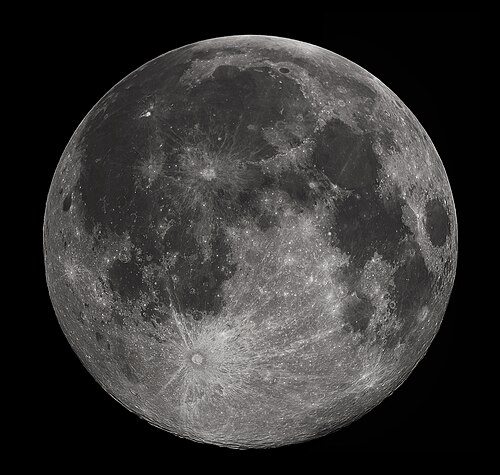
Look up at the night sky over a month and the Moon seems to change shape—from a thin silver banana crescent to a glowing full circle and back again! Yet the Moon never actually changes shape or makes its own light; what we see are the lunar phases.
A foundational concept in this investigation is (pronounced WAK-sing), which refers to: Growing larger in sunlit appearance each night as the Moon moves from New Moon toward Full Moon. Every part of The Moon Phases within Space & Astronomy builds upon this essential concept.
At the Grade 4 level of Science & Technology (Space & Astronomy), researchers compare structure, function, and environmental context to see how , , and shape measurable outcomes.
Key Features
The Moon is Earth’s natural rocky satellite, orbiting our planet at an average distance of 384,400 kilometers (238,855 miles). One complete lunar cycle takes 29.5 days (a synodic month) and passes through eight distinct phases.
To analyze these defining traits accurately, specialists examine (WAY-ning): Shrinking smaller in sunlit appearance each night as the Moon moves from Full Moon back to New Moon. Alongside (Growing larger in sunlit appearance each night as the Moon moves from New Moon toward Full Moon.), these specialized characteristics set The Moon Phases apart within Space & Astronomy.
Field Observation & Evidence: Researchers studying The Moon Phases observe how physical form matches function in Science & Technology. Each observable feature provides a clear advantage that supports stability, survival, or performance across changing conditions.
How It Works
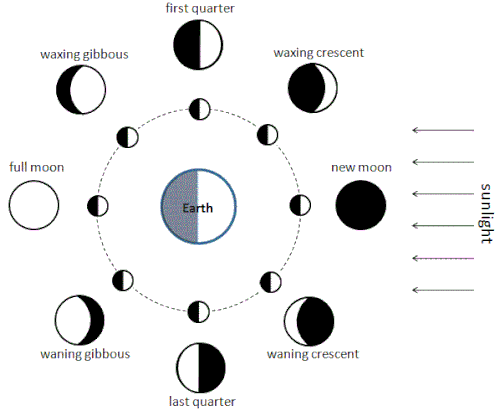
The Sun always illuminates exactly half of the spherical Moon, just as it lights half of Earth. As the Moon orbits Earth, we view that sunlit half from different angles! When the Moon sits between Earth and the Sun, its dark side faces us (New Moon). As the sunlit sliver grows larger (""), we see a Waxing Crescent, First Quarter, Waxing , and finally a Full Moon when Earth is between the Sun and Moon. Then the light shrinks ("") back to New Moon.
This step-by-step process relies on (pronounced GIB-uhs), defined as: A Moon phase in which more than half, but not all, of the Moon’s face is illuminated by sunlight. Each stage of the process prepares the way for the next phase to unfold.
Cause-and-Effect Balance: When conditions remain balanced, and interact inside the to keep the system running smoothly. If any single link in this sequence is disrupted, the entire pace of activity shifts.
In Our World
Because the Moon rotates on its axis in the exact same time it takes to orbit Earth (27.3 days—tidal locking), the same familiar "Man in the Moon" side always faces Earth! The Moon’s gravity also pulls on Earth’s oceans, creating two high tides and two low tides every day.
Understanding how The Moon Phases functions in real environments also involves (WAY-ning): Shrinking smaller in sunlit appearance each night as the Moon moves from Full Moon back to New Moon. Even when surrounding conditions shift across seasons or regions, the interaction between , Waning, and helps sustain balance and resilience in the wider environment.
Global & Practical Significance: The Moon generates no light of its own; it reflects sunlight toward Earth. Furthermore, Earth’s shadow only hits the Moon during a rare lunar eclipse; monthly phases happen because our viewing angle of the sunlit half changes as the Moon orbits Earth.
Amazing Facts
1. Remarkable Scale & Numbers: An easy rule to remember: "" means growing bigger (Light on the Right in the Northern Hemisphere), while "" means shrinking smaller! This discovery highlights why Waxing is central to understanding The Moon Phases.
2. Extraordinary Adaptation & Design: Because the Moon has no wind, rain, or atmosphere, the footprints left by Apollo astronauts in 1969 will stay crisp in the lunar dust for millions of years. Specialized conditions involving make these adaptations possible.
3. Surprising Scientific & Historical Record: Gravity on the Moon is only one-sixth as strong as on Earth—so if you weigh 60 pounds on Earth, you would weigh just 10 pounds on the Moon! Over time, processes linked to leave a lasting mark across Space & Astronomy.
Read & Review
Chapter Synthesis: Throughout this investigation of The Moon Phases in Science & Technology (Space & Astronomy), we examined its core foundations, defining traits, step-by-step mechanisms, and real-world connections using key terms like , , and .
Academic Vocabulary Review: • (WAK-sing): Growing larger in sunlit appearance each night as the Moon moves from New Moon toward Full Moon. • (WAY-ning): Shrinking smaller in sunlit appearance each night as the Moon moves from Full Moon back to New Moon. • (GIB-uhs): A Moon phase in which more than half, but not all, of the Moon’s face is illuminated by sunlight.
Critical Thinking Check: (1) Why does the Moon shine brightly in the night sky? — Its rocky gray surface reflects light coming from the Sun. (2) What causes the changing phases of the Moon over a 29.5-day cycle? — As the Moon orbits Earth, we see different fractions of its sunlit half from our viewing angle.