Introduction
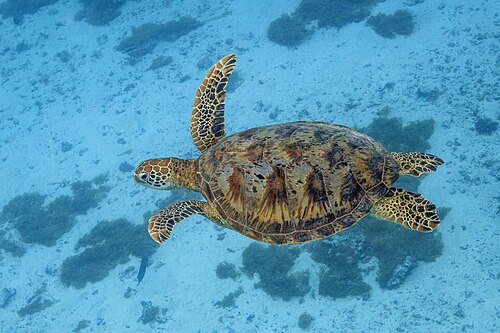
Sea turtles are ancient marine reptiles that have glided through Earth’s oceans for over 110 million years—since the age of dinosaurs! From the moment a ping-pong-ball-sized egg hatches on a sandy beach, a sea turtle embarks on one of nature’s longest ocean migrations.
An important word to know in this book is (KAIR-uh-pays). Carapace means: The hard upper shell of a turtle, fused to its spine and ribs. Learning about Carapace helps us understand how The Journey of a Sea Turtle fits into Life Cycles.
Key Features
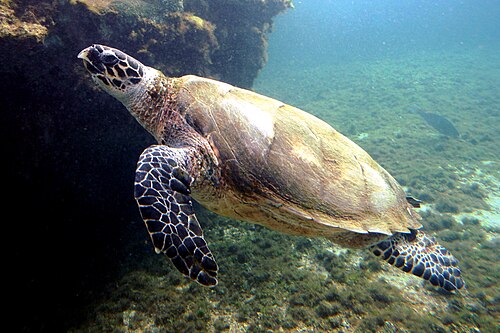
Unlike land tortoises, sea turtles cannot pull their heads or flippers inside their streamlined shells (carapaces). Their front limbs are elongated into powerful wing-like flippers for cruising thousands of kilometers, while special salt glands behind their eyes excrete excess sea salt.
Scientists and explorers also look closely at (NAY-tuhl beech), which means: The exact beach where a sea turtle hatched and to which females return decades later to nest. These special traits make The Journey of a Sea Turtle easy to spot and study.
How It Works
A female sea turtle lays 80 to 120 leathery eggs in a sandy nest called a clutch. Amazingly, the temperature of the sand determines whether hatchlings are male or female! Cooler sand produces males, while warmer sand produces females ("hot chicks, cool dudes").
Here is another helpful term: (mag-nee-toh-ree-SEP-shuhn). It means: The biological ability to detect Earth’s magnetic field and use it like a built-in GPS compass. Step by step, and Magnetoreception work together in nature.
In Our World
Using biomagnetism—an internal compass that senses Earth’s magnetic field—adult female sea turtles navigate across entire oceans to return to the exact where they hatched 20 to 30 years earlier to lay their own eggs.
Understanding how The Journey of a Sea Turtle works in our world also involves (NAY-tuhl beech): The exact beach where a sea turtle hatched and to which females return decades later to nest. Even when surrounding conditions shift across seasons or regions, the interaction between , Natal Beach, and helps sustain balance and resilience in the wider environment.
Amazing Facts
Amazing Fact #1: Leatherback sea turtles are the largest turtles on Earth, growing over 2 meters long and diving deeper than 1,200 meters for jellyfish!
Amazing Fact #2: Only about 1 in 1,000 sea turtle hatchlings survives to adulthood because of crabs, seabirds, and ocean predators.
Amazing Fact #3: Sea turtles can hold their breath for 4 to 7 hours while resting underwater by slowing their heart rate to just one beat every few minutes.
Read & Review
Let's review what we discovered about The Journey of a Sea Turtle! In this book, we explored how , , and connect to Life Cycles.
Key Question #1: What determines whether sea turtle eggs develop into males or females? Answer: The temperature of the beach sand around the nest. Sea turtles have temperature-dependent sex determination: warmer sand produces females and cooler sand produces males.
Key Question #2: How do adult sea turtles find their way back to the beach where they hatched decades earlier? Answer: By sensing Earth’s magnetic field (). Sea turtles imprint on the unique magnetic signature of their natal coastline.