Introduction
Look around your town and you will see wheels everywhere—on bicycles, school buses, airplanes, skateboards, clocks, and factory machines! Yet humans lived for hundreds of thousands of years before inventing the wheel around 3500 BCE in ancient (modern-day Iraq).
A foundational concept in this investigation is (pronounced weel and AK-suhl), which refers to: One of the six classical simple machines, consisting of a larger wheel rotating around a smaller central rod (axle). Every part of The History of the Wheel within Inventions & Tech builds upon this essential concept.
In Grade 5 advanced nonfiction inquiry across Science & Technology (Inventions & Tech), synthesizing primary evidence around , , and reveals how complex systems operate and adapt over time.
Key Features
Surprisingly, the very first wheels were not built for carts or wagons! Archaeologists discovered that Sumerian craftspeople first invented the horizontal potter’s wheel to spin wet clay into round bowls and jars. About 300 years later, people turned the wheel upright to build wooden carts.
To analyze these defining traits accurately, specialists examine (FRIK-shuhn): The resistance force that occurs when one surface rubs or slides against another, which wheels dramatically reduce. Alongside (One of the six classical simple machines, consisting of a larger wheel rotating around a smaller central rod (axle).), these specialized characteristics set The History of the Wheel apart within Inventions & Tech.
Field Observation & Evidence: Researchers studying The History of the Wheel observe how physical form matches function in Science & Technology. Each observable feature provides a clear advantage that supports stability, survival, or performance across changing conditions.

How It Works
A round disk by itself isn’t enough to make a vehicle roll—the true genius of the invention is the wheel-and-axle simple machine! Dragging a heavy stone sled across the ground creates enormous sliding . By fitting a smooth stationary rod (the axle) through a greased hole in the center of a rotating wheel, rolling friction replaces sliding friction, allowing one horse or ox to pull loads ten times heavier!
This step-by-step process relies on (pronounced mes-uh-puh-TAY-mee-uh), defined as: The ancient "Land Between the Rivers" (Tigris and Euphrates) where the potter’s wheel and wheeled carts were first invented. Each stage of the process prepares the way for the next phase to unfold.
Cause-and-Effect Balance: When conditions remain balanced, and interact inside the to keep the system running smoothly. If any single link in this sequence is disrupted, the entire pace of activity shifts.
In Our World
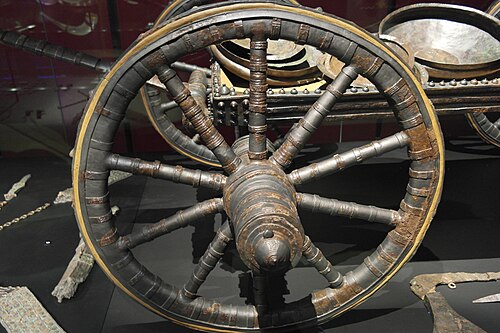
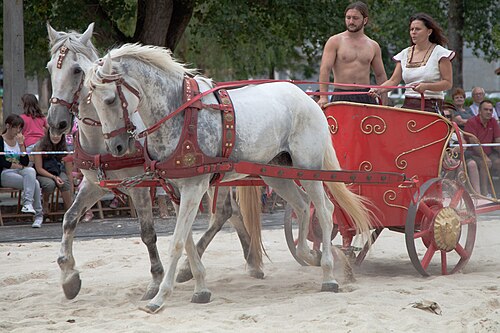
Early Mesopotamian wheels were heavy solid planks of wood pegged together. Around 2000 BCE, inventors carved wooden spokes to create lightweight chariot wheels. Later, engineers added notched teeth to wheels to invent gears—which now turn inside bicycles, wind turbines, watches, and robotic arms!
Understanding how The History of the Wheel functions in real environments also involves (FRIK-shuhn): The resistance force that occurs when one surface rubs or slides against another, which wheels dramatically reduce. Even when surrounding conditions shift across seasons or regions, the interaction between , Friction, and helps sustain balance and resilience in the wider environment.
Global & Practical Significance: Sumerians used horizontal potter’s wheels centuries before adapting upright wheels and axles for wagons. Furthermore, Rolling is far smaller than sliding friction across the ground.
Amazing Facts
1. Remarkable Scale & Numbers: The oldest wooden wheel ever discovered by archaeologists—the Ljubljana Marshes Wheel found in Slovenia—is over 5,150 years old! This discovery highlights why is central to understanding The History of the Wheel.
2. Extraordinary Adaptation & Design: No animal in nature has ever evolved a true freely rotating wheel-and-axle limb because blood vessels and nerves would twist and snap. Specialized conditions involving make these adaptations possible.
3. Surprising Scientific & Historical Record: Adding toothed wheels together creates gears, which can trade speed for climbing power when you shift gears on a bicycle going uphill! Over time, processes linked to leave a lasting mark across Inventions & Tech.
Read & Review
Chapter Synthesis: Throughout this investigation of The History of the Wheel in Science & Technology (Inventions & Tech), we examined its core foundations, defining traits, step-by-step mechanisms, and real-world connections using key terms like , , and .
Academic Vocabulary Review: • (weel and AK-suhl): One of the six classical simple machines, consisting of a larger wheel rotating around a smaller central rod (axle). • (FRIK-shuhn): The resistance force that occurs when one surface rubs or slides against another, which wheels dramatically reduce. • (mes-uh-puh-TAY-mee-uh): The ancient "Land Between the Rivers" (Tigris and Euphrates) where the potter’s wheel and wheeled carts were first invented.
Critical Thinking Check: (1) What was the very first use of the wheel when it was invented in ancient around 3500 BCE? — A spinning potter’s wheel for shaping clay bowls and pots. (2) How does a make moving heavy loads so much easier than dragging them on a sled? — It replaces high sliding with much lower rolling friction.