Introduction
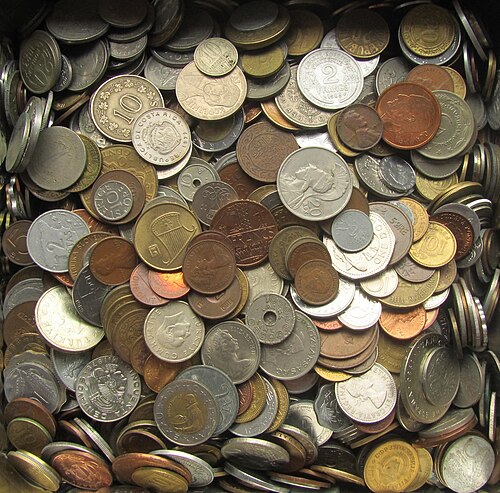
Imagine walking into a bakery to buy a loaf of bread, and instead of handing the baker dollar bills or tapping a card, you try to trade a live chicken! For thousands of years before money was invented, people traded goods directly using the system.
A foundational concept in this investigation is (pronounced BAR-ter), which refers to: Trading goods or services directly for other goods or services (such as trading wheat for shoes) without using money. Every part of The History of Money: From Barter to Coins within Economics for Kids builds upon this essential concept.
In Grade 3 Social Sciences & Culture studies (Economics for Kids), understanding how , , and work together helps explain real-world patterns. As you read each chapter, notice how these key terms connect structure, process, and environment.
Key Features
Why did societies invent money to replace pure ? Economists call the big flaw of barter the "double coincidence of wants"! If you have extra apples and want a pair of shoes, you have to find a shoemaker who happens to want apples right now—and apples rot if you try to save them for next winter!
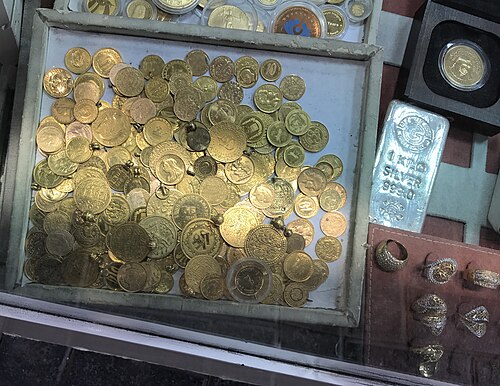
To analyze these defining traits accurately, specialists examine (MEE-dee-uhm uv iks-CHAYNJ): Anything widely accepted by everyone in a society as payment for goods and services, such as coins and currency. Alongside (Trading goods or services directly for other goods or services (such as trading wheat for shoes) without using money.), these specialized characteristics set The History of Money: From Barter to Coins apart within Economics for Kids.
Field Observation & Evidence: Researchers studying The History of Money: From to Coins observe how physical form matches function in Social Sciences & Culture. Each observable feature provides a clear advantage that supports stability, survival, or performance across changing conditions.
How It Works
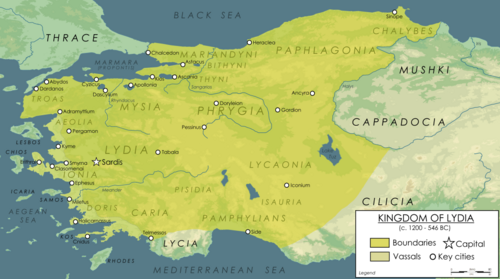
To solve that puzzle, ancient cultures began using commodity money—durable, portable, widely valued items like cowrie seashells in Africa and Asia, cacao beans among the Aztecs, and blocks of salt. Then, around 600 BCE in the Kingdom of Lydia (in modern-day Turkey), King Alyattes and King Croesus minted the world’s first standardized metal coins out of electrum (a natural alloy of gold and silver) stamped with a roaring lion’s head to guarantee each coin’s exact weight!
This step-by-step process relies on (pronounced mint), defined as: An official government factory that stamps and manufactures metal coins of guaranteed weight and value. Each stage of the process prepares the way for the next phase to unfold.
Cause-and-Effect Balance: When conditions remain balanced, and interact inside the to keep the system running smoothly. If any single link in this sequence is disrupted, the entire pace of activity shifts.
In Our World
Because carrying thousands of heavy copper or silver coins on long trade routes was exhausting, merchants in Tang and Song Dynasty China (around 700–1000 CE) invented the world’s first government-printed paper money (jiaozi)! Today, money serves three jobs: 1) A , 2) A Unit of Account (price tag), and 3) A Store of Value—whether as metal coins, paper bills, or digital numbers in a bank computer!
Understanding how The History of Money: From to Coins functions in real environments also involves (MEE-dee-uhm uv iks-CHAYNJ): Anything widely accepted by everyone in a society as payment for goods and services, such as coins and currency. Even when surrounding conditions shift across seasons or regions, the interaction between Barter, Medium of Exchange, and helps sustain balance and resilience in the wider environment.
Global & Practical Significance: Money acts as a universal so anyone can sell their goods and buy from anyone else later. Furthermore, Lydia minted the first stamped electrum coins (~600 BCE), and Song Dynasty China issued the first government paper currency.
Amazing Facts
1. Remarkable Scale & Numbers: The English word "salary" comes from the Latin word salarium (salt money), because in ancient times salt was so valuable for preserving food! This discovery highlights why is central to understanding The History of Money: From Barter to Coins.
2. Extraordinary Adaptation & Design: Among the ancient Aztecs of Mexico, chocolate (cacao) beans were used as real money—a turkey cost about 100 cacao beans, and a ripe avocado cost 3 cacao beans! Specialized conditions involving make these adaptations possible.
3. Surprising Scientific & Historical Record: China invented and used printed paper money over 1,000 years ago—centuries before Marco Polo brought the news back to amazed Europeans! Over time, processes linked to leave a lasting mark across Economics for Kids.
Read & Review
Chapter Synthesis: Throughout this investigation of The History of Money: From to Coins in Social Sciences & Culture (Economics for Kids), we examined its core foundations, defining traits, step-by-step mechanisms, and real-world connections using key terms like Barter, , and .
Academic Vocabulary Review: • (BAR-ter): Trading goods or services directly for other goods or services (such as trading wheat for shoes) without using money. • (MEE-dee-uhm uv iks-CHAYNJ): Anything widely accepted by everyone in a society as payment for goods and services, such as coins and currency. • (mint): An official government factory that stamps and manufactures metal coins of guaranteed weight and value.
Critical Thinking Check: (1) What was the main problem with the ancient " system" that led people to invent money? — You had to find someone who both had what you wanted AND wanted what you had at the exact same time ("double coincidence of wants"). (2) Where were the world’s first standardized, stamped metal coins minted around 600 BCE, and where was paper money later invented? — Metal coins in the Kingdom of Lydia (Turkey); paper money in China.