Introduction
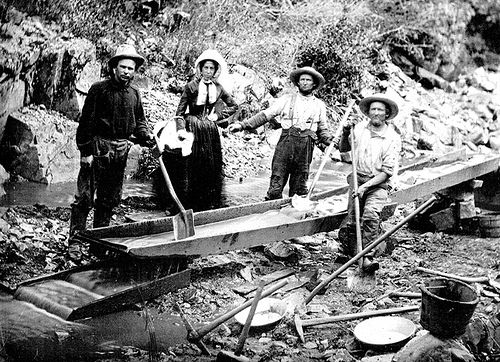
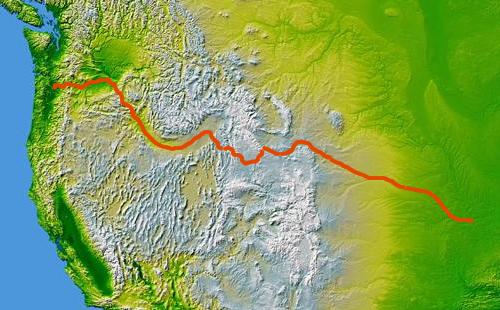
On January 24, 1848, carpenter James W. Marshall spotted shiny flakes of gold in the tailrace of Sutter’s Mill along the American River in Coloma, California. When news reached the East Coast and the world, more than 300,000 "Forty-Niners" rushed west in 1849—many traveling 3,200 kilometers (2,000 miles) across prairies, deserts, and mountains in canvas-topped wagon trains!
An important word to know in this book is (for-tee-NY-ner). Forty-Niner means: A prospector or pioneer who traveled to California in 1849 during the height of the Gold Rush. Learning about Forty-Niner helps us understand how The Gold Rush & Life on a Wagon Train fits into The Underground Railroad & Westward Expansion.
Key Features
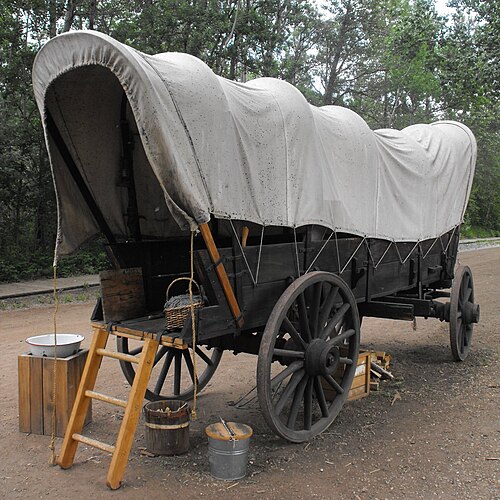
Families traveling the Oregon and California Trails starting in Independence, Missouri, did not ride inside giant Conestoga freight wagons; instead, they used smaller, lighter wooden farm wagons called "Prairie Schooners" because their white canvas bonnets looked like sailing ships crossing an ocean of grass!
Scientists and explorers also look closely at (PRAIR-ee SKOO-ner), which means: A light, canvas-covered wooden wagon pulled by oxen or mules used by pioneers crossing the western trails. These special traits make The Gold Rush & Life on a Wagon Train easy to spot and study.
How It Works
A pulled by teams of slow, steady oxen (or mules) was packed to the brim with 900 kilograms (2,000 pounds) of survival supplies: barrels of flour, cornmeal, bacon, coffee, tools, and cast-iron Dutch ovens. Because the wagon box was full and had no springs, pioneers—including children—walked 15 to 20 miles on foot alongside the oxen every single day for 5 months! In California, prospectors "panned" for gold by swirling river gravel in shallow metal pans so heavy gold flakes settled to the bottom.
Here is another helpful term: (PAN-ing). It means: Washing river gravel in a shallow pan with water so heavy gold particles sink to the bottom while lighter sand washes away. Step by step, and Panning work together in nature.
In Our World
While a few lucky miners struck it rich, many merchants who sold sturdy tools and clothes to miners—like Levi Strauss, who invented copper-riveted denim blue jeans in San Francisco—made far steadier fortunes! By 1850, the sudden population boom propelled California to become the 31st state in the Union.
Understanding how The Gold Rush & Life on a Wagon Train works in our world also involves (PRAIR-ee SKOO-ner): A light, canvas-covered wooden wagon pulled by oxen or mules used by pioneers crossing the western trails. Even when surrounding conditions shift across seasons or regions, the interaction between , Prairie Schooner, and helps sustain balance and resilience in the wider environment.
Amazing Facts
Amazing Fact #1: Because wagons had no shock absorbers and were packed with food barrels, pioneer kids walked nearly the entire 2,000-mile trail on foot!
Amazing Fact #2: Out on the treeless Great Plains where there was no firewood, pioneer children gathered dried buffalo dung ("buffalo chips") to burn for cooking campfires!
Amazing Fact #3: Gold is nearly 19 times heavier than water—which is why gold flakes sink to the bottom of a miner’s pan while lighter sand and mud wash over the rim.
Read & Review
Let's review what we discovered about The Gold Rush & Life on a Wagon Train! In this book, we explored how , , and connect to The Underground Railroad & Westward Expansion.
Key Question #1: Why were the covered wagons used on the Oregon and California Trails nicknamed "Prairie Schooners"? Answer: Their white canvas tops looked like the sails of schooner ships gliding across a sea of tall prairie grass. From a distance, a line of white-topped wagons crossing the plains resembled sailing ships.
Key Question #2: Why does for gold in a river work scientifically? Answer: Gold is much denser (heavier) than sand and gravel, so gold flakes sink to the bottom of the pan when swirled with water. Gold’s high density (19.3 g/cm³) causes it to settle at the bottom of the pan while lighter sediment washes out.