Introduction
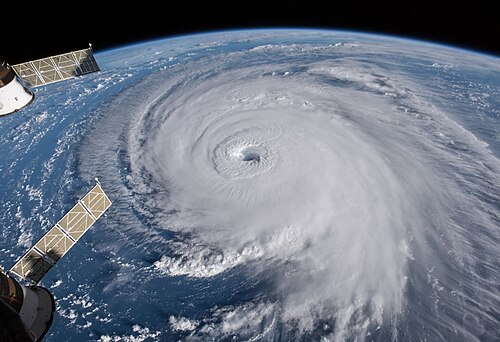
Seen from space, a hurricane looks like a giant white pinwheel spinning across the ocean—up to 800 kilometers (500 miles) wide—with a mysterious, cloud-free hole right in the center called the Eye!
An important word to know in this book is (EYE-wawl). Eyewall means: The dense ring of towering thunderstorms immediately surrounding the calm eye, containing the hurricane’s fiercest winds. Learning about Eyewall helps us understand how The Eye of a Hurricane fits into Extreme Weather.
Key Features
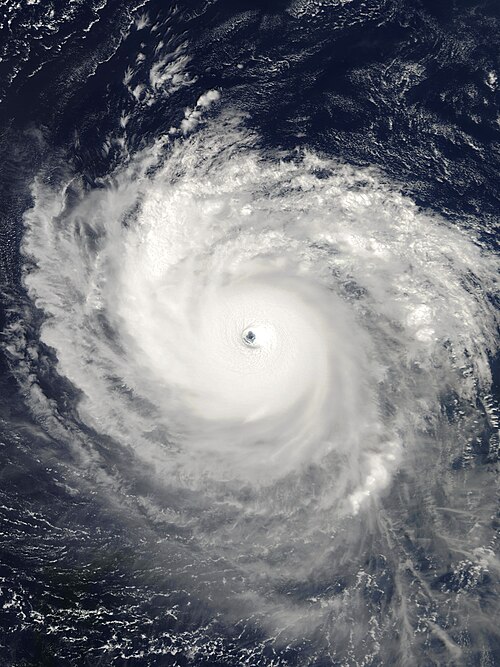
Whether called a hurricane in the Atlantic, a typhoon in the western Pacific, or a cyclone in the Indian Ocean, all tropical cyclones are giant heat engines fueled by warm ocean water at least 26.5°C (80°F) deep.
Scientists and explorers also look closely at (storm surj), which means: An abnormal rise of ocean water pushed onto coastal land by a hurricane’s powerful winds. These special traits make The Eye of a Hurricane easy to spot and study.
How It Works
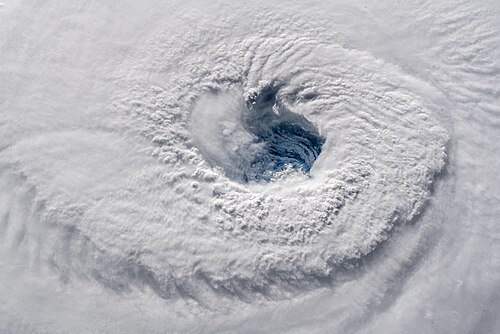
Warm, moist ocean air rises rapidly, cools, and condenses into towering thunderclouds, releasing massive heat energy. Earth’s rotation (the ) makes the storm spin counterclockwise in the Northern Hemisphere. Right around the calm center is the —a ring of violent thunderstorms with the hurricane’s strongest winds and heaviest rain—while sinking air inside the 30-to-65-kilometer-wide eye creates blue skies and light breezes!
Here is another helpful term: (kor-ee-OH-lis ih-FEKT). It means: The curving of moving air and water caused by Earth’s rotation, which makes hurricanes spin. Step by step, and Coriolis Effect work together in nature.
In Our World
Meteorologists rate hurricanes on the Saffir-Simpson Hurricane Wind Scale from Category 1 (74–95 mph) to Category 5 (157+ mph). When a hurricane makes landfall, its biggest danger is often the —a dome of ocean water pushed ashore by the winds.
Understanding how The Eye of a Hurricane works in our world also involves (storm surj): An abnormal rise of ocean water pushed onto coastal land by a hurricane’s powerful winds. Even when surrounding conditions shift across seasons or regions, the interaction between , Storm Surge, and helps sustain balance and resilience in the wider environment.
Amazing Facts
Amazing Fact #1: Inside the eye of a fierce hurricane, the wind suddenly drops and birds are often seen flying safely inside the moving circle of calm sky!
Amazing Fact #2: Hurricanes can never form right on the Equator because the Coriolis spin force there is zero.
Amazing Fact #3: As soon as a hurricane moves over dry land or cold water, it loses its warm-water fuel source and begins to weaken.
Read & Review
Let's review what we discovered about The Eye of a Hurricane! In this book, we explored how , , and connect to Extreme Weather.
Key Question #1: Where are the strongest winds and heaviest rains located inside a hurricane? Answer: In the surrounding the center. While the eye itself is calm due to sinking air, the surrounding eyewall has the most violent updrafts and winds.
Key Question #2: What provides the primary fuel that powers a tropical hurricane? Answer: Warm ocean water (at least 80°F / 26.5°C) evaporating into moist rising air. Latent heat released when warm ocean water vapor condenses into clouds drives the hurricane engine.