Introduction
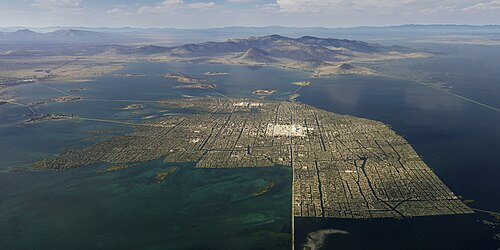
In 1325 CE, wandering Mexica (Aztec) people arrived at swampy Lake Texcoco in the high Valley of Mexico. According to legend, their god Huitzilopochtli told them to build their city wherever they spotted an eagle perched on a prickly-pear cactus holding a snake (the exact symbol on Mexico’s flag today!). On that marshy island, the Aztecs engineered —one of the largest, cleanest, and most dazzling cities on Earth!
A foundational concept in this investigation is (pronounced teh-noch-TEET-lahn), which refers to: The magnificent island capital city of the Aztec Empire built in Lake Texcoco (now the site of Mexico City). Every part of The Aztec Empire within Ancient Civilizations builds upon this essential concept.
In Grade 5 advanced nonfiction inquiry across Social Sciences & Culture (Ancient Civilizations), synthesizing primary evidence around , , and reveals how complex systems operate and adapt over time.
Key Features
By 1500 CE, was home to more than 200,000 people—bigger than London or Paris at the time! Connected to the lake shores by three wide raised stone causeways with removable wooden bridges, the island city gleamed with whitewashed palaces, botanical gardens, zoos, canals, and the towering twin-staircase Templo Mayor pyramid at the sacred center.
To analyze these defining traits accurately, specialists examine (chih-NAM-puh): A raised, ultra-fertile agricultural island ("floating garden") built by the Aztecs in shallow lakebeds using mud and woven willow fences. Alongside (The magnificent island capital city of the Aztec Empire built in Lake Texcoco (now the site of Mexico City).), these specialized characteristics set The Aztec Empire apart within Ancient Civilizations.
Field Observation & Evidence: Researchers studying The Aztec Empire observe how physical form matches function in Social Sciences & Culture. Each observable feature provides a clear advantage that supports stability, survival, or performance across changing conditions.
How It Works
How did the Aztecs grow enough food for 200,000 people on a swampy lake island? They engineered chinampas—often called "floating gardens"! Workers drove wooden stakes into the shallow lakebed to form rectangular pens, wove willow branches between the stakes like giant baskets, and layered rich lake-bottom mud and decaying plants inside until the fertile plots rose above the water. Willow trees planted at the corners anchored the soil with their roots, allowing farmers to harvest up to 7 crops of corn, beans, squash, tomatoes, chilies, and amaranth every single year!
This step-by-step process relies on (pronounced KAWZ-way), defined as: A raised stone road built across water or wetlands connecting an island city like to the mainland. Each stage of the process prepares the way for the next phase to unfold.
Cause-and-Effect Balance: When conditions remain balanced, and interact inside the to keep the system running smoothly. If any single link in this sequence is disrupted, the entire pace of activity shifts.
In Our World
The Aztecs built dual stone aqueducts to bring fresh mountain spring water into , had public street-sweepers who kept the city spotless, and required mandatory schooling for BOTH boys and girls (unheard of in Europe at the time!). Today, historic Mexico City stands right on the ancient foundations of Tenochtitlan, and over 1.5 million people in Mexico still speak Nahuatl—the language of the Aztecs (which gave English the words chocolate, tomato, avocado, and coyote)!
Understanding how The Aztec Empire functions in real environments also involves (chih-NAM-puh): A raised, ultra-fertile agricultural island ("floating garden") built by the Aztecs in shallow lakebeds using mud and woven willow fences. Even when surrounding conditions shift across seasons or regions, the interaction between , Chinampa, and helps sustain balance and resilience in the wider environment.
Global & Practical Significance: Chinampas were self-irrigating, nutrient-rich artificial agricultural islands that yielded up to seven harvests a year. Furthermore, Nahuatl words ending in -tl (xocolatl, tomatl, ahuacatl, chilli) entered Spanish and English from Mexico.
Amazing Facts
1. Remarkable Scale & Numbers: Look at the center of the modern flag of Mexico and you will see the ancient Aztec founding symbol of : an eagle perched on a prickly-pear cactus holding a serpent! This discovery highlights why Tenochtitlan is central to understanding The Aztec Empire.
2. Extraordinary Adaptation & Design: Every day, four English words you probably use come straight from the Aztec language (Nahuatl): chocolate (xocolatl), tomato (tomatl), avocado (ahuacatl), and coyote (coyotl)! Specialized conditions involving make these adaptations possible.
3. Surprising Scientific & Historical Record: The Aztec Empire was one of the first societies in world history to require universal compulsory education for every child—boys and girls alike! Over time, processes linked to leave a lasting mark across Ancient Civilizations.
Read & Review
Chapter Synthesis: Throughout this investigation of The Aztec Empire in Social Sciences & Culture (Ancient Civilizations), we examined its core foundations, defining traits, step-by-step mechanisms, and real-world connections using key terms like , , and .
Academic Vocabulary Review: • (teh-noch-TEET-lahn): The magnificent island capital city of the Aztec Empire built in Lake Texcoco (now the site of Mexico City). • (chih-NAM-puh): A raised, ultra-fertile agricultural island ("floating garden") built by the Aztecs in shallow lakebeds using mud and woven willow fences. • (KAWZ-way): A raised stone road built across water or wetlands connecting an island city like Tenochtitlan to the mainland.
Critical Thinking Check: (1) How did Aztec engineers grow abundant food for over 200,000 residents on their island capital of ? — They built chinampas ("floating gardens")—raised rectangular farm plots made of rich lakebed mud anchored by willow trees in the shallow lake. (2) Which everyday English food words come directly from Nahuatl, the language of the Aztecs? — Chocolate, tomato, avocado, and chili.