Introduction
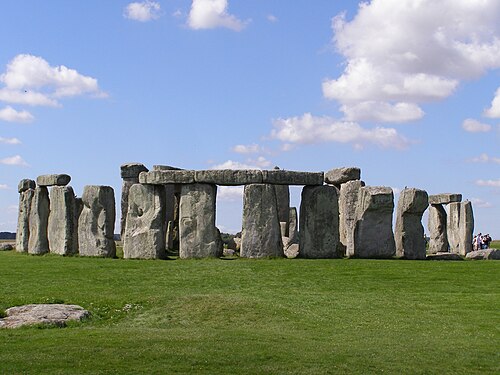
Standing on England’s windswept Salisbury Plain is Stonehenge, a prehistoric ring of massive standing stones built in stages beginning over 5,000 years ago during the Neolithic period. Its iconic outer circle and towering trilithon archways make it the most famous megalithic monument in Europe.
An important word to know in this book is (SOL-stis). Solstice means: Either of the two times in the year (summer and winter) when the sun reaches its highest or lowest point in the sky at noon, marking the longest and shortest days. Learning about Solstice helps us understand how Stonehenge, United Kingdom: Prehistoric Ring & Solstice Sky fits into 🧭 Unsolved & Unexplained: 10 Mysterious Places on Earth.
Key Features
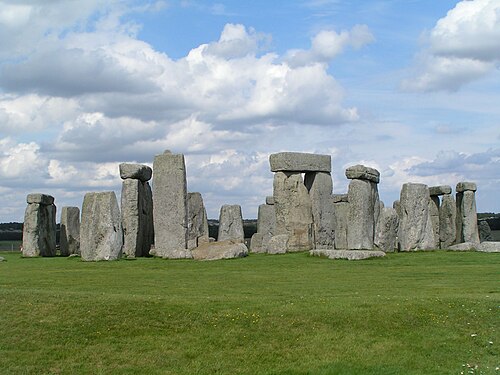
Stonehenge was engineered using two very different types of rock arranged in circles and horseshoes. The largest stones, called sarsens, are ultra-hard sandstone blocks weighing up to 25 tons hauled from West Woods about 15 miles away, while around 80 smaller "bluestones" weighing 2 to 4 tons each were transported all the way from the Preseli Hills in Wales—over 140 miles away!
Scientists and explorers also look closely at (kuhn-SEN-trik), which means: Circles or rings of different sizes that share the exact same center point, with one inside the other. These special traits make Stonehenge, United Kingdom: Prehistoric Ring & Sky easy to spot and study.
How It Works
The Mystery: Prehistoric builders left no written records explaining how they hauled multi-ton stones across rivers and hills or why they arranged them in circles locked together with woodworking-style mortise-and-tenon stone joints. The Science: Because Stonehenge’s main avenue and the Heel Stone align precisely with the sunrise on the summer and the sunset on the winter solstice, archaeoastronomers and archaeologists conclude Stonehenge functioned as an ancient solar calendar, astronomical observatory, and ceremonial gathering site for seasonal harvests.
Here is another helpful term: (MEG-uh-lith). It means: A huge prehistoric stone used alone or together with other stones to construct a monument or temple. Step by step, and Megalith work together in nature.
In Our World
Managed today as a UNESCO World Heritage landscape alongside nearby Avebury, Stonehenge shows that Neolithic communities in Britain possessed sophisticated geometry, engineering teamwork, and long-distance trade networks thousands of years before metal tools or wheeled carts arrived in northern Europe.
Understanding how Stonehenge, United Kingdom: Prehistoric Ring & Sky works in our world also involves (kuhn-SEN-trik): Circles or rings of different sizes that share the exact same center point, with one inside the other. Even after 4,500 years of British wind, rain, and frost, the interlocking stone lintels and solstice sightlines of Stonehenge still mark the longest and shortest days of the solar year with remarkable accuracy.
Amazing Facts
Amazing Fact #1: To keep the horizontal lintel stones locked tightly onto the tops of the giant upright sarsens, Neolithic builders carved interlocking mortise-and-tenon joints and tongue-and-groove corners directly out of solid rock!
Amazing Fact #2: Chemical core testing in 2020 proved that most of Stonehenge’s giant 25-ton sarsen stones came from West Woods in Wiltshire, while the smaller bluestones were quarried 140 miles away in western Wales!
Amazing Fact #3: On the morning of the summer (around June 21), the sun rises directly over the Heel Stone and shines a beam of light straight into the center of the stone circle.
Read & Review
Let's review what we discovered about Stonehenge, United Kingdom: Prehistoric Ring & Sky! In this book, we explored how Solstice, , and connect to 🧭 Unsolved & Unexplained: 10 Mysterious Places on Earth.
Key Question #1: Why do scientists believe Stonehenge functioned as an ancient solar calendar and astronomical ceremonial site? Answer: Its stone circle and main avenue align precisely with the sunrise on the summer and the sunset on the winter solstice. The monument’s axis is carefully oriented toward the summer solstice sunrise and winter solstice sunset, tracking the agricultural year.
Key Question #2: Both Stonehenge in Britain and the Nazca Lines in Peru were created thousands of years ago without modern machines. What similar purpose do scientists believe both sites shared? Answer: Both were aligned with astronomical events and seasonal cycles to serve as ceremonial sites and solar calendars. Ancient societies across continents tracked solstices and sky patterns to guide planting seasons and sacred gatherings.