
Introduction
When 11-year-old Steven Spielberg (born 1946) wanted to earn his Boy Scout Photography Merit Badge in Phoenix, Arizona, his father’s still camera was broken—so the Scoutmaster let young Steven shoot a nine-minute western story on his dad’s 8-millimeter home movie camera instead! From staging backyard model-train crashes in his living room to directing Jaws, E.T. the Extra-Terrestrial, Raiders of the Lost Ark, Jurassic Park, and Schindler’s List, Spielberg became the highest-grossing and most beloved film director in the history of cinema!
A foundational concept in this investigation is (pronounced STO-ree-bord), which refers to: A film director guides the camera angles, actors, lighting, and editing of a movie, often planning every action scene in advance using comic-book-style drawings called storyboards. Every part of Steven Spielberg: Master of Wonder & Adventure Cinema within 🎬 Film, Television, Directors & Storytelling Titans builds upon this essential concept.
In Grade 3 Sports & Entertainment studies (🎬 Film, Television, Directors & Storytelling Titans), understanding how , Animatronics vs. CGI (Computer-Generated Imagery), and Film Score (Leitmotif) work together helps explain real-world patterns. As you read each chapter, notice how these key terms connect structure, process, and environment.

Key Features
Born on December 18, 1946, in Cincinnati, Ohio, to Arnold Spielberg (a pioneering electrical engineer who helped design the early GE-225 mainframe computer!) and Leah Adler (a concert pianist), young Steven combined his father’s love of science and gadgets with his mother’s artistic imagination! At age 12 in Phoenix, he charged neighborhood kids 25 cents admission (while his sisters sold homemade popcorn!) to watch his 8mm backyard movies—using his little sisters as actors, putting cherries in a pressure cooker to simulate volcano lava, and poking tiny pinholes in a black cardboard sheet in front of a flashlight to create a starry night sky!
To analyze these defining traits accurately, specialists examine Animatronics vs. CGI (Computer-Generated Imagery) (an-uh-muh-TRON-iks / see-jee-EYE): Animatronics are life-sized mechanical puppets powered by cables and hydraulic motors on set (like the Jurassic Park T. rex head), while CGI uses 3D computer software to animate digital creatures. Alongside (A film director guides the camera angles, actors, lighting, and editing of a movie, often planning every action scene in advance using comic-book-style drawings called storyboards.), these specialized characteristics set Steven Spielberg: Master of Wonder & Adventure Cinema apart within 🎬 Film, Television, Directors & Storytelling Titans.
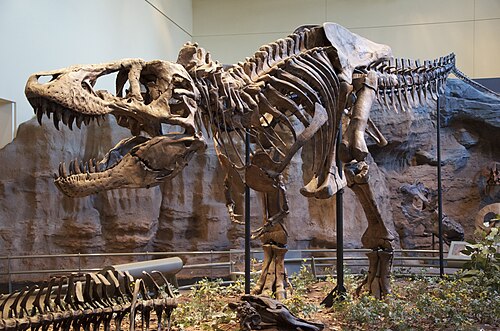
Field Observation & Evidence: Researchers studying Steven Spielberg: Master of Wonder & Adventure Cinema observe how physical form matches function in Sports & Entertainment. Each observable feature provides a clear advantage that supports stability, survival, or performance across changing conditions.
How It Works
In 1975, 27-year-old Spielberg directed Jaws on the open Atlantic Ocean off Martha’s Vineyard. When the three mechanical great white sharks (nicknamed "Bruce") kept short-circuiting in the saltwater, Spielberg turned disaster into cinematic genius: like Alfred Hitchcock, he realized that what the audience doesn’t see yet is even more suspenseful—using composer John Williams’s famous two-note tuba/cello theme ("dun-dun... dun-dun...") and floating yellow barrels to signal the unseen shark, creating the world’s very first summer "" movie! In 1993, his dinosaur adventure Jurassic Park revolutionized cinema again by combining full-scale hydraulic animatronic dinosaurs built by Stan Winston with Computer-Generated Imagery (CGI) created by Industrial Light & Magic!
This step-by-step process relies on Film Score (Leitmotif) (pronounced LYT-moh-teef), defined as: Original orchestral music composed for a movie—where a recurring musical melody (like John Williams’s two-note Jaws bass line or the Indiana Jones march) represents a character or emotion. Each stage of the process prepares the way for the next phase to unfold.
Cause-and-Effect Balance: When conditions remain balanced, and Film Score (Leitmotif) interact inside the Animatronics vs. CGI (Computer-Generated Imagery) to keep the system running smoothly. If any single link in this sequence is disrupted, the entire pace of activity shifts.
In Our World
Wait—did you know that 1993 was perhaps the greatest single year any film director ever had? While editing the dinosaurs of Jurassic Park at night from Poland, Spielberg spent his days filming the deeply moving historical masterpiece Schindler’s List (which won 7 Academy Awards, including Best Picture and Best Director!). He donated 100% of his Schindler’s List profits to establish the USC Shoah Foundation, which has recorded over 55,000 video testimonies of Holocaust and genocide survivors so history is never forgotten—and in 2002, 33 years after leaving college early to direct at Universal Studios, 55-year-old Spielberg secretly finished his classes and graduated with his Bachelor of Arts degree from California State University, Long Beach (turning in Schindler’s List as his advanced filmmaking student project!)!
Understanding how Steven Spielberg: Master of Wonder & Adventure Cinema functions in real environments also involves Animatronics vs. CGI (Computer-Generated Imagery) (an-uh-muh-TRON-iks / see-jee-EYE): Animatronics are life-sized mechanical puppets powered by cables and hydraulic motors on set (like the Jurassic Park T. rex head), while CGI uses 3D computer software to animate digital creatures. Even when surrounding conditions shift across seasons or regions, the interaction between , Animatronics vs. CGI (Computer-Generated Imagery), and Film Score (Leitmotif) helps sustain balance and resilience in the wider environment.
Global & Practical Significance: Earning his Boy Scout Photography Merit Badge with an 8mm movie camera sparked Spielberg’s lifelong passion for visual storytelling. Furthermore, Holding back the full reveal of the shark until 81 minutes into the film created unforgettable tension and launched the first summer .
Amazing Facts
1. Remarkable Scale & Numbers: When 55-year-old Steven Spielberg went back to California State University, Long Beach, in 2002 to complete his college degree so he could show his children the importance of finishing school, his film professor accepted Schindler’s List to fulfill his "Advanced Filmmaking" class requirement! This discovery highlights why is central to understanding Steven Spielberg: Master of Wonder & Adventure Cinema.
2. Extraordinary Adaptation & Design: How did 16-year-old Steven Spielberg make his first two-hour sci-fi movie, Firelight (1964), on a $500 budget? His dad rented a local Phoenix movie theater for one night, 500 people came at $1 a ticket, and because two person gave $1 extra without taking change, teenage Steven made his very first $2 movie profit! Specialized conditions involving Animatronics vs. CGI (Computer-Generated Imagery) make these adaptations possible.
3. Surprising Scientific & Historical Record: During the filming of Jaws (1975), the mechanical shark broke down so often in the ocean saltwater that the shark doesn’t even appear fully on screen until 1 hour and 21 minutes into the movie—which actually made the movie ten times more suspenseful! Over time, processes linked to Film Score (Leitmotif) leave a lasting mark across 🎬 Film, Television, Directors & Storytelling Titans.
Read & Review
Chapter Synthesis: Throughout this investigation of Steven Spielberg: Master of Wonder & Adventure Cinema in Sports & Entertainment (🎬 Film, Television, Directors & Storytelling Titans), we examined its core foundations, defining traits, step-by-step mechanisms, and real-world connections using key terms like , Animatronics vs. CGI (Computer-Generated Imagery), and Film Score (Leitmotif).
Academic Vocabulary Review: • (STO-ree-bord): A film director guides the camera angles, actors, lighting, and editing of a movie, often planning every action scene in advance using comic-book-style drawings called storyboards. • Animatronics vs. CGI (Computer-Generated Imagery) (an-uh-muh-TRON-iks / see-jee-EYE): Animatronics are life-sized mechanical puppets powered by cables and hydraulic motors on set (like the Jurassic Park T. rex head), while CGI uses 3D computer software to animate digital creatures. • Film Score (Leitmotif) (LYT-moh-teef): Original orchestral music composed for a movie—where a recurring musical melody (like John Williams’s two-note Jaws bass line or the Indiana Jones march) represents a character or emotion.
Critical Thinking Check: (1) How did 11-year-old Steven Spielberg first start making movies in Phoenix, Arizona? — To earn his Boy Scout Photography Merit Badge, he filmed a short story using his father’s 8mm home movie camera. (2) How did mechanical failures with the robotic shark during the filming of Jaws (1975) accidentally make the movie a masterpiece of suspense? — Because the mechanical shark kept breaking in saltwater, Spielberg had to hint at the unseen shark using yellow barrels and John Williams’s two-note music—letting the audience’s imagination build the suspense.