Introduction
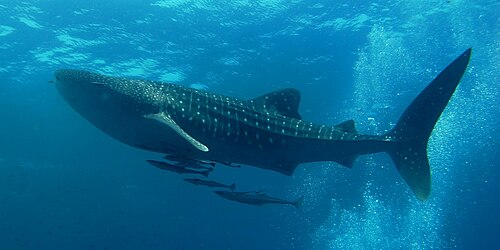
Sharks have patrolled Earth’s oceans for more than 400 million years—appearing before the first trees grew on land and surviving four mass extinctions that wiped out the dinosaurs! Today, over 500 species of sharks range from glowing lanternsharks that fit in your hand to 12-meter (40-foot) whale sharks.
A foundational concept in this investigation is (pronounced KAR-tuh-lij), which refers to: Tough, flexible, lightweight connective tissue that forms the entire skeleton of sharks and rays instead of bone. Every part of Sharks: Ancient Hunters of the Sea within 🌊 Ocean Giants & Apex Predators builds upon this essential concept.
In Grade 3 Animals studies (🌊 Ocean Giants & Apex Predators), understanding how , , and work together helps explain real-world patterns. As you read each chapter, notice how these key terms connect structure, process, and environment.
Key Features
Unlike bony fish, a shark’s entire skeleton is built from lightweight, flexible —the same tough tissue in your ears and nose. Their skin is armored with microscopic tooth-like scales called ("skin teeth") that channel water smoothly to boost swimming speed and silence water turbulence.
To analyze these defining traits accurately, specialists examine (am-POO-lee uv lor-en-ZEE-nee): Jelly-filled sensory pores on a shark’s snout that detect weak electrical fields from living prey. Alongside (Tough, flexible, lightweight connective tissue that forms the entire skeleton of sharks and rays instead of bone.), these specialized characteristics set Sharks: Ancient Hunters of the Sea apart within 🌊 Ocean Giants & Apex Predators.
Field Observation & Evidence: Researchers studying Sharks: Ancient Hunters of the Sea observe how physical form matches function in Animals. Each observable feature provides a clear advantage that supports stability, survival, or performance across changing conditions.

How It Works
Sharks possess a sixth sense called electroreception! Tiny jelly-filled pores around a shark’s snout, called the , detect the faint electrical impulses produced by the beating heart or twitching muscles of a fish hiding under sand. Sharks also grow conveyor-belt rows of teeth, losing and replacing up to 30,000 teeth over a lifetime!
This step-by-step process relies on (pronounced DUR-muhl DEN-tih-kuhlz), defined as: Microscopic, V-shaped tooth-like scales covering shark skin that reduce water drag and protect against injury. Each stage of the process prepares the way for the next phase to unfold.
Cause-and-Effect Balance: When conditions remain balanced, and interact inside the to keep the system running smoothly. If any single link in this sequence is disrupted, the entire pace of activity shifts.
In Our World
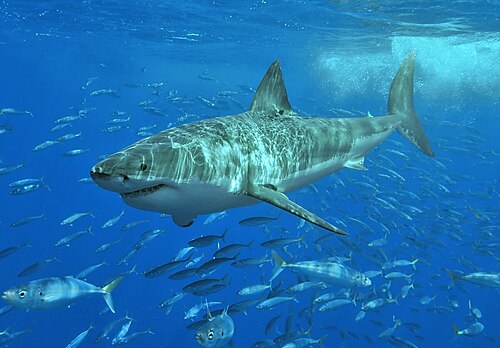
Every shark species fills a vital ecological niche: the Great White Shark uses countershaded stealth and bursts of speed to regulate seal populations, the Hammerhead Shark swings its wide head like a metal detector over the seafloor to pin down stingrays, and the gentle giant Whale Shark filter-feeds on microscopic plankton.
Understanding how Sharks: Ancient Hunters of the Sea functions in real environments also involves (am-POO-lee uv lor-en-ZEE-nee): Jelly-filled sensory pores on a shark’s snout that detect weak electrical fields from living prey. Even when surrounding conditions shift across seasons or regions, the interaction between , Ampullae of Lorenzini, and helps sustain balance and resilience in the wider environment.
Global & Practical Significance: give sharks electroreception to locate prey even in pitch darkness or under sand. Furthermore, is half as dense as bone, helping sharks stay buoyant and make agile turns.
Amazing Facts
1. Remarkable Scale & Numbers: A whale shark is the largest fish on Earth, reaching up to 12–18 meters (40–60 feet) long, yet it eats tiny plankton and small fish! This discovery highlights why is central to understanding Sharks: Ancient Hunters of the Sea.
2. Extraordinary Adaptation & Design: Greenland sharks live in freezing Arctic depths and are the longest-living vertebrates on Earth—scientists have dated individuals at over 400 years old! Specialized conditions involving make these adaptations possible.
3. Surprising Scientific & Historical Record: A shark’s reduce water drag so effectively that Olympic swimsuit engineers and airplane designers copy their microscopic grooves. Over time, processes linked to Dermal Denticles leave a lasting mark across 🌊 Ocean Giants & Apex Predators.
Read & Review
Chapter Synthesis: Throughout this investigation of Sharks: Ancient Hunters of the Sea in Animals (🌊 Ocean Giants & Apex Predators), we examined its core foundations, defining traits, step-by-step mechanisms, and real-world connections using key terms like , , and .
Academic Vocabulary Review: • (KAR-tuh-lij): Tough, flexible, lightweight connective tissue that forms the entire skeleton of sharks and rays instead of bone. • (am-POO-lee uv lor-en-ZEE-nee): Jelly-filled sensory pores on a shark’s snout that detect weak electrical fields from living prey. • (DUR-muhl DEN-tih-kuhlz): Microscopic, V-shaped tooth-like scales covering shark skin that reduce water drag and protect against injury.
Critical Thinking Check: (1) What do the "" on a shark’s snout allow it to sense? — Faint electrical impulses from the heartbeat and muscles of hidden prey. (2) What is a shark’s skeleton made of instead of heavy calcium bone? — Lightweight, flexible .